Essential Oils and Yoga to Keep You Grounded Through the Heatwave
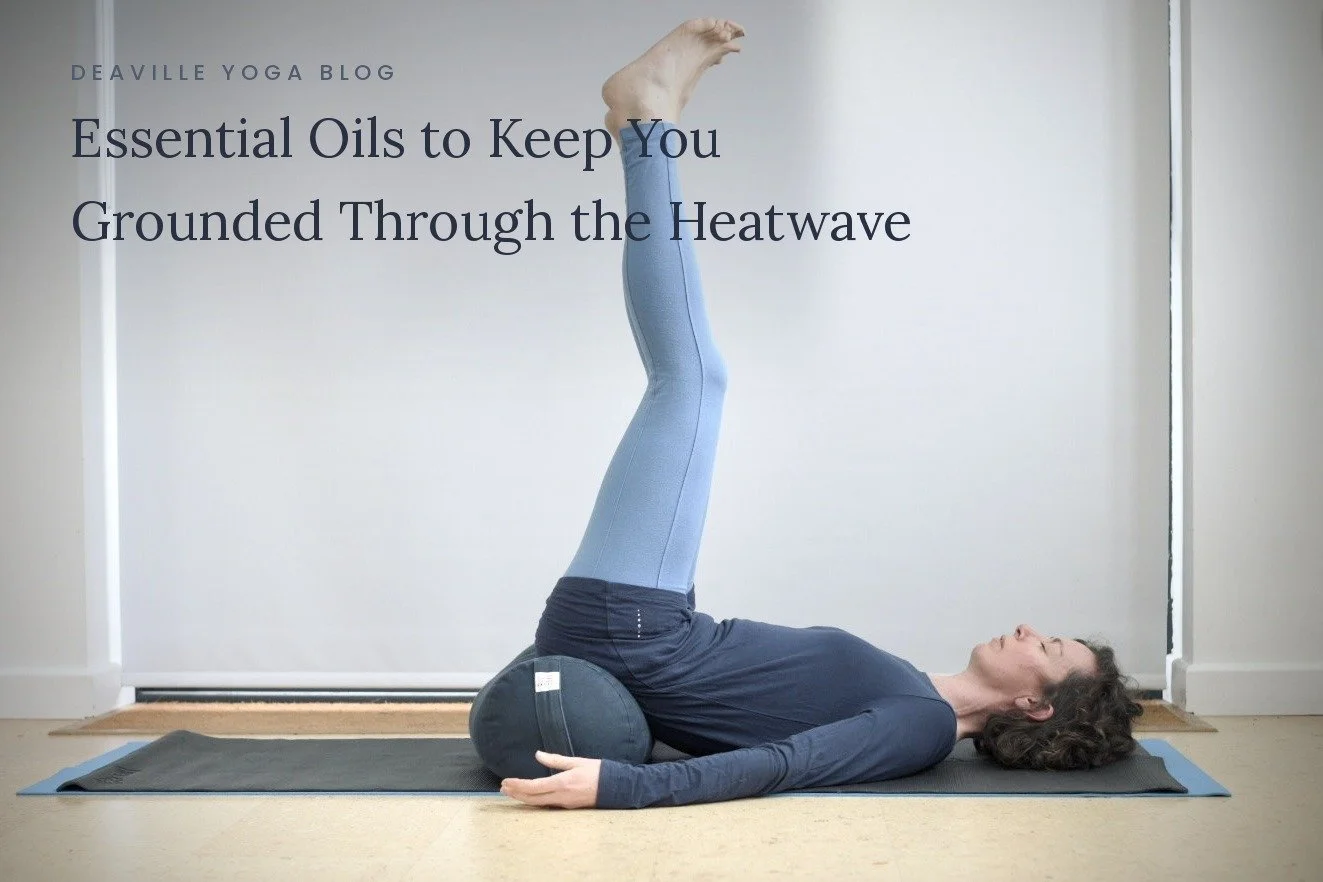
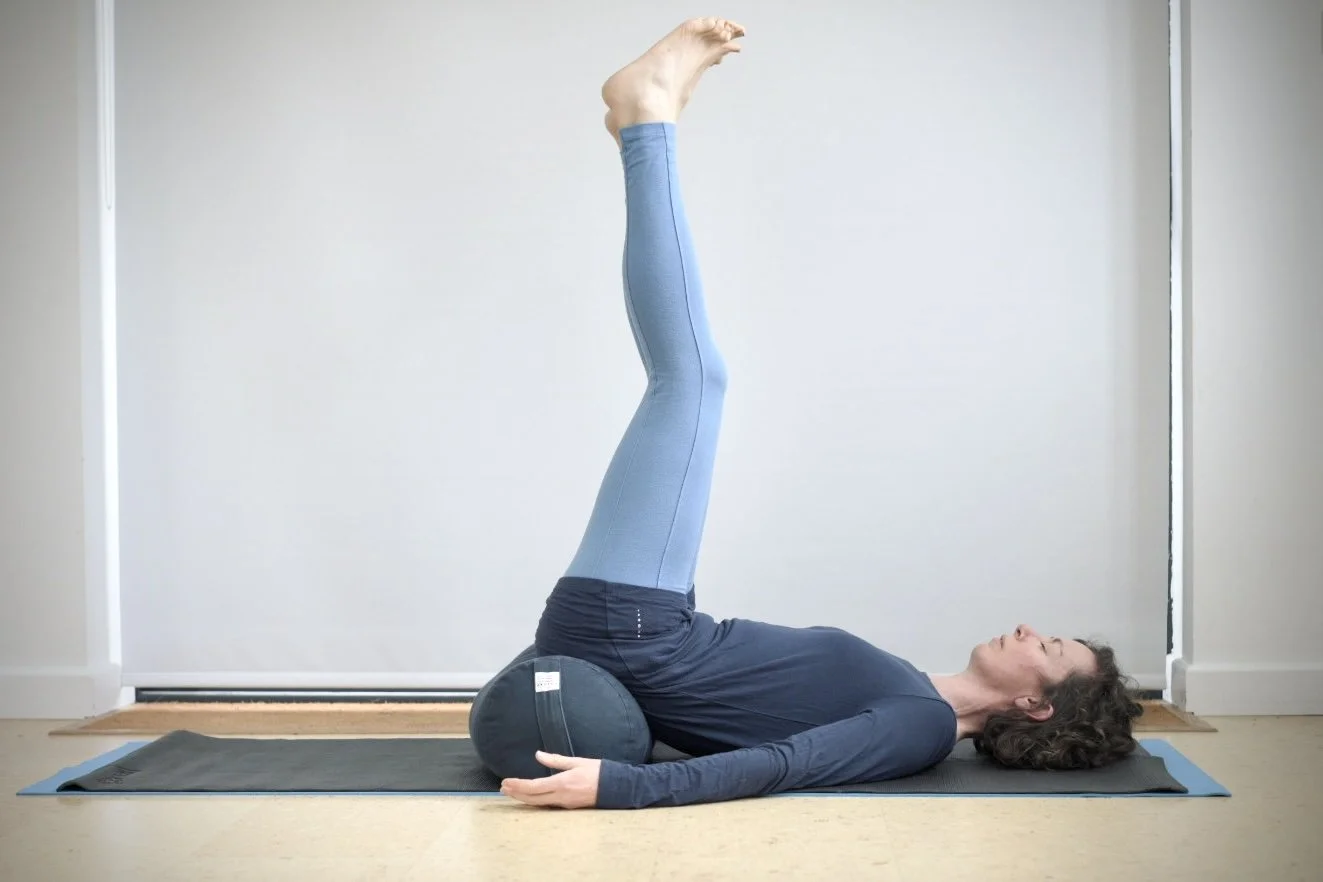
Legs up the wall - a cooling yoga practice during a heatwave
As we head towards heatwave number five of the summer here in the UK, if you're anything like me, the novelty has worn off, it did that around heatwave number two to be honest. By now there's a particular kind of tiredness that comes with this weather — broken sleep, a short fuse, a mind that feels scattered even when the body has barely moved. If you've rolled out your mat this week and thought "I cannot possibly do a full practice in this," you are not alone, and you don't have to be.
I've noticed this feeling in my own practice, but also in my classes, no one is inclined to do much movement in this heat.
Grounding usually gets talked about as something warm and heavy, especially in the winter months when our urge to hibernate kicks in, think earthy oils, slow deliberate movement, a sense of sinking down. In a heatwave, that's the last thing we need is warm and heavy. What we actually need is steadiness in the middle of intensity: something that cools the body and settles the mind without asking for more effort than we have to give. That's the kind of grounding this post is about.
Why heat makes it so hard to feel steady
Heat interferes with two things the body relies on to feel settled: sleep and stress regulation. To fall and stay asleep, core body temperature needs to drop, a recent study tracking over 12.5 million nights of wearable sleep data found that warmer nights measurably shorten sleep and delay how quickly people drop off, with the effect strongest for women in their 40s. On top of that, heat itself acts as a physical stressor, nudging up heart rate and stress hormones, which is part of why minor irritations can feel bigger than they are, a pattern researchers have studied for decades in the well-documented link between heat and short tempers. None of that is a failure of willpower, it's a fairly predictable response to sustained heat. So rather than fighting it with intensity, this is a moment for practices that cool first and steady second.
Cooling, grounding oils for this week
Peppermint — instantly cooling. One drop on a cotton pad and some lovely deep slow breathing.
Cornmint — a gentler, sweeter cousin of peppermint, kind on sensitive skin, so can be blended with a carrier oil and applied to the neck and chest. Lovely for an evening wind-down when you want cooling without the intensity.
Geranium — balancing rather than sedating, geranium helps even out the emotional up-and-down that heat tends to bring, without adding any heaviness.
Sandalwood — traditionally used in hot climates for its cooling, grounding quality; beautiful paired with a slower, floor-based practice.
Lime or grapefruit — bright and refreshing, good for lifting a flat, heat-drained mood. (A safety note on these below — worth reading before you reach for the bottle.)
Please read Essential Oil Safety for Yoga Teachers | Safe Use in Classes & Workshops — Deaville Yoga if you're new to working with essential oils.
A safety note specific to heatwave weather
This one's worth flagging clearly: citrus oils, like lime, lemon, bergamot, grapefruit are phototoxic. They increase your skin's sensitivity to UV light and can cause burning or pigmentation if applied to skin that then goes into direct sun. Given that most of us are spending more time outdoors and in stronger sun right now, it's worth using blended citrus oils on skin that won't see direct sunlight, or sticking to a diffuser instead. As always, dilute properly and patch test anything new, and if you're pregnant or have a medical condition, check in with a qualified aromatherapist first.
A cooling practice to go with it
Two of the simplest and most direct tools for cooling the body come from pranayama:
Sitali or Sitkari breath (the "cooling breath") — inhale through a curled tongue or through clenched teeth, exhale through the nose. It's one of the few yoga tools that has an almost immediate, physical cooling effect, and you can do it anywhere — on the mat, in the car, queuing for a flight.
A short, low-effort sequence: supported forward fold, a gentle seated twist, and legs-up-the-wall to finish. None of this asks much of the body, and legs-up-the-wall in particular is wonderful for heat-swollen ankles and a genuinely restless mind.
Practice earlier in the morning or later in the evening if you can, and let movement stay slow and mostly floor-based while the heat is at its peak. This is a week for less, not more.
A simple ritual for today
If you only take one thing from this post, let it be this: a drop or two of your favourite oil from the list above on a cotton pad or in your diffuser, three rounds of Sitali breath, and five minutes with your legs up the wall. It takes less time than making a cup of tea, and it's enough.
If this kind of practical, seasonal knowledge is something you'd love to build into your own teaching, this is exactly the territory we go deep on in the Essential Oils for Yoga Teachers course, from safety considerations like phototoxicity to building simple rituals your students can actually use. Check it out: Essential Oils for Yoga Teachers | Online CPD Training UK — Deaville Yoga
Stay cool out there, and see you on the mat.
Impact of heat exposure on sleep health and its population vulnerability in the United States — Environment International, 2025 (wearable sleep data study referenced above)
Nighttime temperature and human sleep loss in a changing climate — Science Advances, 2017
Feeling Irritable This Summer? Blame the Heat — Psychology Today, overview of the heat-and-short-tempers research referenced above

3 Easy Essential Oil Gifts to Make in Your Yoga Classes
Yoga students making aromatherapy inhalers with essential oils during a Deaville Yoga workshop.
One of my favourite ways to end a block of yoga classes is by treating everyone to a simple aromatherapy gift to take home.
We usually make these during the final class of the term. I still want plenty of time for yoga, relaxation and connection, so anything too complicated—like body creams, candles or sewing projects—is firmly off the list.
Over the years I've found three beautiful, quick-to-make gifts that students absolutely love. They're perfect for regular weekly classes, but they also work brilliantly during longer workshops or retreats.
Here are my top three.
1. Aromatherapy Inhaler Sticks
Best time to make them
At the beginning of your final class, or during the middle or end of an aromatherapy workshop once students have explored a variety of essential oils.
You'll need
* Aromatherapy inhaler sticks
* Essential oils
* Optional labels
How to make them
Display all the essential oils you've explored during the course or workshop and invite each student to choose one or two favourites.
If they're choosing two oils, encourage them to smell them together first to make sure they enjoy the combination.
Add 10 drops of essential oil to the cotton wick inside the inhaler.
Click the base firmly into place and it's ready to use.
Blending guide
I generally use the following ratios:
Base note: 3–4 drops
Middle note: 4–5 drops
Top note: 5–6 drops
Example
A calming blend:
Frankincense – 4 drops
Lavender – 6 drops
Did you know?
Aromatherapy inhalers are widely used in supportive healthcare settings, including cancer care, to provide comforting aromas and help manage symptoms such as anxiety or nausea under appropriate guidance.
2. Aromatherapy Rollerballs
Best time to make them
At the beginning of a class, or towards the middle or end of a workshop after students have experienced a range of oils.
You'll need
Empty 10ml rollerball bottles
Carrier oil (I use *80% Sweet Almond Oil** and 20% Jojoba Oil)
Essential oils
Optional Witch Hazel (to clean excess oil from the outside of the bottle)
Small labels
Kitchen roll
A small pouring jug
Remember to check for nut allergies if using Sweet Almond Oil.
How to make them
Fill each rollerball bottle around 90% full with your chosen carrier oil.
Invite students to choose one or two essential oils (three can work, but I usually encourage just two).
Once they're happy with the aroma:
Add *10 drops** of essential oil in total.
Firmly click the rollerball top into place.
Shake well.
Wipe the outside with Witch Hazel if needed.
Add a label.
Blending guide
Base note: 3 drops
Middle note: 4–7 drops
Top note: 4–7 drops
Example
An uplifting blend to encourage energy and focus:
Lemon – 6 drops
Rosemary – 4 drops
Did you know?
Rollerballs make a wonderful natural alternative to perfume and are ideal for applying to pulse points throughout the day.
3. Body Scrub
Best time to make it
At the beginning of a class, or during the middle or end of a workshop. Students love taking these home.
You'll need
Bath salts
Carrier oil
Measuring cups
A clean jar (students can bring one from home)
Essential oils
How to make it
Mix together:
1 cup bath salts
¼ cup carrier oil
20 drops of essential oil
Stir thoroughly and your scrub is ready.
Blending guide
Base note: 6–8 drops
Middle note: 8+ drops
Top note: 8+ drops
Example
This morning we made a simple, gentle scrub for a student with sensitive skin.
We blended:
Sweet Orange – 10 drops
Lavender – 10 drops
Simple, fresh and beautifully uplifting.
Did you know?
This recipe also doubles as a luxurious bath soak or foot soak.
One of the reasons I love this activity is because it's so affordable and easy for students to recreate at home. All they need is bath salts, a carrier oil (olive oil or rapeseed oil from the kitchen work well), and a few drops of their favourite essential oils.
A Few Safety Tips
When making aromatherapy gifts with students, always:
Check for allergies and sensitivities.
Follow the recommended dilution rates for adults.
Avoid oils that may not be suitable during pregnancy or for certain medical conditions.
Encourage students to carry out a patch test before applying a new blend to larger areas of skin.
Final Thoughts
Creating a small aromatherapy gift adds something really special to the end of a yoga course or workshop. It's a lovely way for students to continue their self-care long after they've rolled up their mat, and it's always one of the most memorable parts of the experience.
I hope you've found these ideas inspiring.
If you have any questions about using aromatherapy safely in your yoga classes, or you'd like to learn more about blending essential oils, I'd love to hear from you.
Heather Deavilleheather@deavilleyoga.com
New to Aromatherapy?
Want to use essential oils confidently in your yoga classes?
Whether you're just starting out or looking to deepen your knowledge, my Aromatherapy for Yoga Teachers Course will teach you how to blend safely, choose the right oils for different themes, and confidently introduce aromatherapy into your classes and workshops.
Discover the Aromatherapy for Yoga Teachers Course
Read Next
Essential Oils in Pregnancy Yoga
Teaching pregnancy yoga? Not every essential oil is suitable during pregnancy. In this guide, I explore which oils are considered appropriate, which should be avoided, and how to use aromatherapy safely and confidently in your prenatal classes.
Read my Essential Oils in Pregnancy Yoga blog
Experience It Yourself
Join Me on a Yoga Retreat
Many of the aromatherapy activities in this blog are inspired by my yoga retreats. From creating personalised inhalers to mindful blending sessions, they're a beautiful way to help students slow down and connect with themselves.
If you'd love to experience yoga, nature and aromatherapy together, I'd love to welcome you on one of my retreats.
6 Essential Oils for Hormone Balance & Emotional Support in Yoga Classes
6 Essential Oils Yoga Teachers Can Use for Hormone & Mood Support in classses.
6 Essential Oils Yoga Teachers Can Use for Hormone & Mood Support
As a yoga teacher and aromatherapist, I’m a big believer in taking a holistic approach to the different stages of a woman’s life. Hormonal shifts, whether during perimenopause, times of stress, or emotional transition, can affect sleep, mood, energy and focus.
One gentle and powerful way to offer support in your yoga practice or classes is through essential oils.
If you’re a yoga teacher wanting to incorporate aromatherapy safely into your classes, this guide will introduce six beautiful oils that can support hormone balance, emotional wellbeing and nervous system regulation.
Essential Oil Safety for Yoga Teachers (read full advice here)
Before using essential oils in yoga classes, safety is essential.
Do not take essential oils internally.
Do not apply oils neat to the skin — always dilute in a carrier oil (sweet almond oil is ideal; even rapeseed oil works).
Check contraindications for each oil.
If you or your students are on medication, advise them to consult their GP before use.
The safest and most accessible way to use essential oils in yoga classes is aromatically through inhalation.
Simple methods include:
One drop on a cotton pad for individual use
Personal inhalers
Diffusing oils in a well-ventilated space
Inhalation allows the aromatic compounds to interact directly with the limbic system of the brain, having an immediate impact on our bodies, minds and souls.
1. Bergamot – For Uplifting Low Mood
Bergamot is a beautiful citrus oil that feels both uplifting and gently energising.
It’s ideal for:
Low mood
Fatigue
Emotional heaviness
In a yoga class, bergamot works beautifully at the beginning of practice to shift stagnant energy and create lightness in the room.
2. Rose – For Self-Compassion
Rose is often called the oil of self-love.
During hormonal transitions, many women feel disconnected from themselves. Rose supports heart opening, compassion and emotional processing.
This oil pairs beautifully with:
Women’s circles
Restorative yoga
Heart-opening sequences
Even one drop on a cotton pad during savasana can create a deeply nurturing experience.
3. Vetiver – For Sleep & Deep Grounding
If sleep is disrupted due to hormonal shifts, Vetiver is incredibly supportive.
It’s earthy and grassy in scent, so if you find it too earthy I recommend blending one drop with:
Geranium
Lavender
Vetiver is excellent in:
Yin yoga
Evening classes
Grounding meditations
It helps anchor scattered energy and calm an overstimulated nervous system.
4. Rosemary – For Brain Fog & Focus
Hormonal changes can affect clarity and concentration.
Rosemary is stimulating and sharpening — wonderful when you need mental clarity.
Use it for:
Morning classes
Workshops
Teacher trainings
Study sessions
It pairs well with pranayama or focused standing sequences.
5. Roman Chamomile – For Soothing Heat & Tension
Roman chamomile is deeply calming.
It helps release:
Emotional tension
Irritability
Internal “heat”
This oil supports parasympathetic activation and is ideal in:
Restorative yoga
Breathwork practices
Closing relaxation
6. Rosewood – For Energetic Boundaries
Rosewood is less commonly spoken about but beautiful for emotional protection.
For teachers holding space regularly, this oil can:
Support energetic boundaries
Preserve your own energy
Reduce emotional depletion
It’s a wonderful oil to use before teaching or during retreat facilitation.
Other Essential Oils for Hormonal & Emotional Support
Other oils I regularly use in women’s yoga classes include:
Clary Sage
Frankincense
Benzoin
Lemon
Tea Tree
Sandalwood
When thoughtfully integrated, aromatherapy can deepen your students’ sensory experience and support nervous system regulation within your yoga classes.
Choosing High-Quality Essential Oils
If you’re purchasing essential oils in the UK, I use oils from Base Formula, Natural Health Remedies and Neal's Yard Remedies (not affiliated).
Always prioritise organic and ethical sourcing where you can. In my experience you get a much nicer oil this way.
Integrating Essential Oils Into Your Yoga Teaching
Essential oils can:
Deepen savasana
Enhance themed workshops
Support women navigating hormonal shifts
Create a more embodied sensory experience
When used safely and intentionally, aromatherapy becomes a powerful extension of your teaching — supporting both emotional wellbeing and nervous system balance.
If you’d like to learn how to confidently and professionally integrate essential oils into your yoga classes, retreats or workshops, explore my essential oils training and CPD options.
Let’s grow happier, older and wiser — together.
Love and hugs as always,
Heather ✨