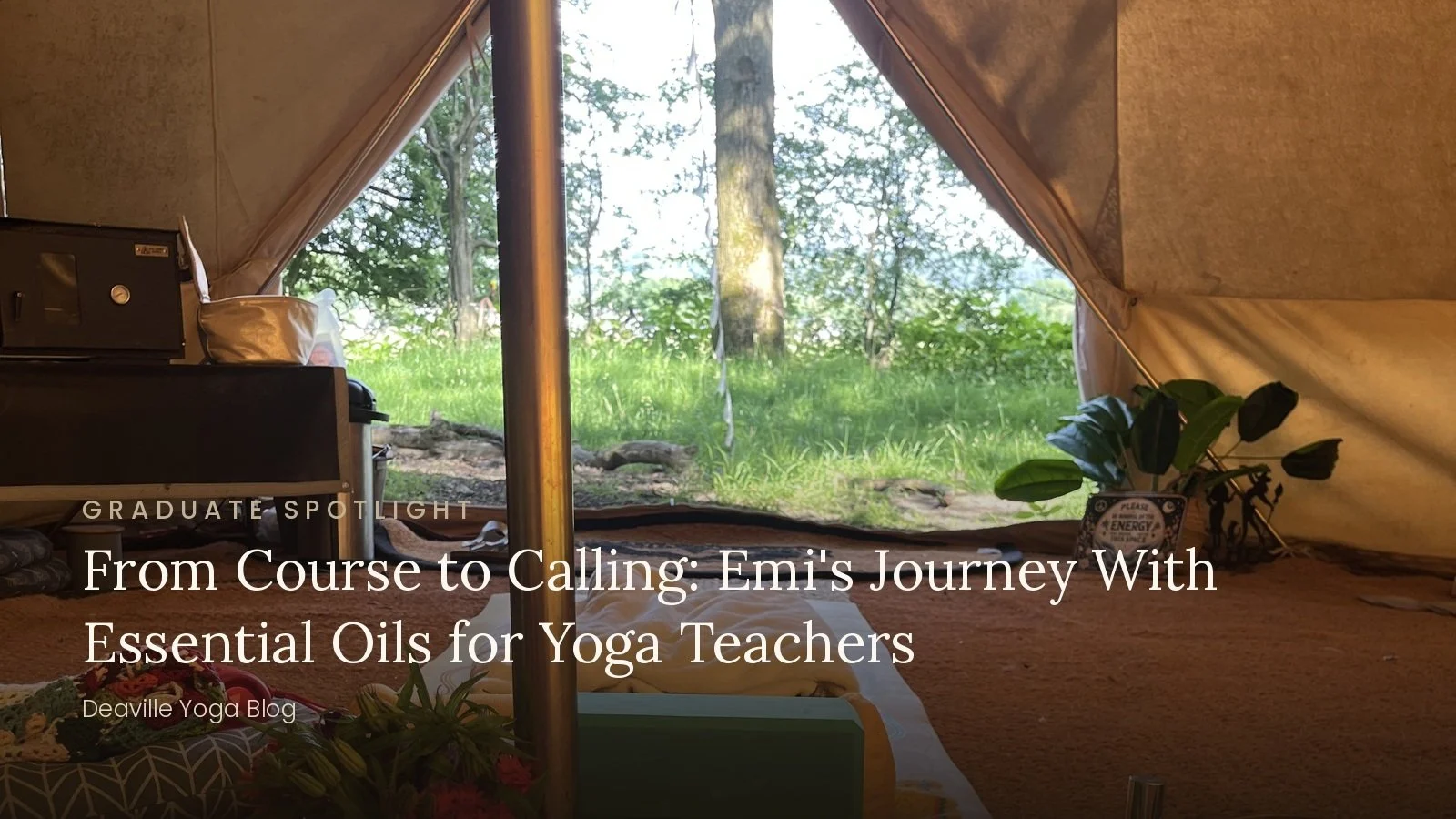
From Course to Calling: Emi's Journey With Essential Oils for Yoga Teachers
Graduate Spotlight: Emi
When Emi took the Essential Oils for Yoga Teachers course, she was looking for something specific: the confidence to blend and create her own way, rather than follow a sales script. A friend had introduced her to essential oils through a multi-level marketing route, and while the oils themselves resonated, the business model didn't. "I wanted the genuine confidence to create, mix, blend, and support women's health in a truly holistic way," she told me.
That search for genuine, grounded knowledge has since become the foundation of her entire teaching practice — and, as it turns out, the direction of her whole business.
Oils as a monthly ritual, not a fixed formula
Rather than settling on a handful of "signature" oils, Emi treats her oil choices the way she treats her sequencing: as something that shifts with the season and the theme of her practice. "I love linking my oil choices to Traditional Chinese Medicine and whatever theme I'm weaving into my somatic and yin yoga practice that month," she says.
In class, that shows up everywhere — deep inhalation during breathwork, guided self-massage on the wrists, neck and feet, and what she describes as the undisputed crowd favourite: the Savasana temple rub.
Her approach to blending is refreshingly honest. "I take a very hands-on approach: pure trial and error. I love researching the healing properties of each oil and experimenting. Honestly, some combinations have been absolute disasters, but others have turned out utterly amazing." It's a good reminder that expertise isn't about getting it right every time — it's about being curious enough to keep experimenting.
The biggest lightbulb moment from the course itself, she says, was learning about top, middle and base notes. "That was a total revelation."
A monthly sanctuary is born
The ripple effects of the course went well beyond Emi's regular classes. It inspired her to create Scent and Serenity, a monthly event dedicated to somatic exercises, yin yoga and meditation — "a total sanctuary for women to step off the hamster wheel and genuinely rest."
It's also reshaped her business entirely. Emi is currently rebranding from Blossoms Yoga to EmiLouEmbodied, with a new focus on supporting women through midlife, menopause and post-menopause — informed in part by her own experience of navigating menopause without HRT, and her long-standing use of essential oils as part of that.
One moment in particular has stayed with her: a student once told her, "All I can think about all month is the smell of that oil — I literally can't wait to come back!" Emi ended up blending her a small rollerball so she could find that same moment of peace at home, without having to wait for the next class.
Who this is for
Asked who she'd recommend the course to, Emi doesn't hesitate: "Honestly, any yoga teacher would benefit, but it's absolute magic if you teach slower, more restorative, or holistic classes." For her, the course gave her the practical grounding to "curate delicious experiences where women can truly surrender and rest" — which, given where her business is heading, feels like exactly the right words for it.
You can follow Emi's new chapter at EmiLouEmbodied on Instagram.If Emi's story resonates and you'd love to build this kind of practical, confident knowledge into your own teaching, you can find out more about the Essential Oils for Yoga Teachers course here.
Essential Oils and Yoga to Keep You Grounded Through the Heatwave
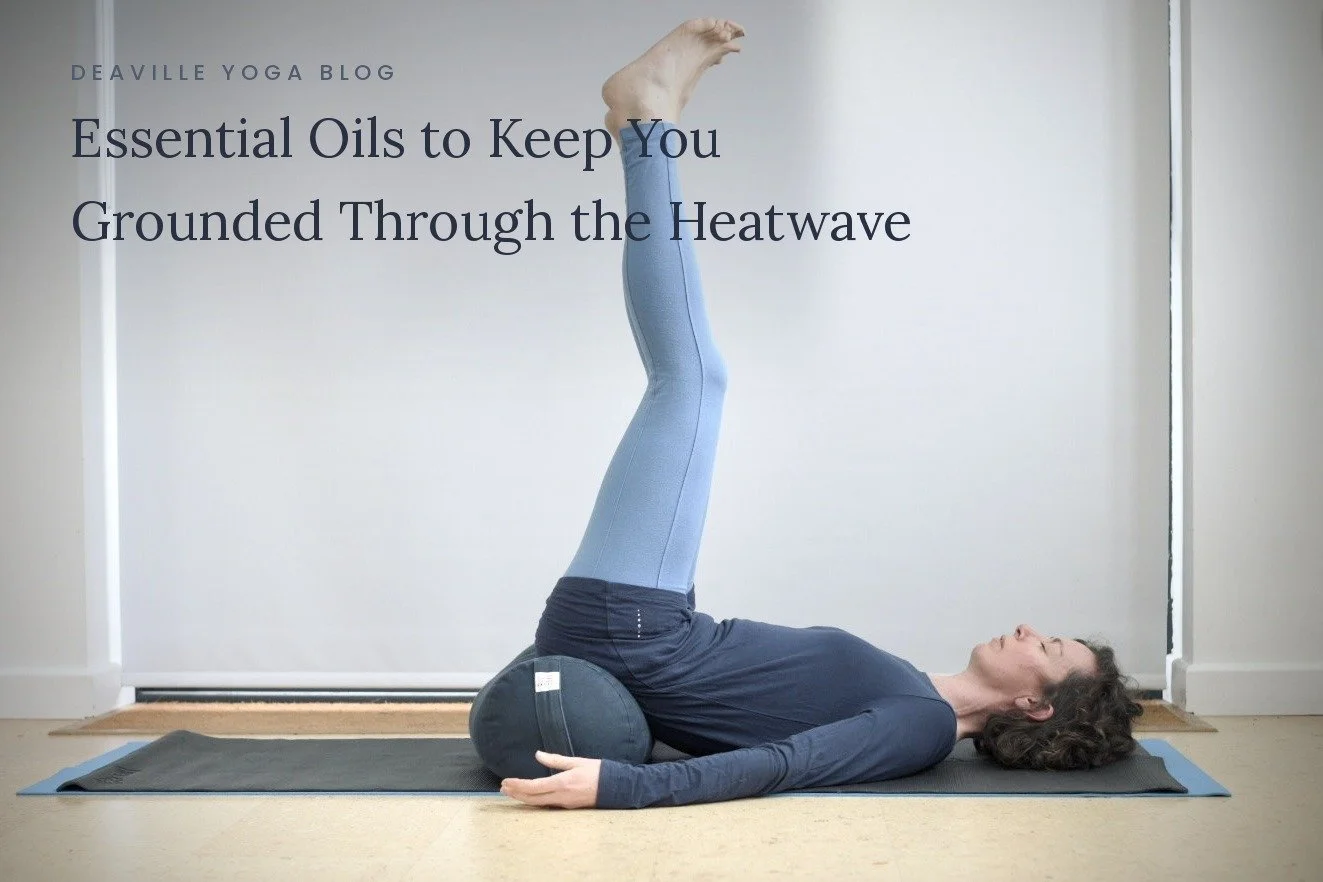
Legs up the wall - a cooling yoga practice during a heatwave
As we head towards heatwave number five of the summer here in the UK, if you're anything like me, the novelty has worn off, it did that around heatwave number two to be honest. By now there's a particular kind of tiredness that comes with this weather — broken sleep, a short fuse, a mind that feels scattered even when the body has barely moved. If you've rolled out your mat this week and thought "I cannot possibly do a full practice in this," you are not alone, and you don't have to be.
I've noticed this feeling in my own practice, but also in my classes, no one is inclined to do much movement in this heat.
Grounding usually gets talked about as something warm and heavy, especially in the winter months when our urge to hibernate kicks in, think earthy oils, slow deliberate movement, a sense of sinking down. In a heatwave, that's the last thing we need is warm and heavy. What we actually need is steadiness in the middle of intensity: something that cools the body and settles the mind without asking for more effort than we have to give. That's the kind of grounding this post is about.
Why heat makes it so hard to feel steady
Heat interferes with two things the body relies on to feel settled: sleep and stress regulation. To fall and stay asleep, core body temperature needs to drop, a recent study tracking over 12.5 million nights of wearable sleep data found that warmer nights measurably shorten sleep and delay how quickly people drop off, with the effect strongest for women in their 40s. On top of that, heat itself acts as a physical stressor, nudging up heart rate and stress hormones, which is part of why minor irritations can feel bigger than they are, a pattern researchers have studied for decades in the well-documented link between heat and short tempers. None of that is a failure of willpower, it's a fairly predictable response to sustained heat. So rather than fighting it with intensity, this is a moment for practices that cool first and steady second.
Cooling, grounding oils for this week
Peppermint — instantly cooling. One drop on a cotton pad and some lovely deep slow breathing.
Cornmint — a gentler, sweeter cousin of peppermint, kind on sensitive skin, so can be blended with a carrier oil and applied to the neck and chest. Lovely for an evening wind-down when you want cooling without the intensity.
Geranium — balancing rather than sedating, geranium helps even out the emotional up-and-down that heat tends to bring, without adding any heaviness.
Sandalwood — traditionally used in hot climates for its cooling, grounding quality; beautiful paired with a slower, floor-based practice.
Lime or grapefruit — bright and refreshing, good for lifting a flat, heat-drained mood. (A safety note on these below — worth reading before you reach for the bottle.)
Please read Essential Oil Safety for Yoga Teachers | Safe Use in Classes & Workshops — Deaville Yoga if you're new to working with essential oils.
A safety note specific to heatwave weather
This one's worth flagging clearly: citrus oils, like lime, lemon, bergamot, grapefruit are phototoxic. They increase your skin's sensitivity to UV light and can cause burning or pigmentation if applied to skin that then goes into direct sun. Given that most of us are spending more time outdoors and in stronger sun right now, it's worth using blended citrus oils on skin that won't see direct sunlight, or sticking to a diffuser instead. As always, dilute properly and patch test anything new, and if you're pregnant or have a medical condition, check in with a qualified aromatherapist first.
A cooling practice to go with it
Two of the simplest and most direct tools for cooling the body come from pranayama:
Sitali or Sitkari breath (the "cooling breath") — inhale through a curled tongue or through clenched teeth, exhale through the nose. It's one of the few yoga tools that has an almost immediate, physical cooling effect, and you can do it anywhere — on the mat, in the car, queuing for a flight.
A short, low-effort sequence: supported forward fold, a gentle seated twist, and legs-up-the-wall to finish. None of this asks much of the body, and legs-up-the-wall in particular is wonderful for heat-swollen ankles and a genuinely restless mind.
Practice earlier in the morning or later in the evening if you can, and let movement stay slow and mostly floor-based while the heat is at its peak. This is a week for less, not more.
A simple ritual for today
If you only take one thing from this post, let it be this: a drop or two of your favourite oil from the list above on a cotton pad or in your diffuser, three rounds of Sitali breath, and five minutes with your legs up the wall. It takes less time than making a cup of tea, and it's enough.
If this kind of practical, seasonal knowledge is something you'd love to build into your own teaching, this is exactly the territory we go deep on in the Essential Oils for Yoga Teachers course, from safety considerations like phototoxicity to building simple rituals your students can actually use. Check it out: Essential Oils for Yoga Teachers | Online CPD Training UK — Deaville Yoga
Stay cool out there, and see you on the mat.
Impact of heat exposure on sleep health and its population vulnerability in the United States — Environment International, 2025 (wearable sleep data study referenced above)
Nighttime temperature and human sleep loss in a changing climate — Science Advances, 2017
Feeling Irritable This Summer? Blame the Heat — Psychology Today, overview of the heat-and-short-tempers research referenced above
Can You Actually Make a Living Teaching Yoga?
Making a living as a Yoga Teacher - Teaching online!
Here's Why Toddler Yoga Might Be the Missing Piece
Quite often, Yoga Teacher Trainings and CPDs miss out an essential aspect of becoming a yoga teacher – and that's looking at what you can actually earn.
I'm not going to promise you the world. It's unlikely, especially if you're new to teaching, that you'll earn as much as you might in a well-paid corporate job. But you can earn a good living teaching yoga. It takes dedication, hard work and, most importantly, diversification.
If you're up for that, then read on…
None of us became yoga teachers because of the money. Far from it. We wanted to share our passion for yoga because we knew how much it had helped us and wanted to help others too.
But in order to help others, we also need to pay our bills, support our families and live comfortably. Our own cups need to be full enough first.
So where does Toddler Yoga come into this?
Firstly... Toddler Yoga is a resilient niche
Even when money is tight, many families continue to prioritise spending on their children's development and wellbeing. That makes Toddler Yoga a surprisingly resilient part of the wellness industry.
Unlike adult classes, you're not relying solely on people finding time for themselves. Parents are often actively looking for enriching activities that support their child's development, confidence and wellbeing.
Secondly... You're not limited to yoga studios
One of the biggest advantages of becoming a Toddler Yoga teacher is that you're no longer limited to teaching in yoga studios.
Aside from running your own parent and toddler classes, you can teach in nurseries, pre-schools and daycare settings.
A typical one-hour booking in a nursery can command between £60–£85 (based on rates in South East England). Within that hour you may teach one, two or even three different groups.
Compare that with many yoga studios and gyms outside London, where teachers are often paid between £25–£35 per class, and you can begin to see why Toddler Yoga can become such a valuable addition to your timetable.
Thirdly... Toddler Yoga fills those awkward gaps in your diary
If you're anything like me, you're probably juggling work around family life.
Most of my adult classes happen between 9am and 11.30am, then again in the evenings once my husband is home.
But what about those hours between 11.30am and the school run?
That's where nurseries and pre-schools come in.
Those "dead" hours for many yoga teachers are actually prime time for early years settings.
Better still, nurseries love consistency, so why not offer a block booking discount?
Let's say your normal hourly rate is £75, but you offer six weekly sessions for £70 per visit.
That's £420 from just one nursery in 6 weeks.
You've almost earned back the investment in your Mini Movers Toddler Yoga Teacher Training with a single client.
Now imagine you have three nursery clients.
That's £210 every week added to your income, teaching class plans you already have. No reinventing the wheel. No hours spent creating new content every week.
From the nursery's perspective, if you teach 20 children across two sessions, they're paying just £3.50 per child for a specialist enrichment activity. That's excellent value for them, and a sustainable hourly rate for you.
Fourthly... One qualification opens far more doors than you might think
Nurseries are just the beginning.
Once you're qualified, opportunities also include:
Family Hubs
Children's Centres
Libraries
Community groups
Holiday clubs
Family festivals
Private events
Many of these organisations don't have yoga teachers on staff—they bring in specialists.
That means they're often looking for someone exactly like you.
Fifthly... Workshops and birthday parties can become another income stream
Weekly classes are wonderful, but they're not your only option.
Seasonal workshops like Christmas Yoga, Teddy Bear Yoga, Dinosaur Adventures or Jungle Yoga are hugely popular with young families.
Birthday parties are another opportunity many teachers overlook.
One toddler yoga birthday party could bring in the equivalent of several regular classes, while introducing your business to dozens of new families.
Sixthly... You may already have the perfect clients
Do you already teach Pregnancy Yoga or Mum & Baby Yoga?
Perhaps you have a thriving baby yoga class, but once the babies start crawling and graduate, you don't have anywhere for those families to go.
Now you do.
Much like Pregnancy Yoga students make up around 90% of my postnatal clients, those same families then make up around 80% of my Toddler Yoga classes.
Instead of constantly finding new customers, you're simply continuing the journey with the families who already know, like and trust you.
It's one of the easiest and most rewarding ways to grow your business.
Finally... Diversification is what creates a sustainable yoga business
The yoga teachers I know who make a comfortable living rarely rely on one weekly class in one studio.
Instead, they've built a business with multiple income streams that work together.
Imagine your week including:
Adult yoga classes
Pregnancy Yoga
Mum & Baby Yoga
Toddler Yoga classes
Nursery sessions
Workshops
Birthday parties
Community bookings
If one area becomes quieter, another keeps your business moving forward.
That's what diversification looks like.
Toddler Yoga isn't about replacing what you already teach.
It's about adding another reliable income stream that fits beautifully alongside everything else you're already doing.
Because sharing yoga with the next generation is incredibly rewarding…
But being able to build a sustainable career doing what you love?
That's pretty special too.
Ready to add Toddler Yoga to your teaching toolkit?
If you're looking for a way to diversify your teaching, create more reliable income and make a real difference to young children's lives, I'd love to welcome you onto the Mini Movers Toddler Yoga Teacher Training.
Over three inspiring days, you'll learn everything you need to confidently teach yoga to children aged 1–5 years. You'll leave with eight ready-to-use class plans, a comprehensive course manual, live teaching practice, personal feedback and the confidence to start teaching straight away. There’s also a bonus masterclass on the business of Yoga - where we delve into the nitty gritty of finance - online after the course.
Whether your dream is to run your own parent and toddler classes, work with nurseries and pre-schools, or simply offer more to the families you already teach, this course gives you the skills, resources and support to make it happen.
Because investing in your teaching isn't just about learning something new.
Sometimes it's about opening the door to opportunities you never knew existed.
If you're ready to take the next step, I'd love to help you get there.
Find out more about the Mini Movers Toddler Yoga Teacher Training and secure your place today.

3 Easy Essential Oil Gifts to Make in Your Yoga Classes
Yoga students making aromatherapy inhalers with essential oils during a Deaville Yoga workshop.
One of my favourite ways to end a block of yoga classes is by treating everyone to a simple aromatherapy gift to take home.
We usually make these during the final class of the term. I still want plenty of time for yoga, relaxation and connection, so anything too complicated—like body creams, candles or sewing projects—is firmly off the list.
Over the years I've found three beautiful, quick-to-make gifts that students absolutely love. They're perfect for regular weekly classes, but they also work brilliantly during longer workshops or retreats.
Here are my top three.
1. Aromatherapy Inhaler Sticks
Best time to make them
At the beginning of your final class, or during the middle or end of an aromatherapy workshop once students have explored a variety of essential oils.
You'll need
* Aromatherapy inhaler sticks
* Essential oils
* Optional labels
How to make them
Display all the essential oils you've explored during the course or workshop and invite each student to choose one or two favourites.
If they're choosing two oils, encourage them to smell them together first to make sure they enjoy the combination.
Add 10 drops of essential oil to the cotton wick inside the inhaler.
Click the base firmly into place and it's ready to use.
Blending guide
I generally use the following ratios:
Base note: 3–4 drops
Middle note: 4–5 drops
Top note: 5–6 drops
Example
A calming blend:
Frankincense – 4 drops
Lavender – 6 drops
Did you know?
Aromatherapy inhalers are widely used in supportive healthcare settings, including cancer care, to provide comforting aromas and help manage symptoms such as anxiety or nausea under appropriate guidance.
2. Aromatherapy Rollerballs
Best time to make them
At the beginning of a class, or towards the middle or end of a workshop after students have experienced a range of oils.
You'll need
Empty 10ml rollerball bottles
Carrier oil (I use *80% Sweet Almond Oil** and 20% Jojoba Oil)
Essential oils
Optional Witch Hazel (to clean excess oil from the outside of the bottle)
Small labels
Kitchen roll
A small pouring jug
Remember to check for nut allergies if using Sweet Almond Oil.
How to make them
Fill each rollerball bottle around 90% full with your chosen carrier oil.
Invite students to choose one or two essential oils (three can work, but I usually encourage just two).
Once they're happy with the aroma:
Add *10 drops** of essential oil in total.
Firmly click the rollerball top into place.
Shake well.
Wipe the outside with Witch Hazel if needed.
Add a label.
Blending guide
Base note: 3 drops
Middle note: 4–7 drops
Top note: 4–7 drops
Example
An uplifting blend to encourage energy and focus:
Lemon – 6 drops
Rosemary – 4 drops
Did you know?
Rollerballs make a wonderful natural alternative to perfume and are ideal for applying to pulse points throughout the day.
3. Body Scrub
Best time to make it
At the beginning of a class, or during the middle or end of a workshop. Students love taking these home.
You'll need
Bath salts
Carrier oil
Measuring cups
A clean jar (students can bring one from home)
Essential oils
How to make it
Mix together:
1 cup bath salts
¼ cup carrier oil
20 drops of essential oil
Stir thoroughly and your scrub is ready.
Blending guide
Base note: 6–8 drops
Middle note: 8+ drops
Top note: 8+ drops
Example
This morning we made a simple, gentle scrub for a student with sensitive skin.
We blended:
Sweet Orange – 10 drops
Lavender – 10 drops
Simple, fresh and beautifully uplifting.
Did you know?
This recipe also doubles as a luxurious bath soak or foot soak.
One of the reasons I love this activity is because it's so affordable and easy for students to recreate at home. All they need is bath salts, a carrier oil (olive oil or rapeseed oil from the kitchen work well), and a few drops of their favourite essential oils.
A Few Safety Tips
When making aromatherapy gifts with students, always:
Check for allergies and sensitivities.
Follow the recommended dilution rates for adults.
Avoid oils that may not be suitable during pregnancy or for certain medical conditions.
Encourage students to carry out a patch test before applying a new blend to larger areas of skin.
Final Thoughts
Creating a small aromatherapy gift adds something really special to the end of a yoga course or workshop. It's a lovely way for students to continue their self-care long after they've rolled up their mat, and it's always one of the most memorable parts of the experience.
I hope you've found these ideas inspiring.
If you have any questions about using aromatherapy safely in your yoga classes, or you'd like to learn more about blending essential oils, I'd love to hear from you.
Heather Deavilleheather@deavilleyoga.com
New to Aromatherapy?
Want to use essential oils confidently in your yoga classes?
Whether you're just starting out or looking to deepen your knowledge, my Aromatherapy for Yoga Teachers Course will teach you how to blend safely, choose the right oils for different themes, and confidently introduce aromatherapy into your classes and workshops.
Discover the Aromatherapy for Yoga Teachers Course
Read Next
Essential Oils in Pregnancy Yoga
Teaching pregnancy yoga? Not every essential oil is suitable during pregnancy. In this guide, I explore which oils are considered appropriate, which should be avoided, and how to use aromatherapy safely and confidently in your prenatal classes.
Read my Essential Oils in Pregnancy Yoga blog
Experience It Yourself
Join Me on a Yoga Retreat
Many of the aromatherapy activities in this blog are inspired by my yoga retreats. From creating personalised inhalers to mindful blending sessions, they're a beautiful way to help students slow down and connect with themselves.
If you'd love to experience yoga, nature and aromatherapy together, I'd love to welcome you on one of my retreats.
Why I Love Teaching Toddler Yoga
Mini Movers Toddler Yoga
Toddler yoga is one of the most joyous classes you will ever teach. But how did I get here, and what can I share with you on your own journey?
My Journey
In 2017, I became a certified pre and postnatal yoga teacher, thanks to the fabulous Sally Parkes. It had been my dream from the very start of my yoga teacher training to support women through their pregnancies, birth, and beyond — and this training became the foundation for nearly a decade of teaching what I love.
I immediately fell in love with Mum & Baby Yoga. I taught it with my own youngest child, and although he had to "retire" at 7 months (the moment he started crawling), I taught this class three times a week, and it always brought me such joy. Sally then invited me — or, more honestly, I think I pestered her into it — to assist on the Pre & Postnatal YTT and lead the Mum & Baby Yoga module. I've been reveling in this role for many years, and many of you reading this may know me from there.
But when the babies started crawling, just like my little one did, the class stopped working — for mum or baby. So I trained in pre-school yoga and created the class so many of my mums were asking for: the one that comes after Mum & Baby Yoga. I now call it Mini Movers.
Over the years of teaching, I perfected and honed my classes. I was always determined to bring in as much yoga for mum as possible, while introducing yoga to the kids through story, dance, music, song, and play.
When I moved house a year ago, I met a wonderful teacher called Kate. She was already teaching toddler yoga locally, and our timetables clashed — so I finally decided to do what so many of you have been asking me to do for years: write a 30-hour CPD training so you can take this work back to your own communities and teach it with joy.
It's been a six-month journey, during which I've deepened my own knowledge and risen to the challenge of putting everything you need into one training — everything you need to teach these classes successfully.
Whether in your own classes, in studios, or in nurseries and pre-school settings, helping to fill those "dead" yoga hours of the day, my Mini Movers Training has finally arrived. I believe it's exactly what you need to take the next step in your yoga teaching journey. The first cohort trains this autumn, with one day online (Sun 27th September) and two days in person at Jing Studio, Central Brighton (Sat 3rd, Sun 4th October).
Numbers will be limited to ensure everyone gets the support they need to leave the training ready to teach.
I would love you to join me
If this story resonates with you — if you've taught Mum & Baby Yoga and watched your littlest students start to crawl their way out of your class, or if you've simply been waiting for a joyful, well-structured way to bring yoga into nurseries and pre-schools — Mini Movers was created for you.
Spaces in the first cohort are limited, and early bird pricing closes soon. 👉 Find out more and join the waitlist I can't wait to share this wonderful style of yoga with you. Heather x
Breathing With Care: A Guide to Essential Oils in Pregnancy Yoga
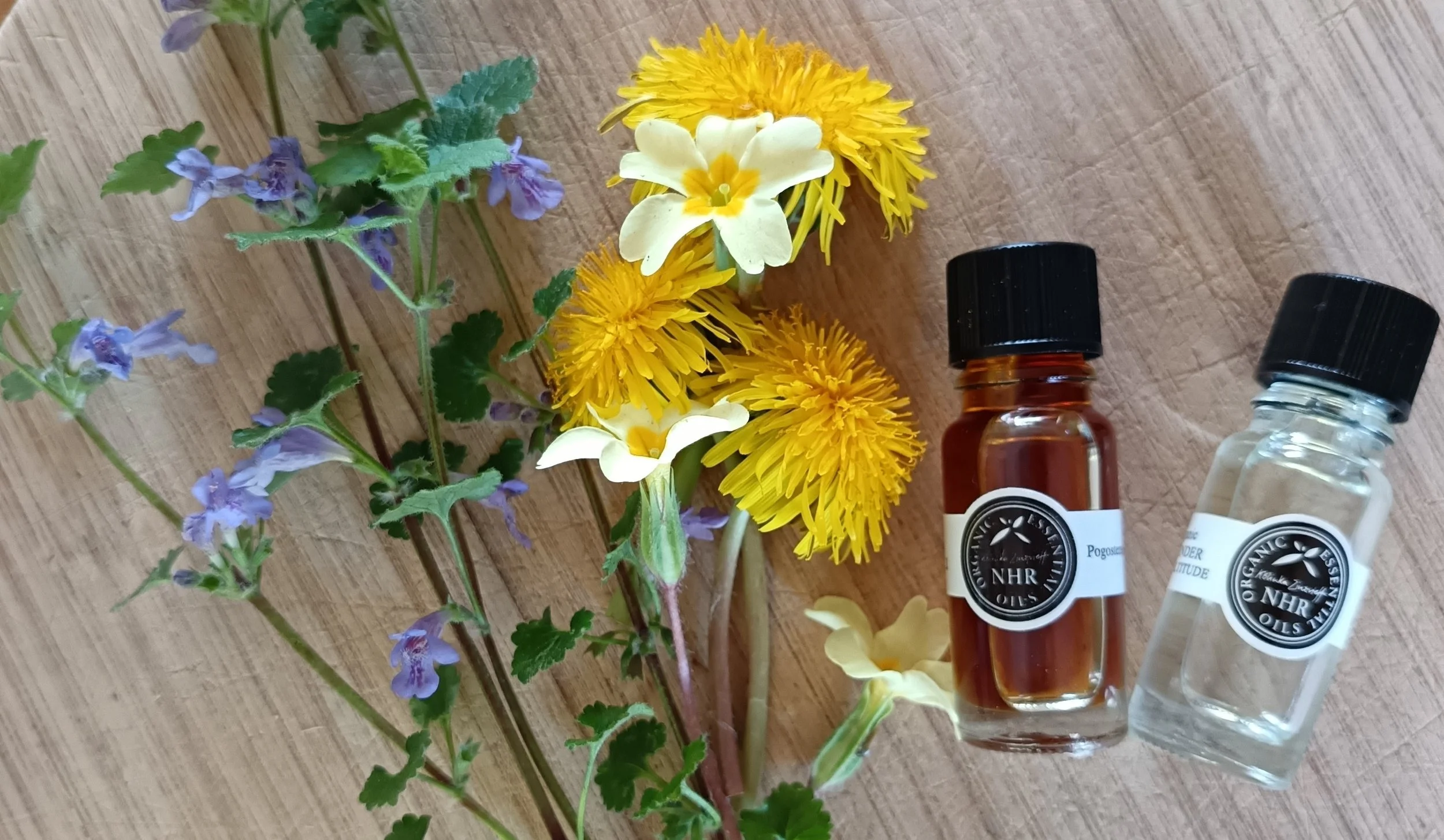
Image of two essential oils and wildflowers
For teachers, studio owners, and expectant mothers navigating the wonderful — and occasionally complicated — world of aromatherapy.
Pregnancy yoga is a sanctuary.
A rare hour where an expectant mother can slow down, breathe deeply, and feel genuinely at home in a body that seems to be changing by the day. As yoga teachers, we work hard to make that space feel nourishing — and for many of us, we naturally want to includes scent.
A diffuser humming in the corner, a drop of lavender on a cotton pad , a grounding blended rollerball offered as a gift. Aromatherapy and yoga feel like natural companions. But when it comes to pregnancy, the conversation around essential oils deserves a little more care than it typically gets.
This isn't a post about fear. It's about being informed, respectful of each student's unique situation, and confident in the choices you make as a teacher. If you are new to using essential oils with your yoga students, I’d highly recommend you read my Essential Oil Safety for Yoga Teachers: A Practical Guide Blog before starting your journey.
Why Pregnancy Requires Extra Care
Essential oils are highly concentrated plant extracts, potent enough that even a single drop can carry powerful chemical constituents that affect the body physically and emotionally. When inhaled or absorbed through the skin, those compounds enter the bloodstream, and during pregnancy, whatever enters the mother's bloodstream can reach the baby too.
During pregnancy, the body also shifts in ways that increase sensitivity across the board:
- Hormonal changes heighten smell sensitivity
- Nausea and migraines can be triggered more easily
- The skin may become more reactive
- The nervous system is more vulnerable to overstimulation
- Some oils may stimulate uterine activity or circulation
The first trimester carries the highest risk — organ systems are forming, and many midwives and aromatherapists recommend avoiding most oils entirely during this period and I agree with them, especially in a yoga class.
By the second and third trimesters, more options become available, but the principle of "less is more" always applies.
This doesn't mean all essential oils are unsafe in pregnancy. It means we need to use them more thoughtfully. When chosen well and used with restraint, gentle aromatics can beautifully support relaxation, emotional regulation, grounding, sleep, and nervous system balance.
The Golden Rule: Less Is More
One of the most common mistakes yoga teachers make is simply using too much essential oil.
Pregnant students often need extremely subtle aromatic support. In practice one drop on a cotton pad is more than sufficient, room diffusion should be minimal, and personal inhalation is often safer than filling the whole room with scent.
Oils Generally Considered Gentle During Pregnancy
While every student is different, the following oils are commonly regarded as milder and more appropriate for pregnancy yoga environments (2nd and 3rd trimester only) when used conservatively:
- Lavender (*Lavandula angustifolia*) — a classic choice for relaxation, nervous system support, and sleep. One of the most widely used and well-tolerated options.
- Sweet Orange — bright, uplifting, and emotionally comforting.
- Mandarin — gentle and calming with a nurturing quality.
- Frankincense — deeply grounding and centering; a natural companion for breathwork and meditation.
- Roman Chamomile — soft, soothing, and emotionally calming; well-suited to restorative classes.
- Bergamot — uplifting and anxiety-reducing.
- Sandalwood — grounding and calming; often used in meditation-focused practices.
Even with these oils, moderation matters. If you choose to make rollerballs for your students, dilutions in pregnancy aromatherapy are typically kept to 1% or lower (roughly 2 drops of essential oil per 10ml of carrier).
Oils Best Avoided in Pregnancy Yoga Spaces
Some essential oils are traditionally avoided during pregnancy due to their stimulating, hormonal, or potentially uterotonic effects. The following are commonly flagged:
- Clary Sage — a powerful uterine stimulant; sometimes used intentionally to encourage labour near term, but not appropriate in a general class setting.
- Rosemary — stimulating and potentially emmenagogic (stimulates blood flow to the uterus).
- Peppermint — particularly in high concentrations; also best avoided while breastfeeding as it may reduce milk supply.
- Cinnamon and Clove — skin irritants and potential uterine stimulants.
- Basil, Thyme, Oregano — high phenol content; they can be toxic and may cause adverse effects on fetal development .
- Fennel and Anise — contain oestrogen-mimicking compounds.
- Juniper Berry — traditionally used as an emmenagogue.
- Wintergreen — contains methyl salicylate, closely related to aspirin.
- Eucalyptus — best avoided in large amounts or applied to skin.
- Sage (common sage) — contains thujone, which can be neurotoxic in larger amounts.
- Mugwort, Pennyroyal, Tansy — significant risk; no place in a prenatal class.
This isn't an exhaustive list, and recommendations can vary depending on training and source material. When in doubt, keep the class environment simple and gentle.
How to Use Oils in a Pregnancy Yoga Class
1. Gentle Room Diffusion
If you choose to diffuse:
Use only 1–3 drops total
Ensure the room is well ventilated and windows can be opened
Avoid continuous diffusion throughout long classes
Position the diffuser near the door rather than at the front of the room
Always give students a heads-up and invite them to opt out
A subtle background aroma is all that's needed. You're creating an atmosphere, not a treatment.
2. Tissue or Cotton Pad Inhalation
This is my personal favourite method for pregnancy classes — and here's why.
The mums-to-be in your class will likely have a range of pregnancy-related side effects and conditions, and one oil simply won't work for them all. A student with morning sickness might find citrus uplifting while her neighbour finds it nauseating. Another student managing anxiety might love frankincense, while someone else finds it too heady. A single drop on a cotton pad lets you personalise the experience — offering each student the oil that's best suited to her and most likely to be appreciated, rather than filling the room with something that works beautifully for five people and is deeply unpleasant for a sixth.
Place a drop on a tissue, cotton pad, or personal inhaler stick and allow each student to choose whether they want to use it — and which oil feels right for them. This approach respects autonomy, sidesteps the challenge of heightened or unpredictable scent sensitivity, and means no one is ever exposed to something they didn't choose.
Always Prioritise Consent
Not every pregnant student wants aromatics in class. Some may be experiencing heightened smell sensitivity, morning sickness, migraines, anxiety around fragrance, or have allergies or asthma. Any of these can make even a "safe" oil feel deeply uncomfortable.
Normalise opting out from before the very first class. Ask your students to complete a pre-class questionnaire. Mention that you use essential oils, give them the option to opt out, or let you know if they have any likes and dislikes.
On the same form also ask about their pregnancy symptoms. Get this information in advance of your class as it’s invaluabel to help you plan.
Then in class you might open with something like:
"I'll be using a very gentle lavender diffusion today — but please do let me know if you'd prefer no scent near your space, and I'm happy to switch it off."
That one sentence can make a significant difference to how safe and supported a student feels.
Staying Within Your Scope
As yoga teachers, you are not aromatherapists or healthcare providers. Your role is to create a nurturing, informed environment where students can enjoy the benefits of gentle aroma without unnecessary risk — not to diagnose, treat, or prescribe.
This means being mindful of the language you use. Avoid claims like "this oil induces labour," "this prevents nausea," or "this treats anxiety." Instead, reach for softer framing: "this aroma may support relaxation," or "many people find this grounding." The distinction matters — both for your students' safety and for your own professional integrity.
Your students' midwives and obstetricians are always the right people to turn to for clinical guidance. Encourage students who want to use oils more intentionally at home to seek out a qualified aromatherapist — ideally one with specific training in pregnancy. Organisations like the International Federation of Professional Aromatherapists (IFPA) can help point them in the right direction.
Note on "Natural" and "Safe"
One of the most persistent misconceptions in the wellness world is that natural equals harmless. Essential oils are highly concentrated plant compounds — far more potent than the plant itself. The same properties that make lavender calming or clary sage hormonally active don't disappear just because something comes from a flower.
This isn't a reason to avoid essential oils. It's a reason to respect them.
Simplicity Is the Point
Pregnancy yoga is not about creating an elaborate sensory experience. The most supportive class environments are often the simplest. A calm teacher, a grounded presence, gentle breathwork, and a subtle aroma — or no aroma at all — can be far more effective than an overpowering blend of competing scents.
Many experienced prenatal yoga teachers choose to run dedicated pregnancy classes without any diffused oils at all, leaning instead into sound, touch, breath, and the warmth of bolsters and blankets. The oils, when they're there, are an addition — never the foundation.
In Summary
- The first trimester is the highest-risk period; use nothing.
- Always ask students about pregnancy and scent sensitivities before class.
- Use the minimum effective amount — one drop on a cotton pad in a well-ventilated room is often enough.
- Lavender, frankincense, chamomile, and gentle citruses are the most widely accepted safe options for prenatal settings.
- Make opting out easy, normal, and clearly offered every class.
- Stay within your scope: support, don't treat.
When used with mindfulness and restraint, essential oils can be a beautiful part of pregnancy yoga. The goal is never to overwhelm or "treat," but to gently support comfort, calm, and emotional ease. Subtlety, in this context, really is the most powerful medicine.
Want to go deeper?
If this blog has sparked your curiosity and you'd love to feel truly confident using essential oils in your yoga teaching — not just in pregnancy classes, but across all your classes, workshops and retreats — my on-demand Essential Oils for Yoga Teachers CPD was made for you.
This 7-hour online training, recognised by Yoga Alliance UK and registerable as YACEP hours, covers everything from safety and contraindications to sequencing scent-led classes, understanding how oils influence mood and the nervous system, and building themed experiences your students will remember.
It's self-paced, with lifetime access — so you can learn in your own time and return to it whenever you need a refresher.
👉 Find out more about Essential Oils for Yoga Teachers CPD
This post is for general information purposes and does not constitute medical or clinical aromatherapy advice. Always encourage students to consult their midwife, obstetrician, or a qualified aromatherapist for personalised guidance.
Chakra Yoga Series: Part 7, Crown Chakra
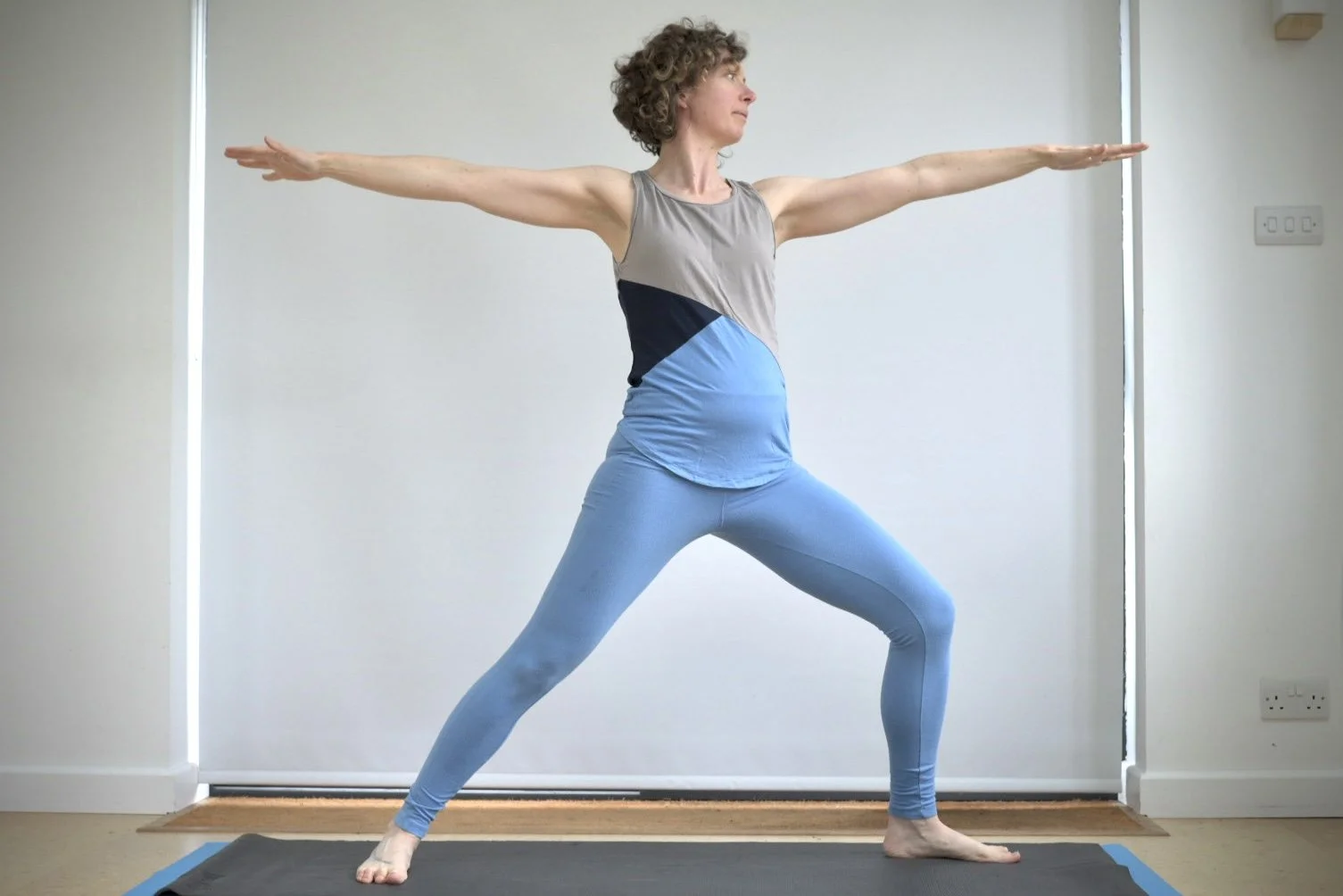
Yoga Teacher in Warri II pose
As we arrived at the final week of our journey through the chakras, we reached the Crown Chakra, Sahasrara. And yet, in many ways, this is not an ending at all, but a beginning.
Going deeper into stillness
This week we continued in the same direction as our exploration of the Third Eye Chakra, moving further into stillness. We softened mental chatter, created space, and allowed ourselves time to reconnect, not only to our intuition, but to a wider sense of awareness and connection to all living things.
To support this journey, we began back at the Root Chakra. In many ways, the Crown Chakra invites us to reflect on the entire chakra system. When the chakras are balanced, we begin to feel both an inner steadiness and an outer connection to something greater than ourselves.
Root to rise
“Root to rise” is a familiar phrase in yoga, but this week it truly came alive in our practice.
We began with grounding, pelvis-focused movements, building awareness from the base upwards. As the weeks have unfolded, I’ve found myself offering fewer verbal cues, one of the joys of working with the same students over time. With less instruction, there is more space for students to feel, explore, and trust their own experience.
Our connection to the earth felt strong and steady. We moved through:
Bridge Pose
Flowing Cat–Cow
Mountain Pose
Dolphin Pose
Warrior II
Extended Side Angle
Eagle Pose
As with our Third Eye practice, we returned again and again to our Drishti, our focused gaze. The energy in each class felt calm and grounded, yet quietly powerful—soft, steady, and deeply present. The stillness of mind was something you could almost feel in the room.
Essential oils
We began the practice with Elemi essential oil, a resin-based middle note known for its grounding and regulating effect on the nervous system. It helps to ease stress, clear the mind, and support clarity and focus. It was exactly what was needed as we settled into practice.
We closed with Frankincense essential oil, an oil long associated with spiritual connection, tranquility, and contemplation. Its deeply calming effect on both body and mind made it the perfect companion for our final meditation and savasana.
Mudra and mantra
This week we explored Atmanjali Mudra, often described as a gesture of greeting the self. It carries a quiet sense of reverence and inner acknowledgement.
We paired this with the mantra:
“Tranquillity and inner wisdom characterise my life.”
Throughout the practice, we also worked with the awareness:
“I am the observer of my thoughts and do not let them bring me down.”
And in meditation:
“In the silence, I am open to receive without asking and without expectation. In the silence, I will see and hear the truth.”
Where next?
As I reflect on this journey through the chakras, I feel a strong pull to continue exploring this work more deeply with my students. Rather than keeping each chakra separate, it feels like the right time to begin weaving them together, as they are naturally intended to be.
So next week, we’ll begin a new chapter: a journey through all seven chakras as one integrated practice. It feels exciting, expansive, and full of possibility.
Exploring each chakra individually has been a fascinating experience, both for me as a teacher and for my students. Many have shared how much they’ve enjoyed the process: taking their practice to a deeper level, exploring something new, and stepping beyond their comfort zones with curiosity and openness.
I hope this journey has inspired you to explore the chakras for yourself. And if you’re a yoga teacher, perhaps it might encourage you to create your own Chakra Yoga series. If you do, I would truly love to hear about your experience.
Thank you so much for reading, and I hope to see you back here again soon.
If you’ve enjoyed following this Chakra Yoga journey and feel called to explore it more deeply, you’re so welcome to join me.
I offer regular yoga classes, workshops, retreats and CPD training for yoga teachers who want to integrate essential oils into their teaching in a safe and meaningful way.
👉 Get in touch, I’d love to hear from you heather@deavilleyoga.com
Sources and Inspiration
The themes explored in this class were informed by my own knowledge of traditional yoga philosophy and practice. My experience as a professional aromatherapist and inspiration from:
Anodea Judith’s Chakra Yoga, published by Llewellyn Books
Aromatherapy for healing the spirit, Gabriel Mojay, published by Healing Arts Press
Mudras for Body, Mind & Spirit by Gertrud Hirschi, published by Tarotdeck
The Power of the Chakra’s, Fiona Toy, published by Hinkler
These sources often inform the framework I use when designing themed yoga classes that integrate movement, breath, subtle energy and essential oils.
The Chakra Yoga series:
You can explore the whole series so far by following these links to my chakra yoga blogs for each one:
Week One: The Root Chakra
Week Two: The Sacral Chakra
Week Three: The Solar Plexus Chakra
Week Four: The Heart Chakra
Week Five: The Throat Chakra
Week Six: The Third Eye Chakra
Week Seven: You’re here
Chakra Yoga Series: Part 6, Third Eye Chakra
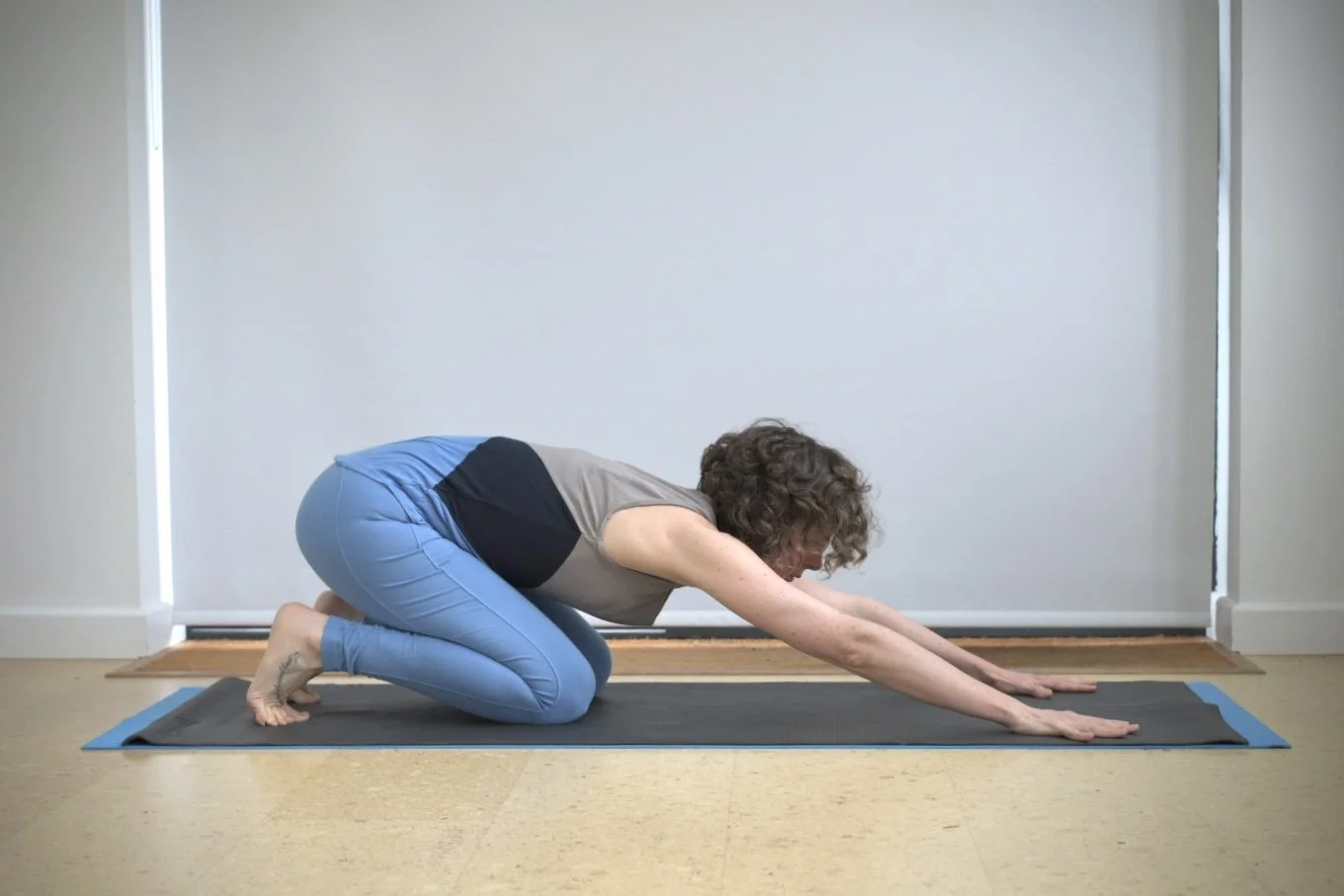
Yoga teacher making her way to Puppy Pose
As we reach week 6 of our Chakra Yoga journey, I can feel the energy settling into a quieter, more meditative space. Having moved through more outward-facing energetic themes, our attention now turns inward to the Third Eye Chakra, Ajna. This practice invites us to trust our intuition and listen deeply to our inner wisdom.
Focus on our focus
In this week’s classes, we worked with both our internal and external gaze. This simple shift helped to quiet the mind and deepen our ability to listen to ourselves.
In yoga, this focused gaze is known as our Drishti. We gently anchor our awareness to a single point, allowing the eyes to be steady yet soft. This steadiness supports us in balance postures and encourages a calmer, more settled mind in stillness.
The inner eye
The Third Eye Chakra is considered the seat of intuition. Located just above and between the eyebrows (and slightly deeper within the centre of the head), it is often described as a form of inner knowing and connecting to a higher, more spiritual realm.
Like the Heart Chakra, its guidance is clearest when we pause long enough to truly listen. This week we explored that space by slowing the breath and visualising calm, expansive imagery, spaces that felt vast, open and still.
One image that resonated strongly was standing at the edge of the ocean, watching sunlight dance across the water. In teaching, I also chose to speak less at times, allowing more silence for students to fully inhabit their practice.
The physical practice
Our asana practice supported this inward focus through postures that encouraged steadiness, space and awareness:
Extended Puppy Pose
Warrior III
Revolved Side Angle Pose
Downward Facing Dog
Each shape offered an opportunity to return to the breath and gently refine attention.
Mudra and mantra
This week I really enjoyed sharing Shankh Mudra (Shell Mudra) with students. In this mudra, the fingers interlace to form a shape reminiscent of a conch shell, symbolising the connection between outer expression and inner truth.
It is said to support inner listening and deepen connection to intuitive knowing. The right thumb is gently held, representing the “pearl of wisdom” protected within.
We closed with the affirmation:
“I trust my instincts and follow their guidance.”
Essential oils for the Third Eye
We began our practice this week with Clary Sage essential oil. This oil supports reconnection with intuition, helping to clear the mind and leaving us feeling revitalised and re-inspired.
We closed the practice with Amyris essential oil, a gently uplifting oil that helps calm and clear the mind while supporting a quiet sense of wellbeing and inner ease.
Join me for a class, workshop or CPD training
My joy is in sharing my two great passions—yoga and aromatherapy—and I would love to have you join me on this journey.
I teach yoga classes in Sussex, run yoga workshops, and Yoga retreats across Sussex and Kent.
I am also blessed to have a wonderful community of yoga teachers who have completed my Essential Oils for Yoga Teachers CPD training. They are passionate about learning how to safely and meaningfully incorporate essential oils into their classes and workshops.
Next week
Next week we’ll journey up the Sushumna Nadi to the Crown Chakra, Sahasrara, building on our exploration of inner knowing while gently expanding into our connection with the world around us and the divine.
Sources and inspiration
The themes explored in this class were informed by my own knowledge of traditional yoga philosophy and aromatherapy, as well as inspiration from:
Chakra Yoga by Anodea Judith (Llewellyn Publications)
Aromatherapy for Healing the Spirit by Gabriel Mojay (Healing Arts Press)
Mudras for Body, Mind & Spirit by Gertrud Hirschi (Findhorn Press)
These sources often inform the framework I use when designing themed yoga classes that integrate movement, breath, subtle energy and essential oils.
The Chakra Yoga series
You can explore the full series so far below:
Week One: The Root Chakra
Week Two: The Sacral Chakra
Week Three: The Solar Plexus Chakra
Week Four: The Heart Chakra
Week Five: The Throat Chakra
Week Six: You’re already here!
Week Seven: Coming April 24th 2026