
Breathing With Care: A Guide to Essential Oils in Pregnancy Yoga
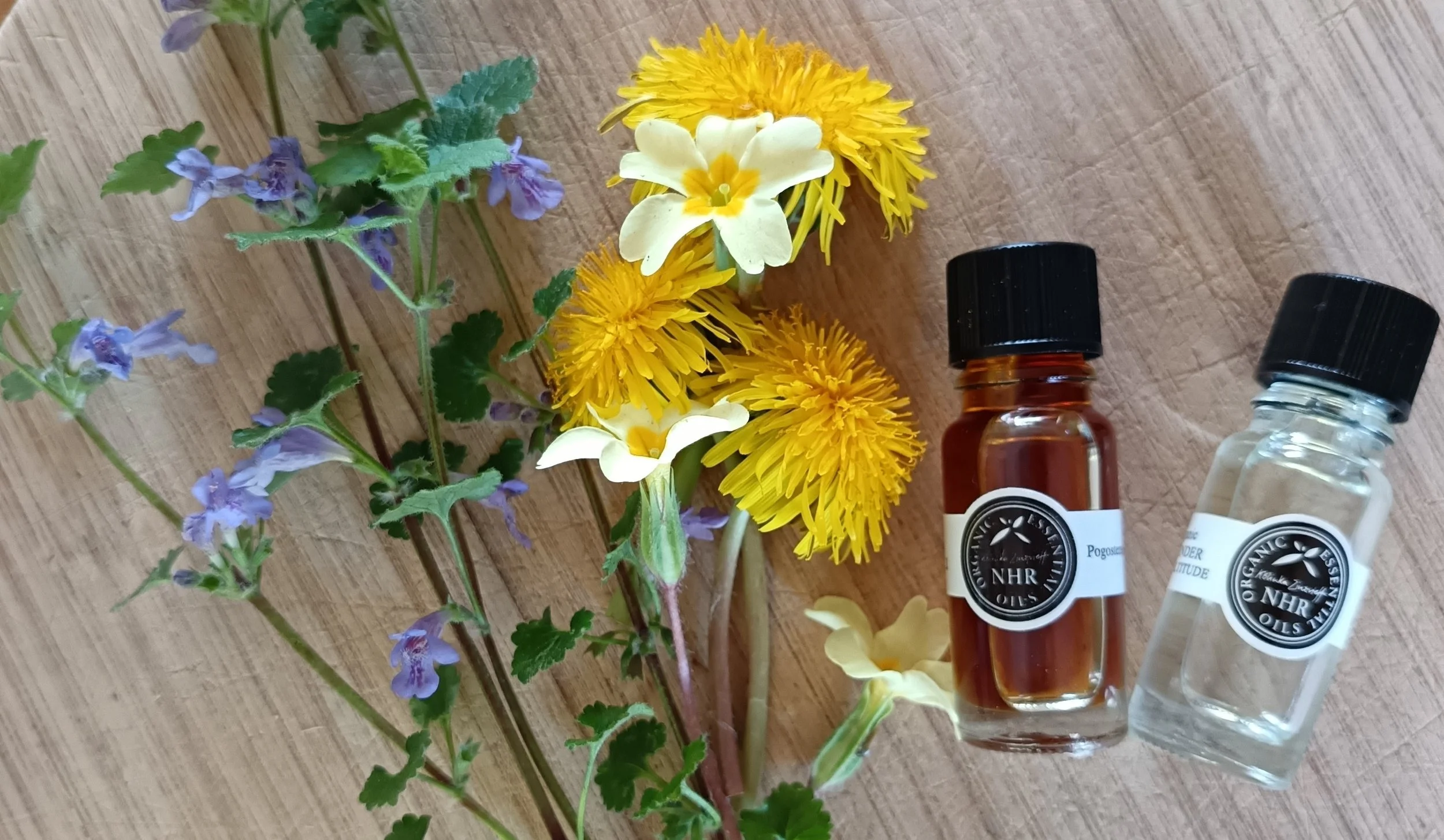
Image of two essential oils and wildflowers
For teachers, studio owners, and expectant mothers navigating the wonderful — and occasionally complicated — world of aromatherapy.
Pregnancy yoga is a sanctuary.
A rare hour where an expectant mother can slow down, breathe deeply, and feel genuinely at home in a body that seems to be changing by the day. As yoga teachers, we work hard to make that space feel nourishing — and for many of us, we naturally want to includes scent.
A diffuser humming in the corner, a drop of lavender on a cotton pad , a grounding blended rollerball offered as a gift. Aromatherapy and yoga feel like natural companions. But when it comes to pregnancy, the conversation around essential oils deserves a little more care than it typically gets.
This isn't a post about fear. It's about being informed, respectful of each student's unique situation, and confident in the choices you make as a teacher. If you are new to using essential oils with your yoga students, I’d highly recommend you read my Essential Oil Safety for Yoga Teachers: A Practical Guide Blog before starting your journey.
Why Pregnancy Requires Extra Care
Essential oils are highly concentrated plant extracts, potent enough that even a single drop can carry powerful chemical constituents that affect the body physically and emotionally. When inhaled or absorbed through the skin, those compounds enter the bloodstream, and during pregnancy, whatever enters the mother's bloodstream can reach the baby too.
During pregnancy, the body also shifts in ways that increase sensitivity across the board:
- Hormonal changes heighten smell sensitivity
- Nausea and migraines can be triggered more easily
- The skin may become more reactive
- The nervous system is more vulnerable to overstimulation
- Some oils may stimulate uterine activity or circulation
The first trimester carries the highest risk — organ systems are forming, and many midwives and aromatherapists recommend avoiding most oils entirely during this period and I agree with them, especially in a yoga class.
By the second and third trimesters, more options become available, but the principle of "less is more" always applies.
This doesn't mean all essential oils are unsafe in pregnancy. It means we need to use them more thoughtfully. When chosen well and used with restraint, gentle aromatics can beautifully support relaxation, emotional regulation, grounding, sleep, and nervous system balance.
The Golden Rule: Less Is More
One of the most common mistakes yoga teachers make is simply using too much essential oil.
Pregnant students often need extremely subtle aromatic support. In practice one drop on a cotton pad is more than sufficient, room diffusion should be minimal, and personal inhalation is often safer than filling the whole room with scent.
Oils Generally Considered Gentle During Pregnancy
While every student is different, the following oils are commonly regarded as milder and more appropriate for pregnancy yoga environments (2nd and 3rd trimester only) when used conservatively:
- Lavender (*Lavandula angustifolia*) — a classic choice for relaxation, nervous system support, and sleep. One of the most widely used and well-tolerated options.
- Sweet Orange — bright, uplifting, and emotionally comforting.
- Mandarin — gentle and calming with a nurturing quality.
- Frankincense — deeply grounding and centering; a natural companion for breathwork and meditation.
- Roman Chamomile — soft, soothing, and emotionally calming; well-suited to restorative classes.
- Bergamot — uplifting and anxiety-reducing.
- Sandalwood — grounding and calming; often used in meditation-focused practices.
Even with these oils, moderation matters. If you choose to make rollerballs for your students, dilutions in pregnancy aromatherapy are typically kept to 1% or lower (roughly 2 drops of essential oil per 10ml of carrier).
Oils Best Avoided in Pregnancy Yoga Spaces
Some essential oils are traditionally avoided during pregnancy due to their stimulating, hormonal, or potentially uterotonic effects. The following are commonly flagged:
- Clary Sage — a powerful uterine stimulant; sometimes used intentionally to encourage labour near term, but not appropriate in a general class setting.
- Rosemary — stimulating and potentially emmenagogic (stimulates blood flow to the uterus).
- Peppermint — particularly in high concentrations; also best avoided while breastfeeding as it may reduce milk supply.
- Cinnamon and Clove — skin irritants and potential uterine stimulants.
- Basil, Thyme, Oregano — high phenol content; they can be toxic and may cause adverse effects on fetal development .
- Fennel and Anise — contain oestrogen-mimicking compounds.
- Juniper Berry — traditionally used as an emmenagogue.
- Wintergreen — contains methyl salicylate, closely related to aspirin.
- Eucalyptus — best avoided in large amounts or applied to skin.
- Sage (common sage) — contains thujone, which can be neurotoxic in larger amounts.
- Mugwort, Pennyroyal, Tansy — significant risk; no place in a prenatal class.
This isn't an exhaustive list, and recommendations can vary depending on training and source material. When in doubt, keep the class environment simple and gentle.
How to Use Oils in a Pregnancy Yoga Class
1. Gentle Room Diffusion
If you choose to diffuse:
Use only 1–3 drops total
Ensure the room is well ventilated and windows can be opened
Avoid continuous diffusion throughout long classes
Position the diffuser near the door rather than at the front of the room
Always give students a heads-up and invite them to opt out
A subtle background aroma is all that's needed. You're creating an atmosphere, not a treatment.
2. Tissue or Cotton Pad Inhalation
This is my personal favourite method for pregnancy classes — and here's why.
The mums-to-be in your class will likely have a range of pregnancy-related side effects and conditions, and one oil simply won't work for them all. A student with morning sickness might find citrus uplifting while her neighbour finds it nauseating. Another student managing anxiety might love frankincense, while someone else finds it too heady. A single drop on a cotton pad lets you personalise the experience — offering each student the oil that's best suited to her and most likely to be appreciated, rather than filling the room with something that works beautifully for five people and is deeply unpleasant for a sixth.
Place a drop on a tissue, cotton pad, or personal inhaler stick and allow each student to choose whether they want to use it — and which oil feels right for them. This approach respects autonomy, sidesteps the challenge of heightened or unpredictable scent sensitivity, and means no one is ever exposed to something they didn't choose.
Always Prioritise Consent
Not every pregnant student wants aromatics in class. Some may be experiencing heightened smell sensitivity, morning sickness, migraines, anxiety around fragrance, or have allergies or asthma. Any of these can make even a "safe" oil feel deeply uncomfortable.
Normalise opting out from before the very first class. Ask your students to complete a pre-class questionnaire. Mention that you use essential oils, give them the option to opt out, or let you know if they have any likes and dislikes.
On the same form also ask about their pregnancy symptoms. Get this information in advance of your class as it’s invaluabel to help you plan.
Then in class you might open with something like:
"I'll be using a very gentle lavender diffusion today — but please do let me know if you'd prefer no scent near your space, and I'm happy to switch it off."
That one sentence can make a significant difference to how safe and supported a student feels.
Staying Within Your Scope
As yoga teachers, you are not aromatherapists or healthcare providers. Your role is to create a nurturing, informed environment where students can enjoy the benefits of gentle aroma without unnecessary risk — not to diagnose, treat, or prescribe.
This means being mindful of the language you use. Avoid claims like "this oil induces labour," "this prevents nausea," or "this treats anxiety." Instead, reach for softer framing: "this aroma may support relaxation," or "many people find this grounding." The distinction matters — both for your students' safety and for your own professional integrity.
Your students' midwives and obstetricians are always the right people to turn to for clinical guidance. Encourage students who want to use oils more intentionally at home to seek out a qualified aromatherapist — ideally one with specific training in pregnancy. Organisations like the International Federation of Professional Aromatherapists (IFPA) can help point them in the right direction.
Note on "Natural" and "Safe"
One of the most persistent misconceptions in the wellness world is that natural equals harmless. Essential oils are highly concentrated plant compounds — far more potent than the plant itself. The same properties that make lavender calming or clary sage hormonally active don't disappear just because something comes from a flower.
This isn't a reason to avoid essential oils. It's a reason to respect them.
Simplicity Is the Point
Pregnancy yoga is not about creating an elaborate sensory experience. The most supportive class environments are often the simplest. A calm teacher, a grounded presence, gentle breathwork, and a subtle aroma — or no aroma at all — can be far more effective than an overpowering blend of competing scents.
Many experienced prenatal yoga teachers choose to run dedicated pregnancy classes without any diffused oils at all, leaning instead into sound, touch, breath, and the warmth of bolsters and blankets. The oils, when they're there, are an addition — never the foundation.
In Summary
- The first trimester is the highest-risk period; use nothing.
- Always ask students about pregnancy and scent sensitivities before class.
- Use the minimum effective amount — one drop on a cotton pad in a well-ventilated room is often enough.
- Lavender, frankincense, chamomile, and gentle citruses are the most widely accepted safe options for prenatal settings.
- Make opting out easy, normal, and clearly offered every class.
- Stay within your scope: support, don't treat.
When used with mindfulness and restraint, essential oils can be a beautiful part of pregnancy yoga. The goal is never to overwhelm or "treat," but to gently support comfort, calm, and emotional ease. Subtlety, in this context, really is the most powerful medicine.
Want to go deeper?
If this blog has sparked your curiosity and you'd love to feel truly confident using essential oils in your yoga teaching — not just in pregnancy classes, but across all your classes, workshops and retreats — my on-demand Essential Oils for Yoga Teachers CPD was made for you.
This 7-hour online training, recognised by Yoga Alliance UK and registerable as YACEP hours, covers everything from safety and contraindications to sequencing scent-led classes, understanding how oils influence mood and the nervous system, and building themed experiences your students will remember.
It's self-paced, with lifetime access — so you can learn in your own time and return to it whenever you need a refresher.
👉 Find out more about Essential Oils for Yoga Teachers CPD
This post is for general information purposes and does not constitute medical or clinical aromatherapy advice. Always encourage students to consult their midwife, obstetrician, or a qualified aromatherapist for personalised guidance.