Chakra Yoga Series Part 1: Root Chakra
Grounding isn’t about holding yourself rigid.
It’s about softening into strength.
This week in our root chakra practice, we explored steadiness through strong standing postures, slower breath and a felt sense of support beneath us.
Returning to the Root: Exploring Grounded Presence in This Week’s Yoga Classes
This week in class, we slowed down.
Not because we were tired, not because we needed less, but to explore the root chakra, to reconnect to the earth and explore the power of this chakra in helping us step away from our thoughts, our to-do lists, and the constant forward pull of life.
We came back to the ground.
We explored the root chakra — Muladhara — the energetic centre associated with safety, stability and belonging. Located at the base of the spine and connected to the element of earth, it governs our sense of being supported, physically, emotionally and energetically. It’s associated with the colour red and is represented by a lotus flour with four petals.
And perhaps more importantly, it influences how safe our nervous system feels in the present moment.
Ground Before You Grow
There’s a quiet wisdom in starting at the root.
In yoga, we often speak of expansion — opening the heart, awakening insight, rising into expression. But growth without grounding can feel unsteady.
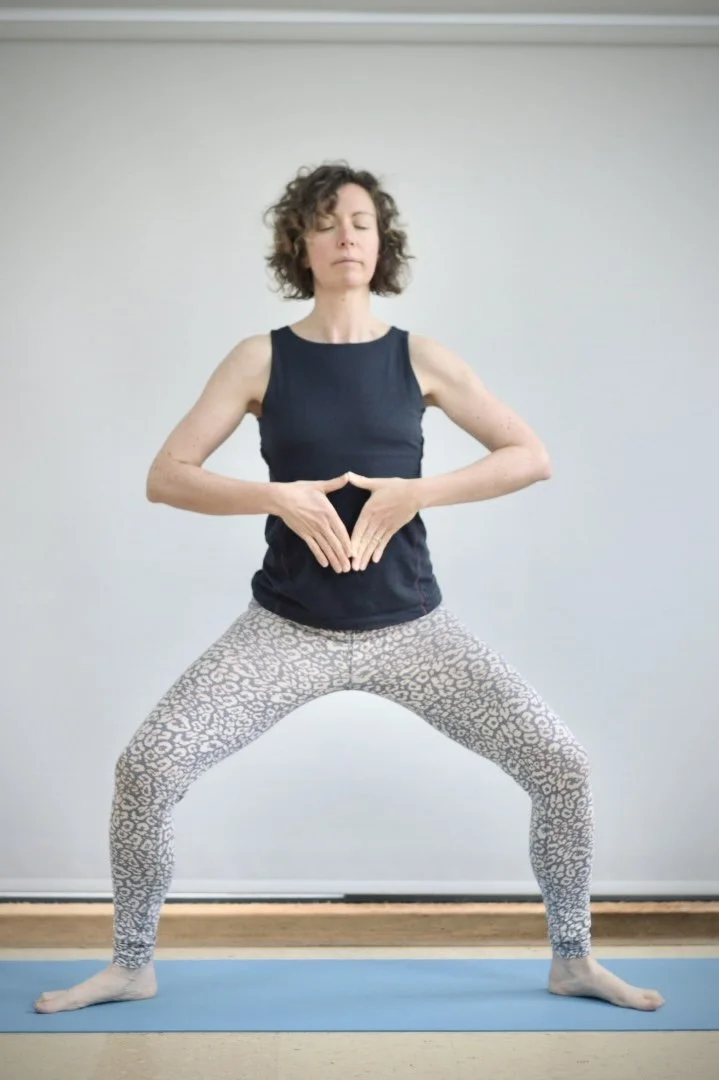
This week, we prioritised steadiness. We started at the pelvis, connecting to our root chakra with our pranayama (breath) our minds through visualization's and physical through our movement. In standing we pressed firmly through the feet, allowing the upper body to be soft and flowing, whilst the lower body was string and connected.
Simple things. Foundational things.
And yet they shift so much.
Safety Is a Felt Sense
When we focus on grounding practices, we are sending subtle cues of safety to the body.
The nervous system responds to rhythm, pressure, containment and connection to the earth. Longer exhales gently stimulate the parasympathetic response. Strong, steady postures build a quiet resilience.
In a world that constantly pulls our attention upward and outward, rooting down allows us to reconnect to what matters.
Working with the Earth Through Aroma
Alongside the physical practice, we also worked subtly with scent in my Tuesday Morning Ditchling class and post Wednesday evenings flow yoga.
Earthy essential oils can deepen the experience of grounding, offering an anchor through the breath. This week we explored vetiver and patchouli — both traditionally associated with root energy.
Vetiver has a deep, smoky, almost ancient aroma. It settles quickly in the body, centres and connects us to mother earth — calming, nourishing, relaxing the body and mind. Many people describe it as feeling like a weighted blanket for the nervous system, it’s also known as the King of Sleep!
Patchouli carries a warm, earthy scent that brings awareness back to the physical body. It can be especially supportive when we feel scattered or disconnected, gently grounding and stabalising the mind when overthinking and worry develop.
Used lightly and intentionally, scent becomes another pathway back to presence — not overpowering, simply supportive.
A Small Grounding Ritual You Can Try
If you’d like to work with root energy at home, try this:
Stand with your feet hip-width apart.
Soften your knees slightly.
Scrunch and release your toes three times.
Imagine roots growing from the soles of your feet into the earth beneath you.
Take five slow breaths.
Let your exhale be longer than your inhale.
If you have vetiver or patchouli to hand, place a drop on a cotton pad or in a diffuser and allow the aroma to accompany your breath.
Notice what shifts.
Building Upwards: Next Week’s Theme
Having established steadiness at the root, next week we gently begin to move upward.
We’ll explore the sacral chakra — Svadhisthana— the centre of fluidity, creativity and emotional expression.
If the root asks, “Am I safe?”
The sacral chakra asks, “Can I feel?”
Our practice will soften, spiral and flow a little more. We’ll work with the element of water, inviting mobility into the hips and space into the lower belly. Where this week was about steadiness and containment, next week will be about permission — to move, to feel, to explore.
If you’ve been feeling unsteady, overwhelmed or disconnected from your body, this kind of themed, intentional practice can be profoundly regulating.
You don’t need to understand chakras to benefit. You simply need a willingness to arrive as you are and take from each practice what works for you.
And you are always welcome.
I run yoga classes and retreats across Sussex and Kent, blending my passion for yoga and aromatherapy to support you through life.
The Chakra Yoga series:
You can explore the whole series so far by following these links to my chakra yoga blogs for each one:
Week One: You’re already here
Week Two: The Sacral Chakra
Week Three: The Solar Plexus Chakra
Week Four: The Heart Chakra
Week Five: The Throat Chakra
Week Six: The Third Eye Chakra
Week Seven: The Crown Chakra - Coming 24th April

Finding Joy in the day to day
Finding joy in the day to day. Where exactly do we start?
Firstly joy doesn’t have to be all singing , all dancing, explosive moments of WOW. Joy can be found by simply enjoying life’s little pleasures, by making them special for you.
If coffee brings you joy, make it well, savour it.
if running brings you joy, grab your trainers and go go go.
If drawing floats your boat, grab a pencil and paper and spend 15 minutes every day letting it flow.
Whatever appeals to you, do it as much as you can.
Here’s a snapshot of how I find joy in my day today life. I hope it inspires you to do the same.
Hot lemon and ginger in the garden with 15min of gentle movement to ease into my day.
Breakfast with my family.
A walk in nature, even better if this is with a friend.
Good conversation to inspire my soul, or make me giggle.
Water, nuts, dark chocolate and fruit. What can I say, I’m a snacker, these three are my favourite combo.
Something to inspire me - this could be work I’m passionate about, a great book or learning something new.
Lunch in the garden, surrounded by the trees, birds, bugs and weeds.
Rest. Yoga Nidra every day, 10 - 20 minutes of deep rest for my body, mind and soul.
Cuddles with my kids, reading to them and some play too.
Meditation before bed, acupressure points, essential oils, a good book.
I don’t do all of these everyday, but I do try my best too. I’ve added in this little moments of joy and self care over the last 3 years, one at a time.
Why don’t you find something that resonates with you and start adding it into your day? Do it now, don’t overthink it, stick with it and in a months time you’ll have created a new habit which helps you feel more joyful day to day.
Lets grow Happier, Older and Wiser together ladies.
Let me know how you get on.
With love and best wishes, Heather*

Step into you Peri Power
7 ways I stepped into my power during my perimenopausal years and how you can too.
Question.
What if all the symptoms you’re experiencing during your perimenopausal years are a sign, a signal, an offering from the universe to take a look at your life and make a change?
You might be thinking, crippling anxiety, painful breasts, heart palpitations and rage don’t feel like a calling Heather.
Stay with me.
This could be your bodies way of saying it’s time to look after yourself more. And that rage? Maybe it’s your power. Maybe the anxiety is telling you that there are elements of your life that must change, again, your power. Now is the time to listen to your body, listen to your heart and make those changes, step into your power.
But what exactly does that look like? We’ll it’s different for all of us. So I’ll share what it looked like for me.
Firstly it meant learning about perimenopause. I trained with Sally Parkes and Rachel Boon in Menoyoga®. This was ground breaking for me. I learnt so much about what was going on in my body and what I could do physically and in terms of the food I consumed to help myself.
Secondly it meant reading, almost everything I could find on this subject. From personal stories, to books about HRT, the brain and those which took a much more spiritual approach to this life transition. I read it all. Some books made me cry, some made me so angry and others I just put about 1000 sticky notes in. My top perimenopause books and why — Deaville Yoga
Thirdly I taught, I shared and I connected with a wonderful group of women to support them through their perimenopause journey’s . And trust me when I say, their support taught me so much too.
Then came action, me stepping into my power.
I started saying no to things. If it wasn’t a full bodies yes, it was a no. I needed to rest, do what I loved and keep my energy for myself and my family.
I started tracking my period and my moods and symptoms (there’s loads of aps out there you can do this with) and this was great because I saw patterns and could plan my work/life around that (mostly, you know the perimenopause eh!)
I stopped drinking, first alcohol, then caffeine. If this is something you’re toying with check out this podcast: What Alcohol Does to Your Body, Brain & Health - Huberman Lab
I tried HRT. Unfortunately it didn’t work for me. My body reacted badly and I had to stop, but I’m glad I tried it as I’ve seen it help so many women Hormone replacement therapy (HRT) - NHS
I started to grow my rest practice, using 20 minute yoga nidra’s daily to get some real deep rest: Yoga Nidra 22min | Guided Relaxation Meditation - YouTube
And I read a lot of books around happiness, which has lead to a deep interest in Buddhism and meditation.
And I always came back to my yoga practice, trying each time to make it what I needed. Sometimes gentle, sometime transformative, sometimes silly and sometimes all about stepping into my power as a perimenopausal queen. Yoga for Perimenopause Power | 15 min Class - YouTube
You’re journey will be different from mine, but I hope that in sharing mine yours will be easier.
Lets grow Happier, Older and Wiser together ladies.
Love and hugs as always, Heather*
6 Essential Oils for Hormone Balance & Emotional Support in Yoga Classes
6 Essential Oils Yoga Teachers Can Use for Hormone & Mood Support in classses.
6 Essential Oils Yoga Teachers Can Use for Hormone & Mood Support
As a yoga teacher and aromatherapist, I’m a big believer in taking a holistic approach to the different stages of a woman’s life. Hormonal shifts, whether during perimenopause, times of stress, or emotional transition, can affect sleep, mood, energy and focus.
One gentle and powerful way to offer support in your yoga practice or classes is through essential oils.
If you’re a yoga teacher wanting to incorporate aromatherapy safely into your classes, this guide will introduce six beautiful oils that can support hormone balance, emotional wellbeing and nervous system regulation.
Essential Oil Safety for Yoga Teachers (read full advice here)
Before using essential oils in yoga classes, safety is essential.
Do not take essential oils internally.
Do not apply oils neat to the skin — always dilute in a carrier oil (sweet almond oil is ideal; even rapeseed oil works).
Check contraindications for each oil.
If you or your students are on medication, advise them to consult their GP before use.
The safest and most accessible way to use essential oils in yoga classes is aromatically through inhalation.
Simple methods include:
One drop on a cotton pad for individual use
Personal inhalers
Diffusing oils in a well-ventilated space
Inhalation allows the aromatic compounds to interact directly with the limbic system of the brain, having an immediate impact on our bodies, minds and souls.
1. Bergamot – For Uplifting Low Mood
Bergamot is a beautiful citrus oil that feels both uplifting and gently energising.
It’s ideal for:
Low mood
Fatigue
Emotional heaviness
In a yoga class, bergamot works beautifully at the beginning of practice to shift stagnant energy and create lightness in the room.
2. Rose – For Self-Compassion
Rose is often called the oil of self-love.
During hormonal transitions, many women feel disconnected from themselves. Rose supports heart opening, compassion and emotional processing.
This oil pairs beautifully with:
Women’s circles
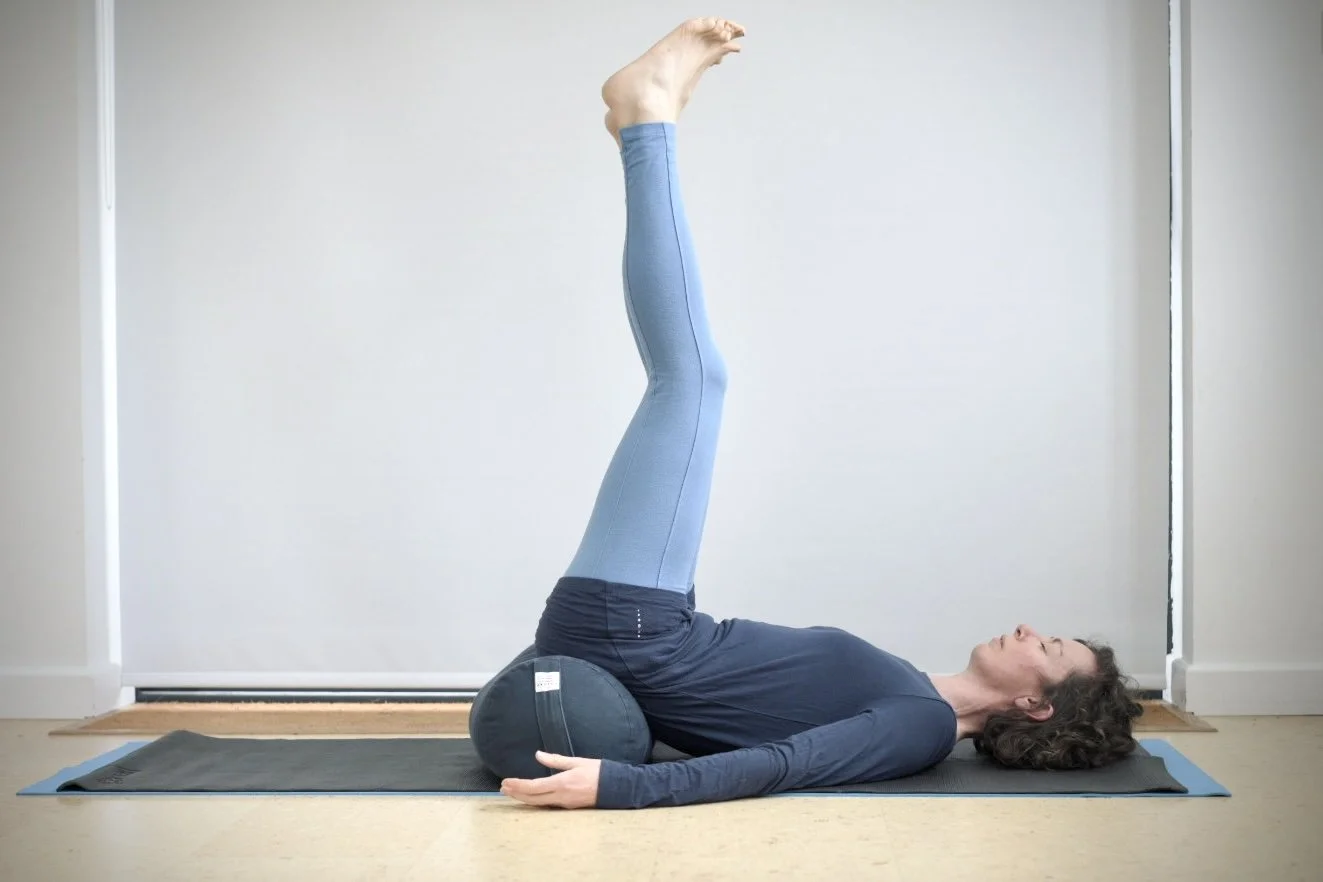
Restorative yoga
Heart-opening sequences
Even one drop on a cotton pad during savasana can create a deeply nurturing experience.
3. Vetiver – For Sleep & Deep Grounding
If sleep is disrupted due to hormonal shifts, Vetiver is incredibly supportive.
It’s earthy and grassy in scent, so if you find it too earthy I recommend blending one drop with:
Geranium
Lavender
Vetiver is excellent in:
Yin yoga
Evening classes
Grounding meditations
It helps anchor scattered energy and calm an overstimulated nervous system.
4. Rosemary – For Brain Fog & Focus
Hormonal changes can affect clarity and concentration.
Rosemary is stimulating and sharpening — wonderful when you need mental clarity.
Use it for:
Morning classes
Workshops
Teacher trainings
Study sessions
It pairs well with pranayama or focused standing sequences.
5. Roman Chamomile – For Soothing Heat & Tension
Roman chamomile is deeply calming.
It helps release:
Emotional tension
Irritability
Internal “heat”
This oil supports parasympathetic activation and is ideal in:
Restorative yoga
Breathwork practices
Closing relaxation
6. Rosewood – For Energetic Boundaries
Rosewood is less commonly spoken about but beautiful for emotional protection.
For teachers holding space regularly, this oil can:
Support energetic boundaries
Preserve your own energy
Reduce emotional depletion
It’s a wonderful oil to use before teaching or during retreat facilitation.
Other Essential Oils for Hormonal & Emotional Support
Other oils I regularly use in women’s yoga classes include:
Clary Sage
Frankincense
Benzoin
Lemon
Tea Tree
Sandalwood
When thoughtfully integrated, aromatherapy can deepen your students’ sensory experience and support nervous system regulation within your yoga classes.
Choosing High-Quality Essential Oils
If you’re purchasing essential oils in the UK, I use oils from Base Formula, Natural Health Remedies and Neal's Yard Remedies (not affiliated).
Always prioritise organic and ethical sourcing where you can. In my experience you get a much nicer oil this way.
Integrating Essential Oils Into Your Yoga Teaching
Essential oils can:
Deepen savasana
Enhance themed workshops
Support women navigating hormonal shifts
Create a more embodied sensory experience
When used safely and intentionally, aromatherapy becomes a powerful extension of your teaching — supporting both emotional wellbeing and nervous system balance.
If you’d like to learn how to confidently and professionally integrate essential oils into your yoga classes, retreats or workshops, explore my essential oils training and CPD options.
Let’s grow happier, older and wiser — together.
Love and hugs as always,
Heather ✨

Perimenopause Power
How to harness your power during perimenopause.
Wahoooooh! Well, if the title didn’t get your attention then I hope the energy of my whoop did.
It’s taken me years to find the grove of my perimenopause power and I want to share with you today what it is I’ve learnt and you find your perimenopausal power.
You may be questioning my use of the word power, especially if your struggling like I did with numerous perimenopause symptoms and getting through the day feels like a struggle, but bare with me and keep reading, I promise you’ll find some gold.
MY TOP PERI POWER TIPS:
The power of NO. Oh my gosh, say no as much as you can (I’m not kidding). This is a time when you need to rest and really focus on what feels good and right for you. Don’t want to go to the ptfa meeting. DON’T. Don’t want to go for drinks on Friday night. DONT. Don’t want to be pulled here there and everywhere by commitments. DONT. Just start saying no, say, thanks so much for the invitation but it’s a no from me this time, or I’m afraid I can’t help out because I’m busy. I know this can feel scary as you might worry that you won’t get invited again (FOMO calling) but you will, trust me and if you don’t then the invitation wasn’t from true friends. Remember, if it’s not a full bodied YES during perimenopause, then it’s a flat out NO!!!!!!!
Say YES to what you want to do. As women we’re kick ass at putting others first, so don’t worry about that for a movement. It’s time to put yourself first. Say YES to the things you love, whatever they may be. Do more of them. More girly nights in, more sauna’s and swims, more yoga, more walking, more reading, more naps in the afternoon. More yes yes yes to what you want and love to do. This is so soothing for your souls and will reduce your stress levels (helping ease those peri symptoms) and boost your enjoyment of YOUR life. Trust me, do it now. Cancel something your not looking forward to and book something you are!
DO LESS. You are going through a huge transition and having a jam packed life does not leave any space for your body, brain and being to do that. You need time doing nothing. Honestly if I could persuade you to do one thing today it would be to do less. You are not superhuman, so stop trying to be. You’re a beautiful woman who needs rest just as much as everyone else. You’re going through a huge transition and you need downtime for that to happen. The emotions that arise at this time need space to be sat with and listened too and you can only listen to your inner wisdom when you have the time to sit and do nothing.
EMPOWER YOURSELF. That’s what my blog is all about really, I want you to learn more about what’s going on during perimenopause and find tools that support you through this incredible, if sometimes challenging, transition. And you can do this by reading books about this subject, check out My top perimenopause books. Learning about the Hormonal changes during Perimenopause and how they affect you at different times during your cycle. What you can do to support yourself and your friends during this transition, like ways to improve your sleep Top 6 tips - Perimenopause and Sleep and how Yoga can help you today 3 reasons why you should practice yoga during Perimenopause.
Start right now.
Cancel something
Book something lovely in
Stare into space for a bit
And then order that perimenopause book
Lets grow Happier, Older and Wiser together ladies.
Love and hugs as always, Heather*

What I wish I’d known about Perimenopause
My mum went through the menopause at the age of 41. Today, I’m 43. Women’s cycling years (periods) generally mimic or mothers, unless your on hormonal birth control that is. Perimenopause symptoms typically start 3-7 years before you transition into menopause, so it’s likely that I went straight from being postnatal with my son (born when I was 36) into perimenopause.
So, before my perimenopause journey began, what do I wish I’d known . . .
That the symptoms of menopause start before menopause! And that this is called perimenopause. I knew my menopause experience was likely to be earlier than a lot of my friends, but I didn’t know that you got any symptoms before your periods stopped so I wasn’t expecting them in my late 30’s.
That this isn’t something that happens to “old ladies with grey hair” and all they you experience are hot flashes! This stereotypical image of a menopausal women doesn’t fit my experience at all, and that scared me and made me doubt my own experience time and time again. If this is you, I feel for you, but do not doubt yourself- trust those instincts!
The word perimenopause and what it means, What is Perimenopause? — Deaville Yoga I’d never heard it before.
it would have been so useful to know how to recognise that all the symptoms I was experiencing in my late 30’s were perimenopause. Not knowing this left me feeling lost and confused by what was happening to my body physically and emotionally.
That I wasn’t going mad. I felt like I was when I was feeling anxious, crying for no reason or flying into periods of rage. That actually all of this was as a result of hormonal changes, and that there was a whole wealth of things I could do to support myself was amazing to learn. Hormonal changes during Perimenopause — Deaville Yoga
Anything about what was going on with my body hormonally. This actually goes for my whole hormonal cycle, from periods starting, through 2 pregnancies and now in my perimenopausal years. The Hormone Repair Manual by Lara Briden and the Menopause Brain by Dr Lisa Mosconi, are two great books for understanding the science behind these vitally important changes My top perimenopause books and why — Deaville Yoga
How important it would be to having a community of women also going through perimenopause to support, laugh and cry with me - I wish I’d known in those lonely hours awake in the night that I would form a community of women who really understood what I was going through and would see and respect me for who I am today. And tomorrow. And in a years time when I’ve changed again.
The power of the word no. I wish I’d learnt this sooner. I now proiritise saying say no to others and yes to myself.
That I don’t need to uphold any standards when it come to my yoga practice. I can accept that my body simply doesn’t enjoy certain poses any more. I can meet my body where it is today.
That also, despite all the hardships, the anxiety, depression, rage and disillusionment. That I would, with the right support and knowledge, learn to absolutely love this transition. Books like Second Spring by Kate Cordrington and Wise Power, The Red School, were a huge part of this evolution for me. My top perimenopause books and why — Deaville Yoga
I hope this blog and my others will reach hundreds of women, so that they can start to gain the knowledge they need to enjoy their perimenopause, so please do forward this onto the women in your life who may need this.
Also, get in touch, let me know, what do you wish you’d known before you entered perimenopause? Please let me know in the comments below.
Together lets live our best Peri HOW, Happier, Older, Wiser.
Love and hugs,
Heather*

Top 6 tips - Perimenopause and Sleep
6 tips on how to improve your sleep during your perimenopausal years.
Waking up in the middle of the night and being unable to get back to sleep is a common experience during the perimenopausal years (unsure when this is, click here.)
Firstly please know that you are not alone. And also know that there are different tools you can use to help you though the emotionally and physically exhausting experience of disrupted sleep.
Here are my top 6 tips on how to cope with and hopefully improve your sleep and find more rest.
Acceptance Did you know that waking for a few hours in the middle of the night, known as biphasic sleep, is actually a very natural thing to do. In Medieval times (and before) everyone in the community would be awake for 2 hours in the night (usually between 11 and 1am), doing whatever they wanted, eating, household chores, chatting to family and friends (there was a lot of bed sharing going on!)
So don’t worry, nighttime waking might not be normal for you, but it is normal, so don’t let it stress you out. If you’re awake, your awake. The forgotten medieval habit of 'two sleeps' - BBC Future
No phones in bed Numerous studies have shown that turning off or stopping looking at hand held devices, particular phones 1.5 - 2hrs before you go to bed has a huge impact on how quickly you fall asleep and the quality of your sleep.
If it’s hard for practical reasons to turn your phone off in the early evening. Try just not looking at it in bed and see how that helps. 6 Ways That Night-time Phone Use Destroys Your Sleep | Psychology Today Canada
Stick to a set wake up time Even at the weekends, the more you can stick to waking up at the same time the better your sleep will be as your body and especially your brain loves to follow a pattern.
Establishing a regular sleep pattern helps improve the bodies circadian rhythm and leaves you feel well rested - good sleep is so important for good energy levels and mood. Even when life is busy don’t let this slip as it really serves you well. Consistent Wake-Up Time: Sleep’s Surprising MVP - Headspace
Meditate Whenever you can but especially before you go to bed, or at 2am when you wake up and can’t fall back to sleep, try meditation or Yoga Nidra. There’s loads of free classes online (hmmm breaks the phone rule though, life is nothing if it’s not contradictory!)
Keeping the body in a calming meditative state, where you can tap into your parasympathetic nervous system (rest and digest,) helps to slow down your heart rate, breathing and helps you to feel calm and relaxed. Even if your not asleep you can rest deeply in meditation so when you do wake for the day at 6am you don’t feel exhausted.
Also, if you meditate or practice Yoga Nidra during the day, it can give you a even brief period of deep rest which will boost your energy levels for the rest of the day.
Exercise and nutrition Think about eating well and exercising regularly. I highly recommend for nutrition you look to experts in the Menopause field like Lara Briden, Rachel Boon and Karen Newby. Women I’ve found to be great sources of accurate advice on eating well during perimenopause.
And for exercise, well firstly do exercise, don’t worry if things aren’t quite the same as they used to be, your changing and that aerobics class isn’t going to do what it did for you in your 20’s. Gentle to moderate yoga is a wonderful practice to adopt at this time, when you find the right teacher you’ll find not only do you grow more flexible and stronger, it will also more peace and calm into your life, giving you the tools you need to enjoy your perimenopausal life.
Think about when is the best time for you to exercise - they’re isn’t a one size fits all answer to this, here’s a link to a great article which will help you The Best Time of Day to Exercise for Sleep | Sleep Foundation although generally speaking don’t do crazy cardio and then expect to just drop off to sleep
Magnesium Is known to reduce cortisol, which is a stress hormone, levels and have a calming affect on the brain, which helps to improve our sleep.
Try to eat magnesium rich foods, such as nuts, leafy greens, legumes, soy products (organic if you can) avocadoes, banana and even good quality dark choclate Foods rich in magnesium: 11 to eat for better sleep | Woman & Home
Or you could consider taking a supplement (please get advice from a trusted source, ie a nutritionist as to a good supplement.)
There are more things I could add to this list, cut out alcohol (not a perimenopausal woman’s friend trust me) reduce caffeine intake, get out into daylight as soon as you can when you wake up, but these 6 are a great place to start and I’ve seen them support so many of my own yoga students to a place where they feel happier and more in control of their sleep and night-time waking’s.
Until next time, I hope you are enjoying growing Older, stepping into your Wisdom and finding deep Happiness.
With love,
Heather*

My top Perimenopause books
My top 4 perimenopause books to support yourself well during your perimenopause years.
There are loads of great books about perimenopause out there. But these 4 are my favourites that I refer back to and recommend all the time. They’re in no particular order, so take a look at my brief summary and what I love about them and then grab yourself the one which most appeals to you (or 2, or 3, or all 4.) There are no paid links in this blog.


The Hormone Repair Manual by Lara Briden.
What I like:
Great information to help you understand exactly what is going on during your perimenopausal years.
Great information on a variety of symptoms, including causes, and what you can do to help yourself when experiencing them.
A fantastic mix of science, nutrition, HRT and holistic advice which all comes together to give you back some control during these turbulant times.
Extra: Check our Lara’s website for a massive range of information on periods, perimenopause and menopause here.
Second Spring by Kate Codrington
What I like:
An incredible holistic overview of the different stages of perimenopause, menopause and our post menopausal years.
An honest and frank book with practical meditations, mantras and holistic practices you can easily use to support yourself.
Filled with real life stories to help you deeply realise that you are not alone, far from it.
This book offers guidance, like a best friend of a book, supporting you through these sometimes turbulent years.
The hope. This is a time of transformation, not to be feared, but revered - I’m on board with that!
The Menopause Brain by Dr Lisa Mosconi
What I like:
Key message that your not loosing your mind, quite the contrary, your brain is rewiring itself for a higher purpose - whoop!
Science backing up a holistic approach to women’s health during the perimenopause and menopause
Explaining what is going on and the deep connection between our hormones and our brain - fascinating stiuff!
Deep dive on the benefits of hormonal and non hormonal therapies
100 pages on the importance of an all round approach to your health at this time - one size does not fit all and one aproach does not tend to reduce all your symptoms.
This is a great book for giving you the tools and knowledge you need to make the best choices for you.
Extra: Check out Dr Mosconi’s Ted Talk: Lisa Mosconi: How menopause affects the brain | TED Talk
Wise Power, Red School, Alexandra Pope and Sjanie Hugo Wurlitzer
What I like:
A completely holistic approach to the perimenopause experience, but grounded in the reality of the experience too.
Offering you guidance on how to cope and honour the emotional changes that occur
Giving you hope and belief in yourself that even in the darkest of times, you will get through this and emerge more wonderful than every before.
A framework in which to put your experience in (fluid as those frames may be) which allows you to truly experience the incredible change that is occurring in your body.
This book empowers, honors, cherishes and celebrates the perimenopause years and beyond.
Extra: Check out their podcast for loads of great interviews and conversations around the perimenopause The Menstruality Podcast | Red School
In conclusion… every woman’s experience of the perimenopausal years is different, I could have recommended 20 books, I could have picked just 2. But I wanted to offer a range of books which would appeal to a range of women who all have their own needs, demands, desires and preferences.
I’d recommend if you can to choose one book from the above that immediately calls to you. And one that doesn’t.
Your brain is being rewired (which I’ll tell anyone who’ll listen to me) so open it up to something new, and you just might find something magical which help transforms your perimenopause experience.
Lets love growing Older, Wiser and Happier ladies,
Heather*
email me heather@deavilleyoga.com with your perimenopause book suggestions - I’d love to know them.