Chakra Yoga Series: Part 6, Third Eye Chakra
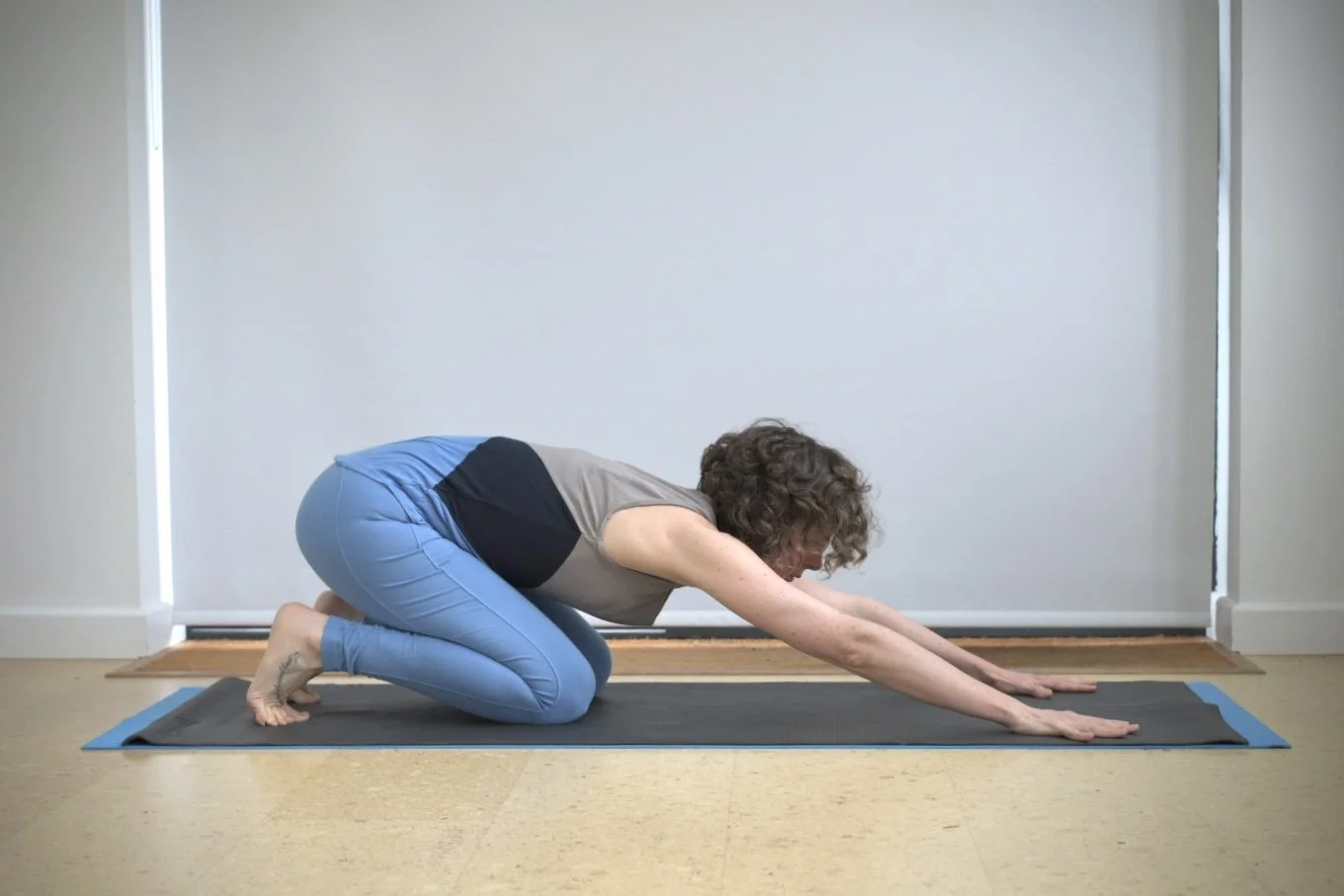
Yoga teacher making her way to Puppy Pose
As we reach week 6 of our Chakra Yoga journey, I can feel the energy settling into a quieter, more meditative space. Having moved through more outward-facing energetic themes, our attention now turns inward to the Third Eye Chakra, Ajna. This practice invites us to trust our intuition and listen deeply to our inner wisdom.
Focus on our focus
In this week’s classes, we worked with both our internal and external gaze. This simple shift helped to quiet the mind and deepen our ability to listen to ourselves.
In yoga, this focused gaze is known as our Drishti. We gently anchor our awareness to a single point, allowing the eyes to be steady yet soft. This steadiness supports us in balance postures and encourages a calmer, more settled mind in stillness.
The inner eye
The Third Eye Chakra is considered the seat of intuition. Located just above and between the eyebrows (and slightly deeper within the centre of the head), it is often described as a form of inner knowing and connecting to a higher, more spiritual realm.
Like the Heart Chakra, its guidance is clearest when we pause long enough to truly listen. This week we explored that space by slowing the breath and visualising calm, expansive imagery, spaces that felt vast, open and still.
One image that resonated strongly was standing at the edge of the ocean, watching sunlight dance across the water. In teaching, I also chose to speak less at times, allowing more silence for students to fully inhabit their practice.
The physical practice
Our asana practice supported this inward focus through postures that encouraged steadiness, space and awareness:
Extended Puppy Pose
Warrior III
Revolved Side Angle Pose
Downward Facing Dog
Each shape offered an opportunity to return to the breath and gently refine attention.
Mudra and mantra
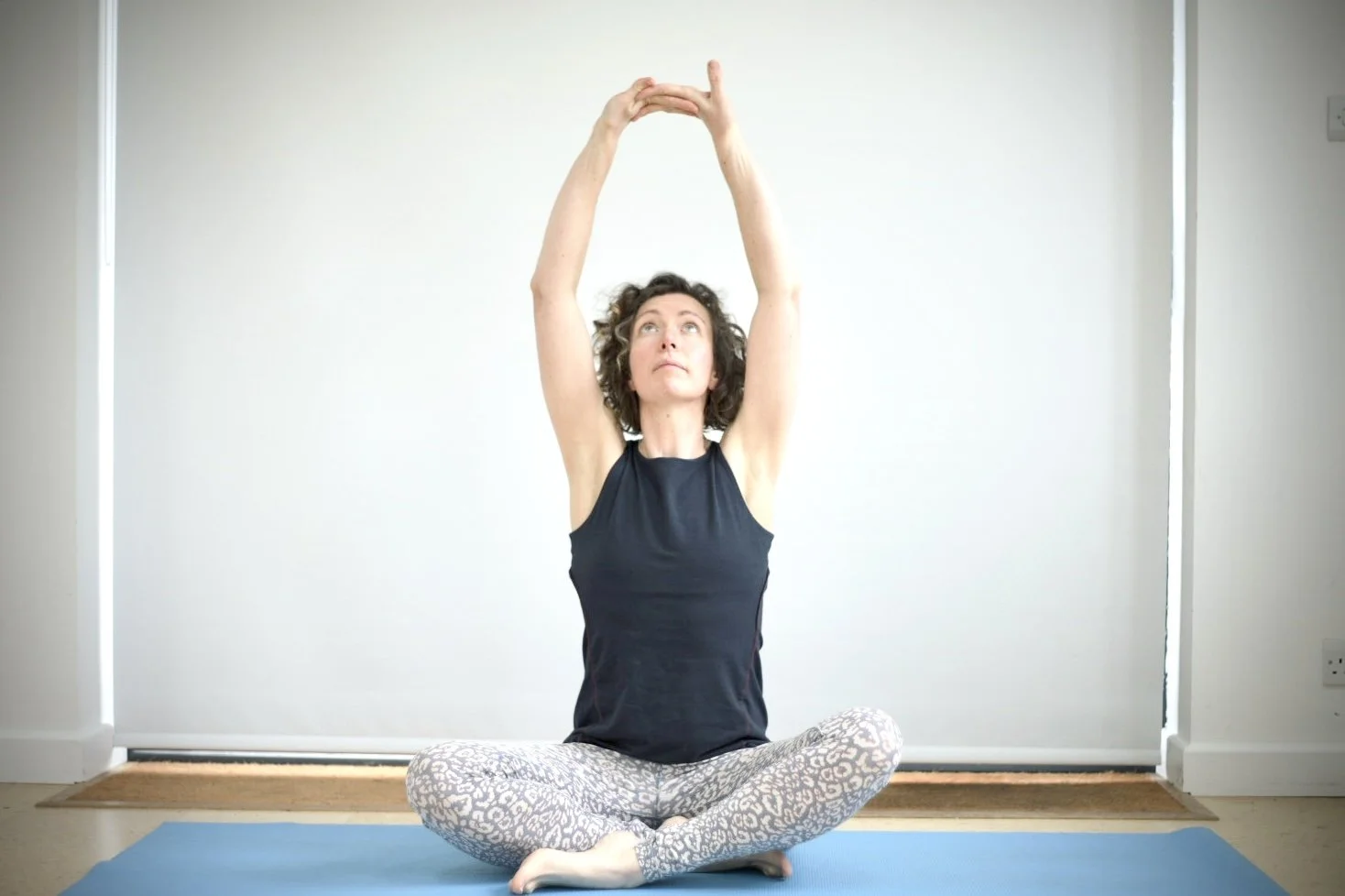
This week I really enjoyed sharing Shankh Mudra (Shell Mudra) with students. In this mudra, the fingers interlace to form a shape reminiscent of a conch shell, symbolising the connection between outer expression and inner truth.
It is said to support inner listening and deepen connection to intuitive knowing. The right thumb is gently held, representing the “pearl of wisdom” protected within.
We closed with the affirmation:
“I trust my instincts and follow their guidance.”
Essential oils for the Third Eye
We began our practice this week with Clary Sage essential oil. This oil supports reconnection with intuition, helping to clear the mind and leaving us feeling revitalised and re-inspired.
We closed the practice with Amyris essential oil, a gently uplifting oil that helps calm and clear the mind while supporting a quiet sense of wellbeing and inner ease.
Join me for a class, workshop or CPD training
My joy is in sharing my two great passions—yoga and aromatherapy—and I would love to have you join me on this journey.
I teach yoga classes in Sussex, run yoga workshops, and Yoga retreats across Sussex and Kent.
I am also blessed to have a wonderful community of yoga teachers who have completed my Essential Oils for Yoga Teachers CPD training. They are passionate about learning how to safely and meaningfully incorporate essential oils into their classes and workshops.
Next week
Next week we’ll journey up the Sushumna Nadi to the Crown Chakra, Sahasrara, building on our exploration of inner knowing while gently expanding into our connection with the world around us and the divine.
Sources and inspiration
The themes explored in this class were informed by my own knowledge of traditional yoga philosophy and aromatherapy, as well as inspiration from:
Chakra Yoga by Anodea Judith (Llewellyn Publications)
Aromatherapy for Healing the Spirit by Gabriel Mojay (Healing Arts Press)
Mudras for Body, Mind & Spirit by Gertrud Hirschi (Findhorn Press)
These sources often inform the framework I use when designing themed yoga classes that integrate movement, breath, subtle energy and essential oils.
The Chakra Yoga series
You can explore the full series so far below:
Week One: The Root Chakra
Week Two: The Sacral Chakra
Week Three: The Solar Plexus Chakra
Week Four: The Heart Chakra
Week Five: The Throat Chakra
Week Six: You’re already here!
Week Seven: Coming April 24th 2026
Chakra Yoga Series: Part 5, Throat Chakra
Finding balance at the throat Chakra is the theme for this week
This week we’ve continued our journey through the Chakra’s, moving from the Heart Chakra last week, and reaching the Throat Chakra, Vishudda. And again the influence this chakra has had over our classes this week has been palpable.
Focus on the breath
This week our practice focused on:
Ujjayi Breath
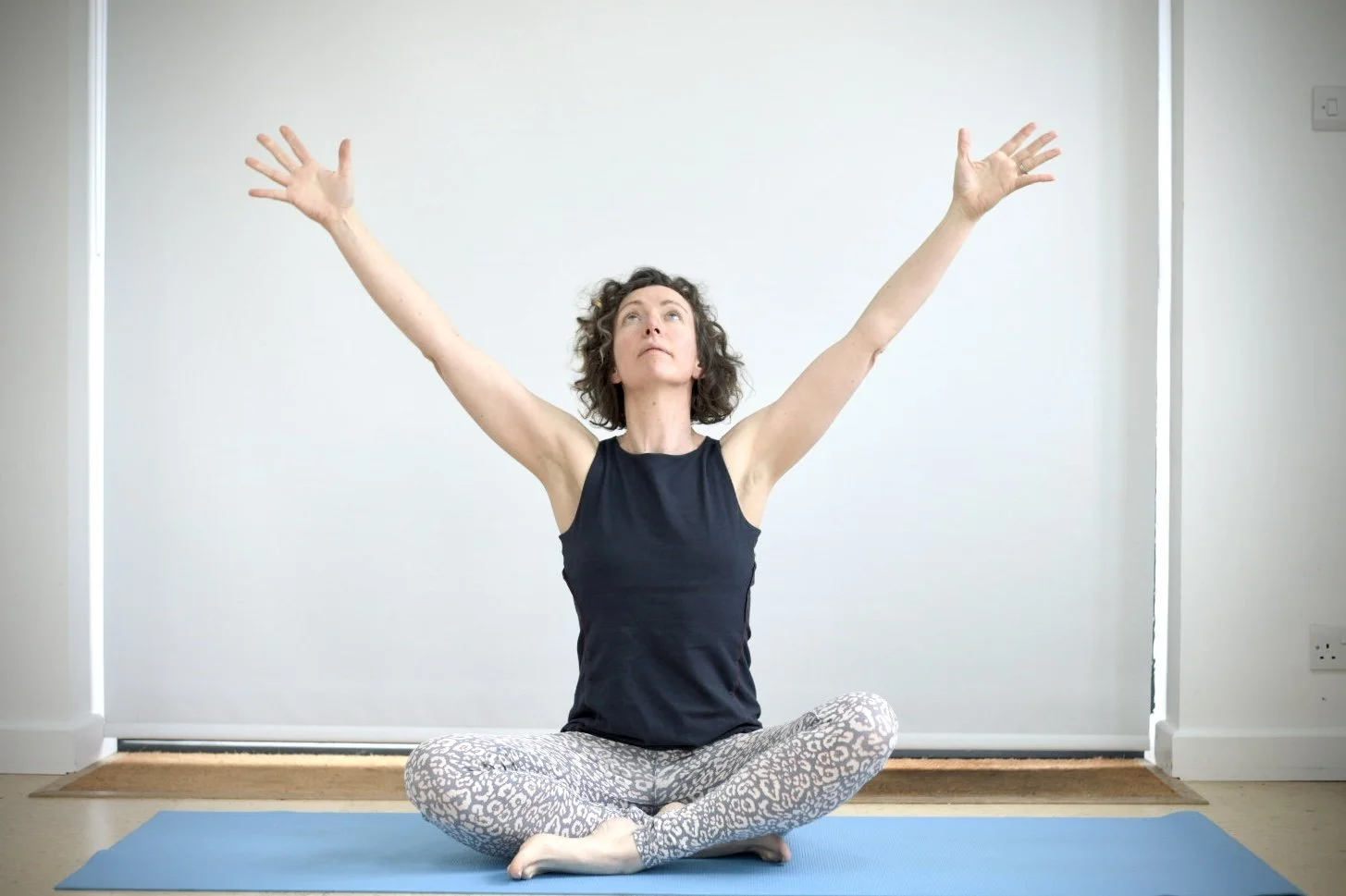
Gentle stretches across the neck
Percussive sound
Yoga Asana (postures) that opened the chest and let the energy flow
The nature of Spring and the elements of wood and either.
Thoughtful communication, mudra and mantra.
The call of the ocean
The Throat Chakra is focused on expression and effective communication. Although we tend to think of this as purely verbal, this chakra has allowed us to explore our non-verbal communication as well. Saying that sound has been at the heart of our practice and what better way to explore this chakra than by starting with the breath.
Ujjayi breath, also known as Ocean breath was the anchor for our pranayama this week. From beginning to end, it allowed us to draw our focus into the here and now and explore it’s sound in isolation, and with the presence of the rest of the world. Described by Anodea Judith as the “internal Om”, Ocean Breath enables us to conquer fear, bring clarity to the mind and support us in speaking our truth.
Releasing and Harmonising
Our class followed a rising energy this week, rising from the Root Chakra, we starting with gentle stretches through the neck and shoulders, shoulder shrugs were followed by more active seated yoga mudra linked to the inhale and exhale these gentle built the energy. The build in energy enable us to move to the Warrior poses and from there to Revolved Side Angle pose.
Mantra and Mudra
For mudras we explored Self-Esteem and Sky Mudra, firstly tapping into our inner truth, then heightening our listening abilities and careful contemplation.
Mantra’s included “I am truthful and honest with myself” and “I communicate openly and honestly to express my thoughts and feelings clearly.”
Essential oils for the Throat Chakra
If I’m honest I was spoilt for choice this week. But taking into account that it is currently Spring here in the UK I chose Bergamot and Lavender to compliment our practice this week.
Bergamot I chose for its optimism and uplifting qualities. These directly allow the body to free up, by releasing pent up feelings and emotions.
Lavender I chose for its ability to encourage self expression and release stuck energy. As we used it towards the end of our practice it’s calming properties were also enjoyed.
Join me for a class, workshop or CPD training
My joy is in sharing my two great passions, yoga and aromatherapy and I would love to have you come on this journey with me.
I teach yoga classes in Sussex, runyoga workshops monthly (sometimes more) and have a wonderful community of yoga teachers who have been on my Essential Oils for Yoga Teachers CPD training and are passionate to learn more about how to safely incorporate essential oils into their workshops and classes.
In three week’s
We’ll be journeying up the Sushumna Nadi to the Third Eye, Ajna chakra and exploring were our consciousness meets our unconsciousness and our intuition resides.
Sources and Inspiration
The themes explored in this class were informed by my own knowledge of traditional yoga philosophy and practice. My experience as a professional aromatherapist and inspiration from:
Anodea Judith’s Chakra Yoga, published by Llewellyn Books
Aromatherapy for healing the spirit, Gabriel Mojay, published by Healing Arts Press
Mudras for Body, Mind & Spirit by Gertrud Hirschi, published by Tarotdeck
The Power of the Chakra’s, Fiona Toy, published by Hinkler
These sources often inform the framework I use when designing themed yoga classes that integrate movement, breath, subtle energy and essential oils.
The Chakra Yoga series:
You can explore the whole series so far by following these links to my chakra yoga blogs for each one:
Week One: The Root Chakra
Week Two: The Sacral Chakra
Week Three: The Solar Plexus Chakra
Week Four: The Heart Chakra
Week Five: You’re already here!
Week Six: The Third Eye Chakra
Week Seven: Coming April 24th 2026
Chakra Yoga Series: Part 4, Heart Chakra
Opening the heart Chakra
This week we have journeyed up to the centre of the chakra system and found ourselves at Anahata Chakra, commonly know as the Heart Chakra.
This Chakra is in the centre of the 7 main yogic chakra’s and as such is the meeting point of our more intellectual, physical beings and our more spiritual selves. This chakra is associated with unconditional love, towards ourselves and others, so it’s been a much softer week compared to ourSolar Plexus journey.
Opening the heart
This week our practice focused on:
Expanding the chest through pranayama (breathwork)
Alternate nostril breathing (nadi shodhana)
The Krama breathing technique Anuloma (Thanks to Anodea Judith for this inspiration)
Asana which opened the heart and chest
Poses like Anahata, or Puppy pose which soften the heart to the earth
Strength through the legs, softness through the arms.
Finding strength in letting go
This weeks practice invited us all to be vulnerable, be it through posture, breathwork (trying something very new) or with the use of a rather unusual mudra which sometimes didn’t work, so we accepted and adjusted. Making space for ourselves just as we are. And a yoga teacher it also asked me to be vulnerable, to be more open about how my own heart leads me in my teaching each week.
Well rooted we rose
I’m really enjoying exploring the chakras in this way and really noticed in this weeks practice how having a strong connection to the chakras we’ve explored so far really supported the opening of the heart. Feeling rooted, through a sprinkle ofRoot Chakraposes helped us feel grounded and ready. Being more creative with well know asana’s helped us to soften and flow like our Sacral Chakra week and with last weeks self confidence boost at the Solar Plexusto lean into we really could soften the heart.
And my favourite manifestation this week was
“I love myself the way I am, not the way I was or could be, and I extend this love to others.”
Essential Oils from the Heart
This week we started our essential oils and yoga practice with an oil I love, Laurel (Bay). This oils continues on really nicely from last weeks self confience supporting oils as it’s inspiring notes boost the self esteme and help to renew our belief in our own boundless potential.
Our second oil, was Rose. Love, trust, self acceptance and emotional wellbeing are at the root of the energetic properties of this oil and I really couldn’t think of a better oil to support our open hearted journey through alternate nostril breathing and savasna.
Join me for a class, workshop or CPD training
My joy is in sharing my two great passions, yoga and aromatherapy and I would love to have you come on this journey with me.
I teach yoga classes in Sussex, runyoga workshops monthly (sometimes more) and have a wonderful community of yoga teachers who have been on my Essential Oils for Yoga Teachers CPD training and are passionate to learn more about how to safely incorporate essential oils into their workshops and classes.
Next week
We’ll be journeying up the Sushumna Nadi to the Throat, Visuddha chakra and exploring our thoughtful communication and expression - I can’t wait!
Sources and Inspiration
The themes explored in this class were informed by my own knowledge of traditional yoga philosophy and aromatherapy as well as inspiration from:
Anodea Judith’s Chakra Yoga, published by Llewellyn Books
Aromatherapy for healing the spirit, Gabriel Mojay, published by Healing Arts Press
Mudras for Body, Mind & Spirit by Gertrud Hirschi, published by Tarotdeck
These sources often inform the framework I use when designing themed yoga classes that integrate movement, breath, subtle energy and essential oils.
The Chakra Yoga series:
You can explore the whole series so far by following these links to my chakra yoga blogs for each one:
Week One: The Root Chakra
Week Two: The Sacral Chakra
Week Three: The Solar Plexus Chakra
Week Four: You’re already here!
Week Five: The Throat Chakra
Week Six: The Third Eye Chakra
Week Seven: The Crown Chakra - Coming 24th April
Chakra Yoga Series Part 2: Sacral Chakra
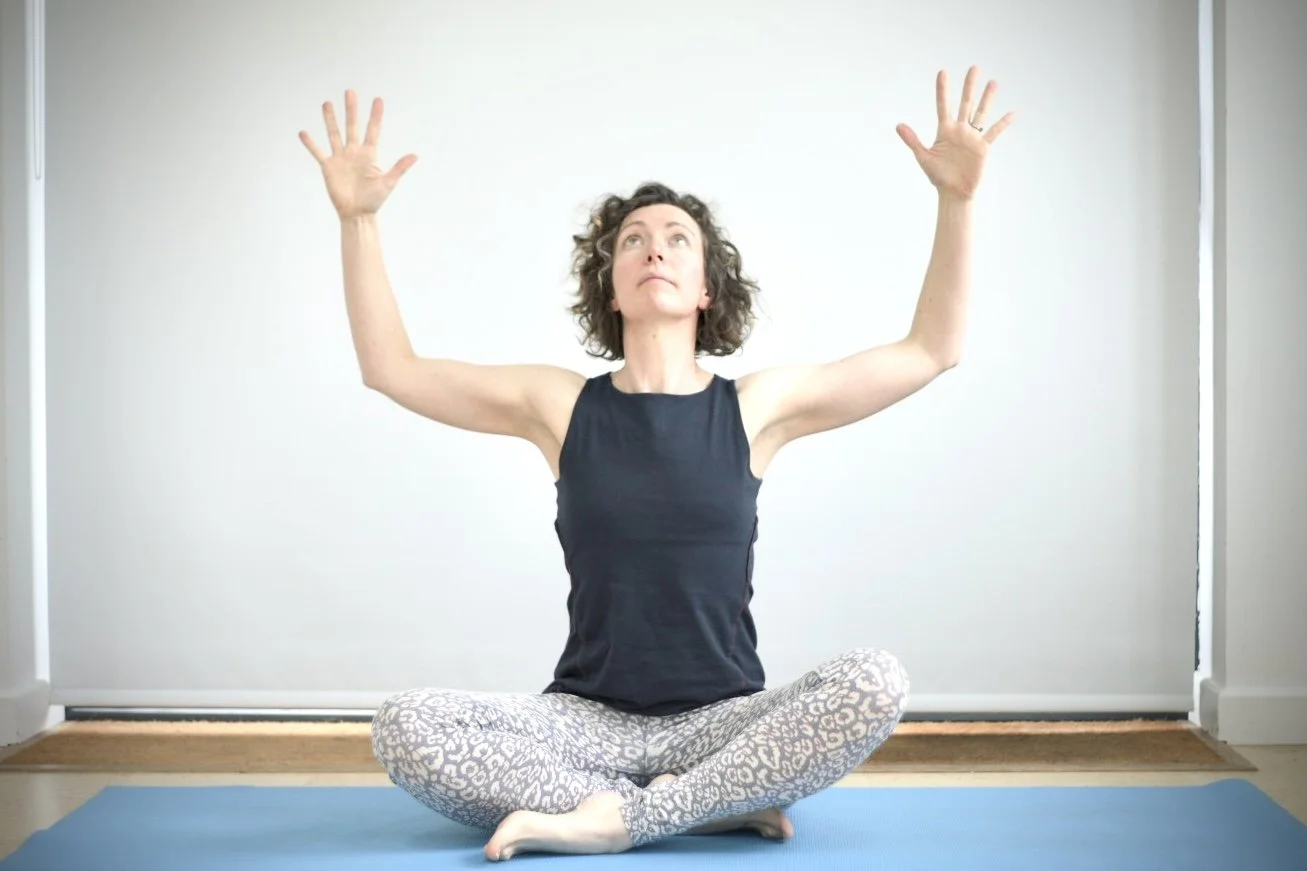
Sacral chakra flow yoga, opening the arms in a wide circle
After establishing a strong base at the root chakra, Muladhara, last week, this week our practice focused on softening and flow, as we worked up the sushumna, the central energetic axis that runs through the body, to explore the sacral chakra, Svadhistana.
This chakra is the energetic centre associated with creativity, desires and fluid movement. Located in the lower belly and connected to the element of water, it invites us to move into a deeper relationship with feeling, expression and flow.
Inviting Fluidity into the Body
This week in our practice we explored flowing movement. Instead of strong held postures, we enjoyed:
Circular movements through the hips, spine and shoulders.
Ripples through the torso
Flowing transitions between asana’s
And as always we invited the breath to guide the rhythm of movement
Flowing movements can feel surprisingly liberating. Where the root chakra grounds us, you can read more about that in my root chakra blog, the sacral chakra, whose element is water, invites us to explore what happens when the body begins to move more freely.
Creativity in Stillness
Creativity is often imagined as something expressive and outward, but the sacral chakra also teaches us about creative stillness. Giving us the opportunity to listen to our bodies, responding to sacral chakra manta’s like:
It is time for me to manifest what I need. I ask myself “what do I need?”
Throughout the practice we used simple hand gestures, or mudras, to support this process. We used “Relax Mudra” to help us let it flow, and used our breath like a wave through the body to help us release tension. We also explored Saraswati Mudra, which links directly to it’s namesake, the goddess of creativity. This mudra encourages us to be open to inspiration, tapping into our creativity and joyfully acknowledging out talents and good ideas.
Working with Aroma to Support Flow
Alongside the movement practice, we worked with two essential oils that beautifully reflect the qualities of the sacral chakra.
Juniper Berry has a fresh, cleansing aroma that many people experience as clarifying and uplifting. Energetically, it helps us break through times of stagnation and fortifies our will power with it’s instinctive confidence and positivity.
Jasmine brings a soft, floral sweetness that is often associated with creativity, sensuality and emotional openness. Energetically its Yin leanings help restore our capacity for creative thought. A harmonious oil it enhances our intuition and helps us tap back into our true desires.
Together, these scents supported the theme of flow, supporting students move from grounded stability into a more water inspired expressive space.
A Simple Practice to Try at Home
If you’d like to explore sacral chakra energy in your own time, try this simple practice:
Lie down in semi-supine, knees bent, feet flat on the floor.
Rest the hands on the low belly, fingers interlaced, thumbs apart (Rest Mudra)
As you exhale press the low back into the floor, as you inhale release.
Keep the belly soft at all times. repeat for 2-3 minutes.
If you have Jasmine or Juniper nearby, pop a drop of one or both onto a cotton pad or into a diffuser and let the oils take you deeper..
Notice how you feel. Just a few minutes can create space for creativity and emotional flow.
Continuing the Journey
Our chakra exploration continues next week as we move upward to the Solar Plexus, Manipura Chakra, the centre associated with personal power, confidence and inner fire.
Having established grounding at the root and fluidity in the sacral chakra, we begin to explore how these foundations support strength and self-trust.
Each layer builds on the one before.
And as always, you are warmly welcome to join us. Click to discover my yoga classes, workshops and retreats.
Essential Oils and Themed Yoga Teaching
Working with aroma alongside movement can add a subtle but powerful layer to themed yoga classes, workshops and retreats.
Essential oils like Juniper and Jasmine can deepen the emotional tone of a practice and help guide students deeper into the qualities you’re exploring.
For yoga teachers, learning how to integrate essential oils safely and intentionally can open up new possibilities for creating meaningful, sensory-led classes, workshops and retreats. Check out my practical guide to essential oil safety in yoga classes here
If you're a teacher interested in exploring this approach, I share the framework I use for blending aromatherapy with yoga practice inside my on demand Essential Oils for Yoga Teachers CPD, where we explore safety, how to use scent to deepen your students yoga practice, and ways to weave scent into themed classes such as chakra practices.
You can learn more about the training here: Essential Oils for Yoga Teachers CPD
Sources and Inspiration
The themes explored in this class were informed by my own knowledge of traditional yoga philosophy and aromatherapy as well as inspiration from:
Anodea Judith’s Chakra Yoga, published by Llewellyn Books
Aromatherapy for healing the spirit, Gabriel Mojay, published by Healing Arts Press
Mudras for Body, Mind & Spirit by Gertrud Hirschi, published by Tarotdeck
These sources often inform the framework I use when designing themed yoga classes that integrate movement, breath, subtle energy and essential oils.
The Chakra Yoga series:
You can explore the whole series so far by following these links to my chakra yoga blogs for each one:
Week One: The Root Chakra
Week Two: You’re already here
Week Three: The Solar Plexus Chakra
Week Four: The Heart Chakra
Week Five: The Throat Chakra
Week Six: The Third Eye Chakra
Week Seven: The Crown Chakra - Coming 24th April
Chakra Yoga Series Part 1: Root Chakra
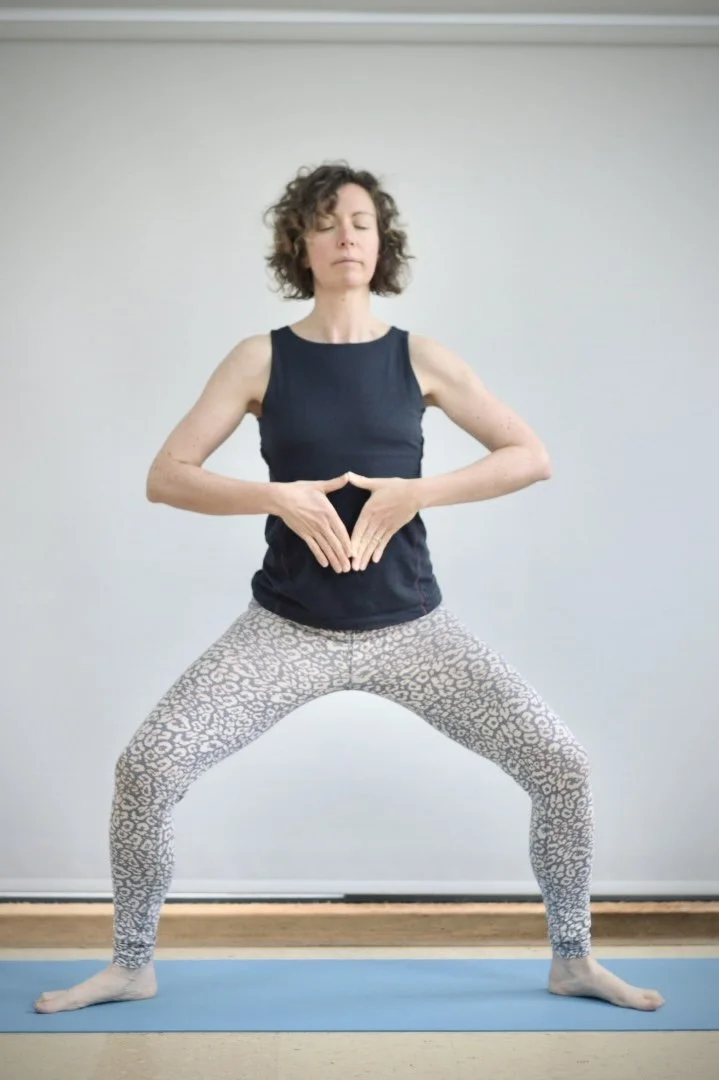
Grounding isn’t about holding yourself rigid.
It’s about softening into strength.
This week in our root chakra practice, we explored steadiness through strong standing postures, slower breath and a felt sense of support beneath us.
Returning to the Root: Exploring Grounded Presence in This Week’s Yoga Classes
This week in class, we slowed down.
Not because we were tired, not because we needed less, but to explore the root chakra, to reconnect to the earth and explore the power of this chakra in helping us step away from our thoughts, our to-do lists, and the constant forward pull of life.
We came back to the ground.
We explored the root chakra — Muladhara — the energetic centre associated with safety, stability and belonging. Located at the base of the spine and connected to the element of earth, it governs our sense of being supported, physically, emotionally and energetically. It’s associated with the colour red and is represented by a lotus flour with four petals.
And perhaps more importantly, it influences how safe our nervous system feels in the present moment.
Ground Before You Grow
There’s a quiet wisdom in starting at the root.
In yoga, we often speak of expansion — opening the heart, awakening insight, rising into expression. But growth without grounding can feel unsteady.
This week, we prioritised steadiness. We started at the pelvis, connecting to our root chakra with our pranayama (breath) our minds through visualization's and physical through our movement. In standing we pressed firmly through the feet, allowing the upper body to be soft and flowing, whilst the lower body was string and connected.
Simple things. Foundational things.
And yet they shift so much.
Safety Is a Felt Sense
When we focus on grounding practices, we are sending subtle cues of safety to the body.
The nervous system responds to rhythm, pressure, containment and connection to the earth. Longer exhales gently stimulate the parasympathetic response. Strong, steady postures build a quiet resilience.
In a world that constantly pulls our attention upward and outward, rooting down allows us to reconnect to what matters.
Working with the Earth Through Aroma
Alongside the physical practice, we also worked subtly with scent in my Tuesday Morning Ditchling class and post Wednesday evenings flow yoga.
Earthy essential oils can deepen the experience of grounding, offering an anchor through the breath. This week we explored vetiver and patchouli — both traditionally associated with root energy.
Vetiver has a deep, smoky, almost ancient aroma. It settles quickly in the body, centres and connects us to mother earth — calming, nourishing, relaxing the body and mind. Many people describe it as feeling like a weighted blanket for the nervous system, it’s also known as the King of Sleep!
Patchouli carries a warm, earthy scent that brings awareness back to the physical body. It can be especially supportive when we feel scattered or disconnected, gently grounding and stabalising the mind when overthinking and worry develop.
Used lightly and intentionally, scent becomes another pathway back to presence — not overpowering, simply supportive.
A Small Grounding Ritual You Can Try
If you’d like to work with root energy at home, try this:
Stand with your feet hip-width apart.
Soften your knees slightly.
Scrunch and release your toes three times.
Imagine roots growing from the soles of your feet into the earth beneath you.
Take five slow breaths.
Let your exhale be longer than your inhale.
If you have vetiver or patchouli to hand, place a drop on a cotton pad or in a diffuser and allow the aroma to accompany your breath.
Notice what shifts.
Building Upwards: Next Week’s Theme
Having established steadiness at the root, next week we gently begin to move upward.
We’ll explore the sacral chakra — Svadhisthana— the centre of fluidity, creativity and emotional expression.
If the root asks, “Am I safe?”
The sacral chakra asks, “Can I feel?”
Our practice will soften, spiral and flow a little more. We’ll work with the element of water, inviting mobility into the hips and space into the lower belly. Where this week was about steadiness and containment, next week will be about permission — to move, to feel, to explore.
If you’ve been feeling unsteady, overwhelmed or disconnected from your body, this kind of themed, intentional practice can be profoundly regulating.
You don’t need to understand chakras to benefit. You simply need a willingness to arrive as you are and take from each practice what works for you.
And you are always welcome.
I run yoga classes and retreats across Sussex and Kent, blending my passion for yoga and aromatherapy to support you through life.
The Chakra Yoga series:
You can explore the whole series so far by following these links to my chakra yoga blogs for each one:
Week One: You’re already here
Week Two: The Sacral Chakra
Week Three: The Solar Plexus Chakra
Week Four: The Heart Chakra
Week Five: The Throat Chakra
Week Six: The Third Eye Chakra
Week Seven: The Crown Chakra - Coming 24th April