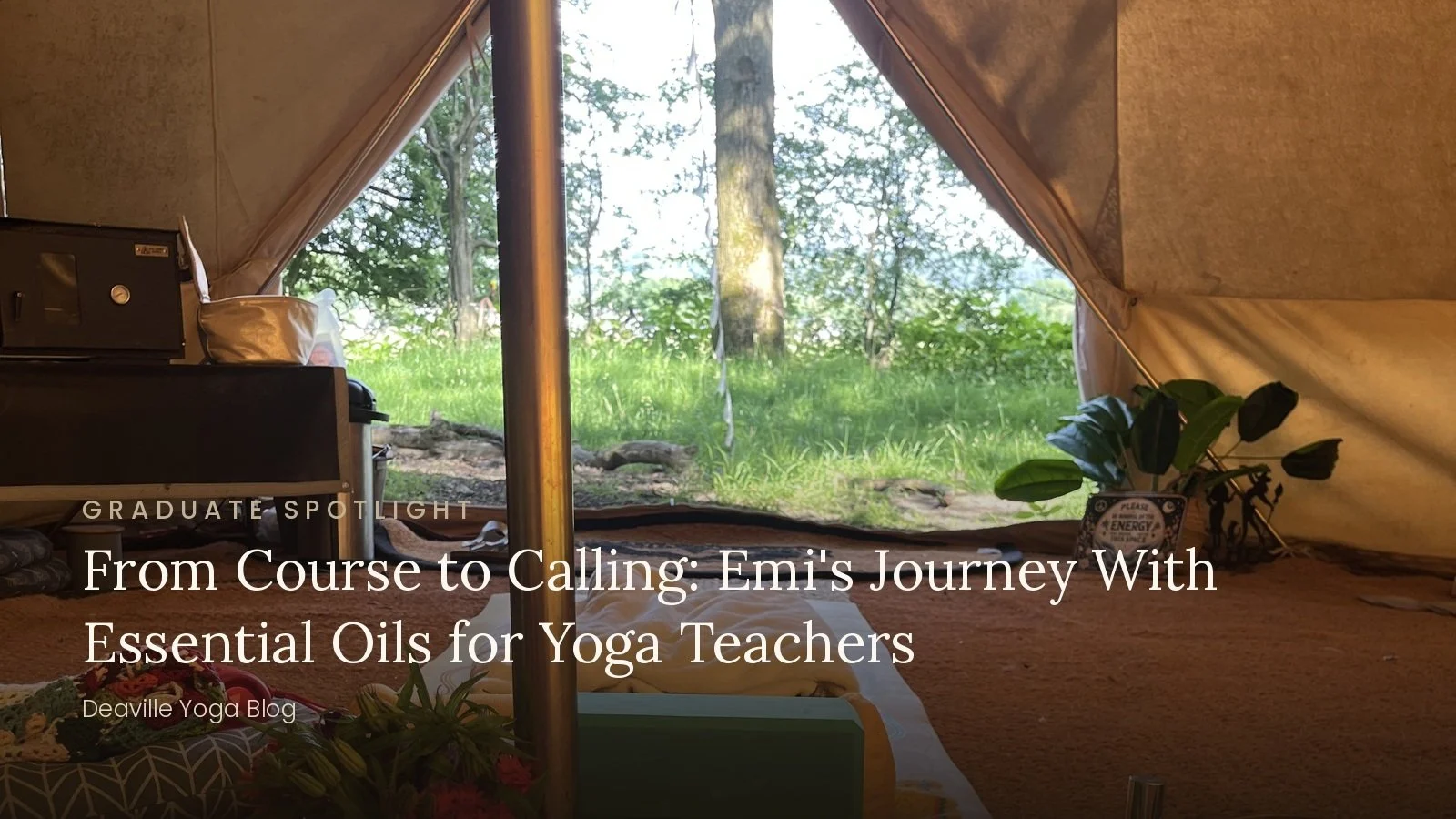
From Course to Calling: Emi's Journey With Essential Oils for Yoga Teachers
Graduate Spotlight: Emi
When Emi took the Essential Oils for Yoga Teachers course, she was looking for something specific: the confidence to blend and create her own way, rather than follow a sales script. A friend had introduced her to essential oils through a multi-level marketing route, and while the oils themselves resonated, the business model didn't. "I wanted the genuine confidence to create, mix, blend, and support women's health in a truly holistic way," she told me.
That search for genuine, grounded knowledge has since become the foundation of her entire teaching practice — and, as it turns out, the direction of her whole business.
Oils as a monthly ritual, not a fixed formula
Rather than settling on a handful of "signature" oils, Emi treats her oil choices the way she treats her sequencing: as something that shifts with the season and the theme of her practice. "I love linking my oil choices to Traditional Chinese Medicine and whatever theme I'm weaving into my somatic and yin yoga practice that month," she says.
In class, that shows up everywhere — deep inhalation during breathwork, guided self-massage on the wrists, neck and feet, and what she describes as the undisputed crowd favourite: the Savasana temple rub.
Her approach to blending is refreshingly honest. "I take a very hands-on approach: pure trial and error. I love researching the healing properties of each oil and experimenting. Honestly, some combinations have been absolute disasters, but others have turned out utterly amazing." It's a good reminder that expertise isn't about getting it right every time — it's about being curious enough to keep experimenting.
The biggest lightbulb moment from the course itself, she says, was learning about top, middle and base notes. "That was a total revelation."
A monthly sanctuary is born
The ripple effects of the course went well beyond Emi's regular classes. It inspired her to create Scent and Serenity, a monthly event dedicated to somatic exercises, yin yoga and meditation — "a total sanctuary for women to step off the hamster wheel and genuinely rest."
It's also reshaped her business entirely. Emi is currently rebranding from Blossoms Yoga to EmiLouEmbodied, with a new focus on supporting women through midlife, menopause and post-menopause — informed in part by her own experience of navigating menopause without HRT, and her long-standing use of essential oils as part of that.
One moment in particular has stayed with her: a student once told her, "All I can think about all month is the smell of that oil — I literally can't wait to come back!" Emi ended up blending her a small rollerball so she could find that same moment of peace at home, without having to wait for the next class.
Who this is for
Asked who she'd recommend the course to, Emi doesn't hesitate: "Honestly, any yoga teacher would benefit, but it's absolute magic if you teach slower, more restorative, or holistic classes." For her, the course gave her the practical grounding to "curate delicious experiences where women can truly surrender and rest" — which, given where her business is heading, feels like exactly the right words for it.
You can follow Emi's new chapter at EmiLouEmbodied on Instagram.If Emi's story resonates and you'd love to build this kind of practical, confident knowledge into your own teaching, you can find out more about the Essential Oils for Yoga Teachers course here.
Essential Oils and Yoga to Keep You Grounded Through the Heatwave
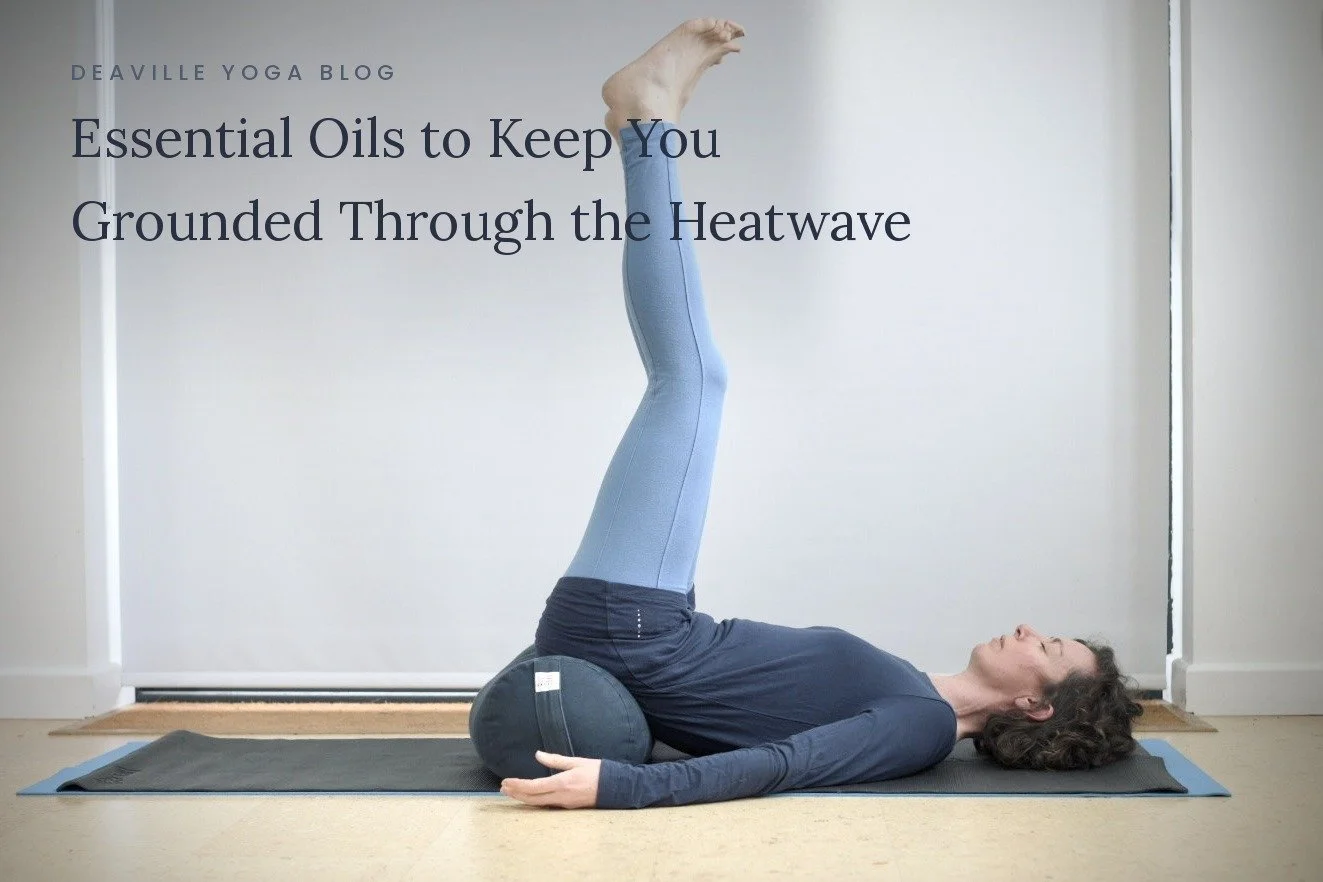
Legs up the wall - a cooling yoga practice during a heatwave
As we head towards heatwave number five of the summer here in the UK, if you're anything like me, the novelty has worn off, it did that around heatwave number two to be honest. By now there's a particular kind of tiredness that comes with this weather — broken sleep, a short fuse, a mind that feels scattered even when the body has barely moved. If you've rolled out your mat this week and thought "I cannot possibly do a full practice in this," you are not alone, and you don't have to be.
I've noticed this feeling in my own practice, but also in my classes, no one is inclined to do much movement in this heat.
Grounding usually gets talked about as something warm and heavy, especially in the winter months when our urge to hibernate kicks in, think earthy oils, slow deliberate movement, a sense of sinking down. In a heatwave, that's the last thing we need is warm and heavy. What we actually need is steadiness in the middle of intensity: something that cools the body and settles the mind without asking for more effort than we have to give. That's the kind of grounding this post is about.
Why heat makes it so hard to feel steady
Heat interferes with two things the body relies on to feel settled: sleep and stress regulation. To fall and stay asleep, core body temperature needs to drop, a recent study tracking over 12.5 million nights of wearable sleep data found that warmer nights measurably shorten sleep and delay how quickly people drop off, with the effect strongest for women in their 40s. On top of that, heat itself acts as a physical stressor, nudging up heart rate and stress hormones, which is part of why minor irritations can feel bigger than they are, a pattern researchers have studied for decades in the well-documented link between heat and short tempers. None of that is a failure of willpower, it's a fairly predictable response to sustained heat. So rather than fighting it with intensity, this is a moment for practices that cool first and steady second.
Cooling, grounding oils for this week
Peppermint — instantly cooling. One drop on a cotton pad and some lovely deep slow breathing.
Cornmint — a gentler, sweeter cousin of peppermint, kind on sensitive skin, so can be blended with a carrier oil and applied to the neck and chest. Lovely for an evening wind-down when you want cooling without the intensity.
Geranium — balancing rather than sedating, geranium helps even out the emotional up-and-down that heat tends to bring, without adding any heaviness.
Sandalwood — traditionally used in hot climates for its cooling, grounding quality; beautiful paired with a slower, floor-based practice.
Lime or grapefruit — bright and refreshing, good for lifting a flat, heat-drained mood. (A safety note on these below — worth reading before you reach for the bottle.)
Please read Essential Oil Safety for Yoga Teachers | Safe Use in Classes & Workshops — Deaville Yoga if you're new to working with essential oils.
A safety note specific to heatwave weather
This one's worth flagging clearly: citrus oils, like lime, lemon, bergamot, grapefruit are phototoxic. They increase your skin's sensitivity to UV light and can cause burning or pigmentation if applied to skin that then goes into direct sun. Given that most of us are spending more time outdoors and in stronger sun right now, it's worth using blended citrus oils on skin that won't see direct sunlight, or sticking to a diffuser instead. As always, dilute properly and patch test anything new, and if you're pregnant or have a medical condition, check in with a qualified aromatherapist first.
A cooling practice to go with it
Two of the simplest and most direct tools for cooling the body come from pranayama:
Sitali or Sitkari breath (the "cooling breath") — inhale through a curled tongue or through clenched teeth, exhale through the nose. It's one of the few yoga tools that has an almost immediate, physical cooling effect, and you can do it anywhere — on the mat, in the car, queuing for a flight.
A short, low-effort sequence: supported forward fold, a gentle seated twist, and legs-up-the-wall to finish. None of this asks much of the body, and legs-up-the-wall in particular is wonderful for heat-swollen ankles and a genuinely restless mind.
Practice earlier in the morning or later in the evening if you can, and let movement stay slow and mostly floor-based while the heat is at its peak. This is a week for less, not more.
A simple ritual for today
If you only take one thing from this post, let it be this: a drop or two of your favourite oil from the list above on a cotton pad or in your diffuser, three rounds of Sitali breath, and five minutes with your legs up the wall. It takes less time than making a cup of tea, and it's enough.
If this kind of practical, seasonal knowledge is something you'd love to build into your own teaching, this is exactly the territory we go deep on in the Essential Oils for Yoga Teachers course, from safety considerations like phototoxicity to building simple rituals your students can actually use. Check it out: Essential Oils for Yoga Teachers | Online CPD Training UK — Deaville Yoga
Stay cool out there, and see you on the mat.
Impact of heat exposure on sleep health and its population vulnerability in the United States — Environment International, 2025 (wearable sleep data study referenced above)
Nighttime temperature and human sleep loss in a changing climate — Science Advances, 2017
Feeling Irritable This Summer? Blame the Heat — Psychology Today, overview of the heat-and-short-tempers research referenced above
Chakra Yoga Series: Part 7, Crown Chakra
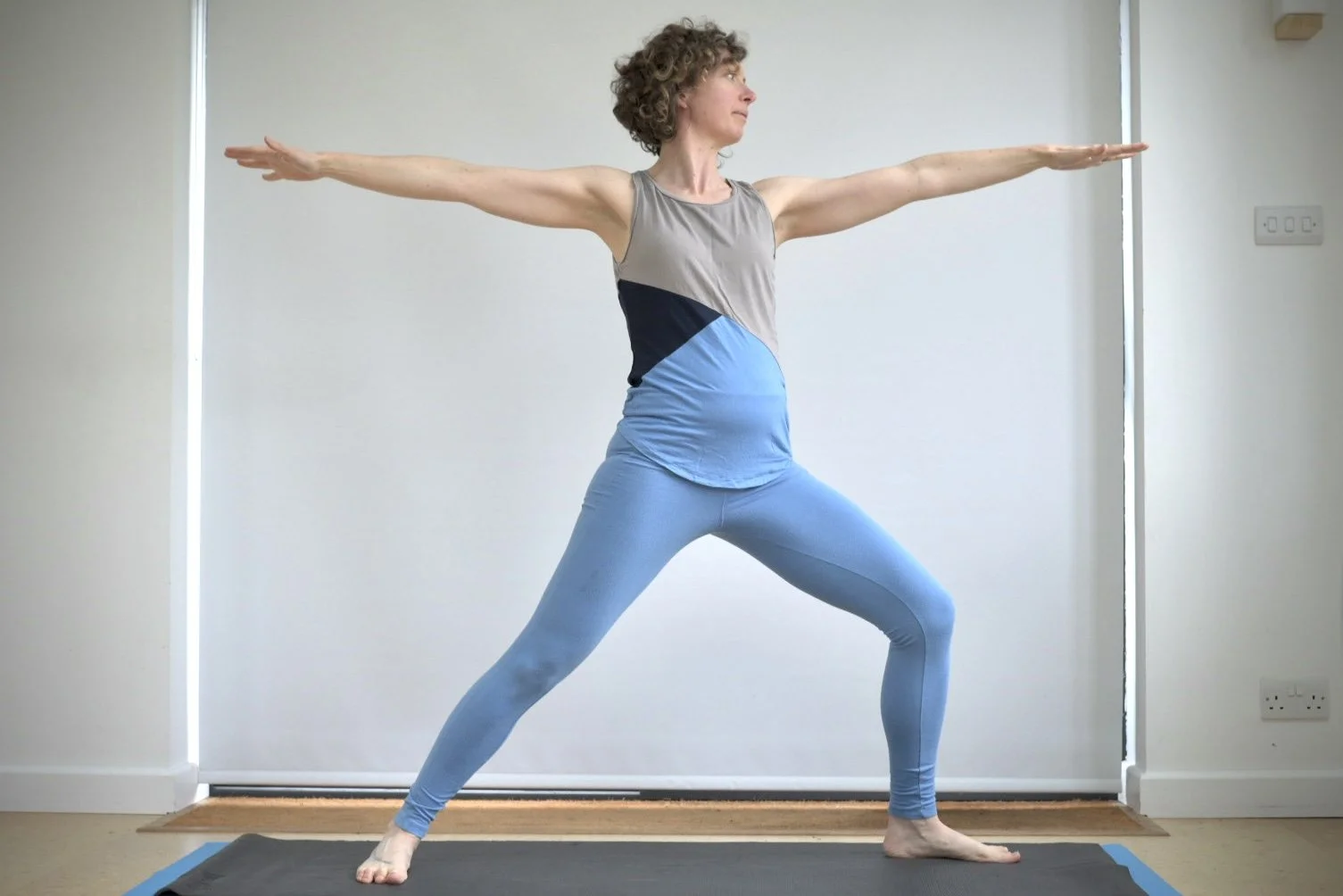
Yoga Teacher in Warri II pose
As we arrived at the final week of our journey through the chakras, we reached the Crown Chakra, Sahasrara. And yet, in many ways, this is not an ending at all, but a beginning.
Going deeper into stillness
This week we continued in the same direction as our exploration of the Third Eye Chakra, moving further into stillness. We softened mental chatter, created space, and allowed ourselves time to reconnect, not only to our intuition, but to a wider sense of awareness and connection to all living things.
To support this journey, we began back at the Root Chakra. In many ways, the Crown Chakra invites us to reflect on the entire chakra system. When the chakras are balanced, we begin to feel both an inner steadiness and an outer connection to something greater than ourselves.
Root to rise
“Root to rise” is a familiar phrase in yoga, but this week it truly came alive in our practice.
We began with grounding, pelvis-focused movements, building awareness from the base upwards. As the weeks have unfolded, I’ve found myself offering fewer verbal cues, one of the joys of working with the same students over time. With less instruction, there is more space for students to feel, explore, and trust their own experience.
Our connection to the earth felt strong and steady. We moved through:
Bridge Pose
Flowing Cat–Cow
Mountain Pose
Dolphin Pose
Warrior II
Extended Side Angle
Eagle Pose
As with our Third Eye practice, we returned again and again to our Drishti, our focused gaze. The energy in each class felt calm and grounded, yet quietly powerful—soft, steady, and deeply present. The stillness of mind was something you could almost feel in the room.
Essential oils
We began the practice with Elemi essential oil, a resin-based middle note known for its grounding and regulating effect on the nervous system. It helps to ease stress, clear the mind, and support clarity and focus. It was exactly what was needed as we settled into practice.
We closed with Frankincense essential oil, an oil long associated with spiritual connection, tranquility, and contemplation. Its deeply calming effect on both body and mind made it the perfect companion for our final meditation and savasana.
Mudra and mantra
This week we explored Atmanjali Mudra, often described as a gesture of greeting the self. It carries a quiet sense of reverence and inner acknowledgement.
We paired this with the mantra:
“Tranquillity and inner wisdom characterise my life.”
Throughout the practice, we also worked with the awareness:
“I am the observer of my thoughts and do not let them bring me down.”
And in meditation:
“In the silence, I am open to receive without asking and without expectation. In the silence, I will see and hear the truth.”
Where next?
As I reflect on this journey through the chakras, I feel a strong pull to continue exploring this work more deeply with my students. Rather than keeping each chakra separate, it feels like the right time to begin weaving them together, as they are naturally intended to be.
So next week, we’ll begin a new chapter: a journey through all seven chakras as one integrated practice. It feels exciting, expansive, and full of possibility.
Exploring each chakra individually has been a fascinating experience, both for me as a teacher and for my students. Many have shared how much they’ve enjoyed the process: taking their practice to a deeper level, exploring something new, and stepping beyond their comfort zones with curiosity and openness.
I hope this journey has inspired you to explore the chakras for yourself. And if you’re a yoga teacher, perhaps it might encourage you to create your own Chakra Yoga series. If you do, I would truly love to hear about your experience.
Thank you so much for reading, and I hope to see you back here again soon.
If you’ve enjoyed following this Chakra Yoga journey and feel called to explore it more deeply, you’re so welcome to join me.
I offer regular yoga classes, workshops, retreats and CPD training for yoga teachers who want to integrate essential oils into their teaching in a safe and meaningful way.
👉 Get in touch, I’d love to hear from you heather@deavilleyoga.com
Sources and Inspiration
The themes explored in this class were informed by my own knowledge of traditional yoga philosophy and practice. My experience as a professional aromatherapist and inspiration from:
Anodea Judith’s Chakra Yoga, published by Llewellyn Books
Aromatherapy for healing the spirit, Gabriel Mojay, published by Healing Arts Press
Mudras for Body, Mind & Spirit by Gertrud Hirschi, published by Tarotdeck
The Power of the Chakra’s, Fiona Toy, published by Hinkler
These sources often inform the framework I use when designing themed yoga classes that integrate movement, breath, subtle energy and essential oils.
The Chakra Yoga series:
You can explore the whole series so far by following these links to my chakra yoga blogs for each one:
Week One: The Root Chakra
Week Two: The Sacral Chakra
Week Three: The Solar Plexus Chakra
Week Four: The Heart Chakra
Week Five: The Throat Chakra
Week Six: The Third Eye Chakra
Week Seven: You’re here
Chakra Yoga Series: Part 6, Third Eye Chakra
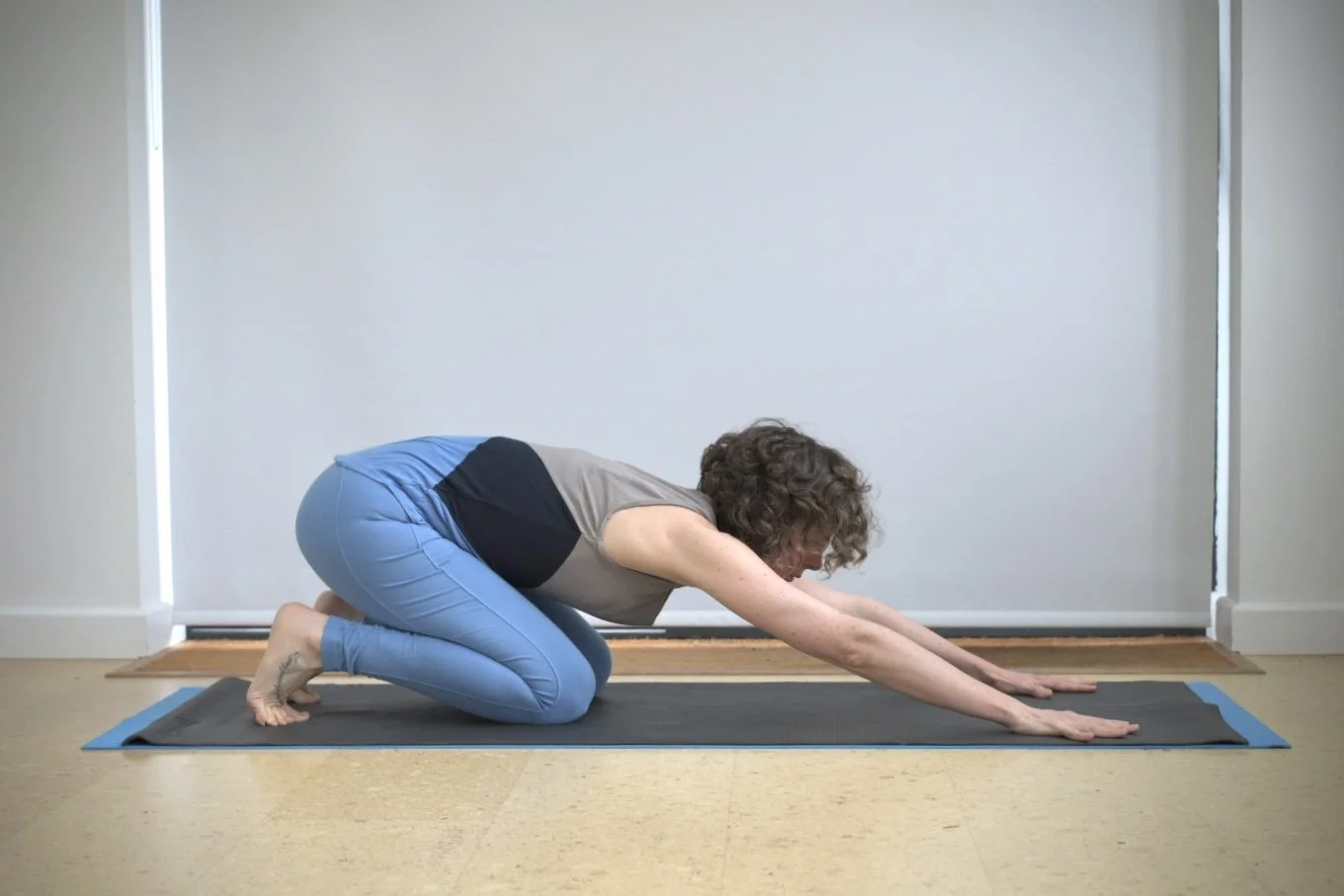
Yoga teacher making her way to Puppy Pose
As we reach week 6 of our Chakra Yoga journey, I can feel the energy settling into a quieter, more meditative space. Having moved through more outward-facing energetic themes, our attention now turns inward to the Third Eye Chakra, Ajna. This practice invites us to trust our intuition and listen deeply to our inner wisdom.
Focus on our focus
In this week’s classes, we worked with both our internal and external gaze. This simple shift helped to quiet the mind and deepen our ability to listen to ourselves.
In yoga, this focused gaze is known as our Drishti. We gently anchor our awareness to a single point, allowing the eyes to be steady yet soft. This steadiness supports us in balance postures and encourages a calmer, more settled mind in stillness.
The inner eye
The Third Eye Chakra is considered the seat of intuition. Located just above and between the eyebrows (and slightly deeper within the centre of the head), it is often described as a form of inner knowing and connecting to a higher, more spiritual realm.
Like the Heart Chakra, its guidance is clearest when we pause long enough to truly listen. This week we explored that space by slowing the breath and visualising calm, expansive imagery, spaces that felt vast, open and still.
One image that resonated strongly was standing at the edge of the ocean, watching sunlight dance across the water. In teaching, I also chose to speak less at times, allowing more silence for students to fully inhabit their practice.
The physical practice
Our asana practice supported this inward focus through postures that encouraged steadiness, space and awareness:
Extended Puppy Pose
Warrior III
Revolved Side Angle Pose
Downward Facing Dog
Each shape offered an opportunity to return to the breath and gently refine attention.
Mudra and mantra
This week I really enjoyed sharing Shankh Mudra (Shell Mudra) with students. In this mudra, the fingers interlace to form a shape reminiscent of a conch shell, symbolising the connection between outer expression and inner truth.
It is said to support inner listening and deepen connection to intuitive knowing. The right thumb is gently held, representing the “pearl of wisdom” protected within.
We closed with the affirmation:
“I trust my instincts and follow their guidance.”
Essential oils for the Third Eye
We began our practice this week with Clary Sage essential oil. This oil supports reconnection with intuition, helping to clear the mind and leaving us feeling revitalised and re-inspired.
We closed the practice with Amyris essential oil, a gently uplifting oil that helps calm and clear the mind while supporting a quiet sense of wellbeing and inner ease.
Join me for a class, workshop or CPD training
My joy is in sharing my two great passions—yoga and aromatherapy—and I would love to have you join me on this journey.
I teach yoga classes in Sussex, run yoga workshops, and Yoga retreats across Sussex and Kent.
I am also blessed to have a wonderful community of yoga teachers who have completed my Essential Oils for Yoga Teachers CPD training. They are passionate about learning how to safely and meaningfully incorporate essential oils into their classes and workshops.
Next week
Next week we’ll journey up the Sushumna Nadi to the Crown Chakra, Sahasrara, building on our exploration of inner knowing while gently expanding into our connection with the world around us and the divine.
Sources and inspiration
The themes explored in this class were informed by my own knowledge of traditional yoga philosophy and aromatherapy, as well as inspiration from:
Chakra Yoga by Anodea Judith (Llewellyn Publications)
Aromatherapy for Healing the Spirit by Gabriel Mojay (Healing Arts Press)
Mudras for Body, Mind & Spirit by Gertrud Hirschi (Findhorn Press)
These sources often inform the framework I use when designing themed yoga classes that integrate movement, breath, subtle energy and essential oils.
The Chakra Yoga series
You can explore the full series so far below:
Week One: The Root Chakra
Week Two: The Sacral Chakra
Week Three: The Solar Plexus Chakra
Week Four: The Heart Chakra
Week Five: The Throat Chakra
Week Six: You’re already here!
Week Seven: Coming April 24th 2026
Chakra Yoga Series: Part 5, Throat Chakra
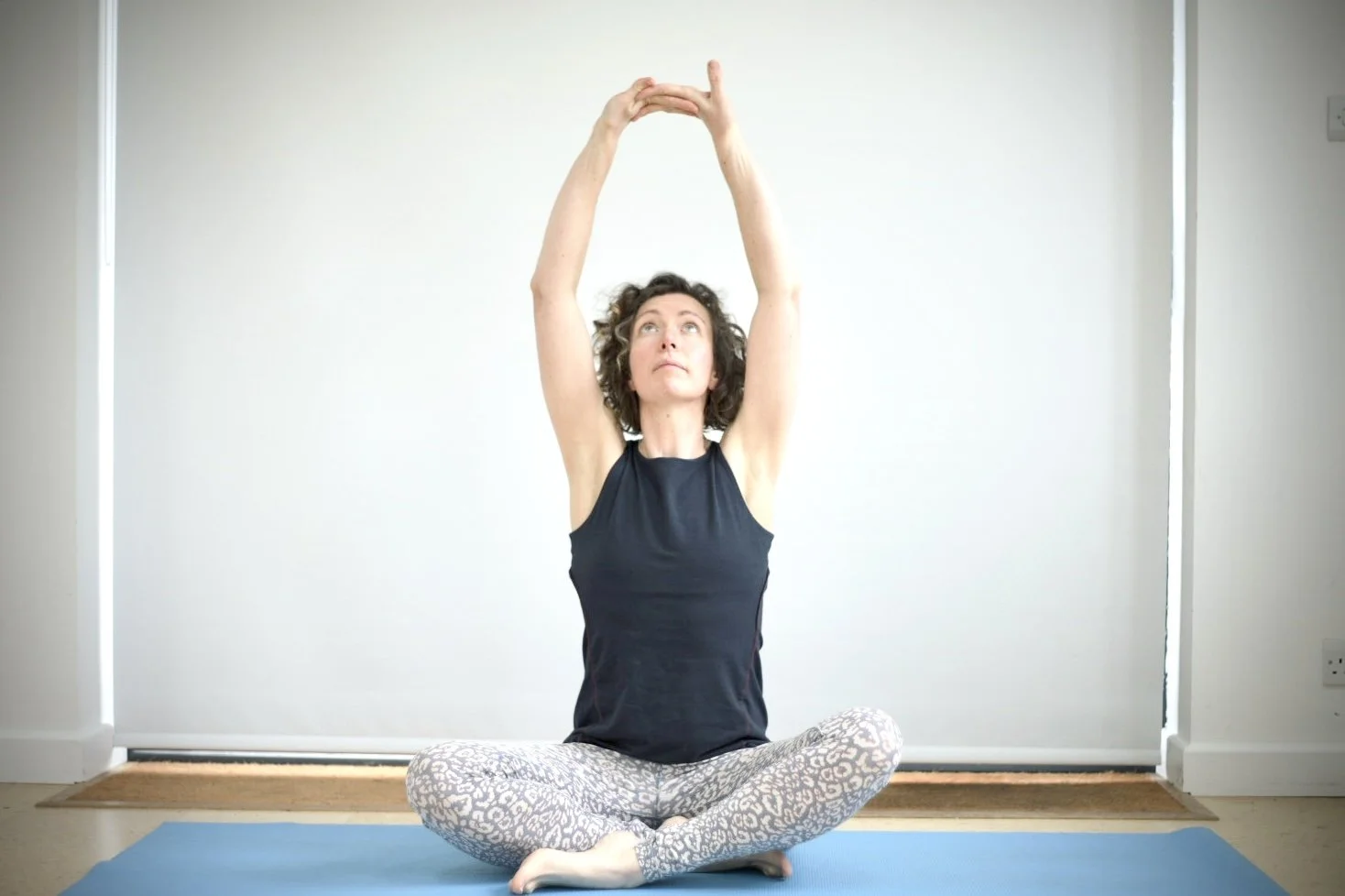
Finding balance at the throat Chakra is the theme for this week
This week we’ve continued our journey through the Chakra’s, moving from the Heart Chakra last week, and reaching the Throat Chakra, Vishudda. And again the influence this chakra has had over our classes this week has been palpable.
Focus on the breath
This week our practice focused on:
Ujjayi Breath
Gentle stretches across the neck
Percussive sound
Yoga Asana (postures) that opened the chest and let the energy flow
The nature of Spring and the elements of wood and either.
Thoughtful communication, mudra and mantra.
The call of the ocean
The Throat Chakra is focused on expression and effective communication. Although we tend to think of this as purely verbal, this chakra has allowed us to explore our non-verbal communication as well. Saying that sound has been at the heart of our practice and what better way to explore this chakra than by starting with the breath.
Ujjayi breath, also known as Ocean breath was the anchor for our pranayama this week. From beginning to end, it allowed us to draw our focus into the here and now and explore it’s sound in isolation, and with the presence of the rest of the world. Described by Anodea Judith as the “internal Om”, Ocean Breath enables us to conquer fear, bring clarity to the mind and support us in speaking our truth.
Releasing and Harmonising
Our class followed a rising energy this week, rising from the Root Chakra, we starting with gentle stretches through the neck and shoulders, shoulder shrugs were followed by more active seated yoga mudra linked to the inhale and exhale these gentle built the energy. The build in energy enable us to move to the Warrior poses and from there to Revolved Side Angle pose.
Mantra and Mudra
For mudras we explored Self-Esteem and Sky Mudra, firstly tapping into our inner truth, then heightening our listening abilities and careful contemplation.
Mantra’s included “I am truthful and honest with myself” and “I communicate openly and honestly to express my thoughts and feelings clearly.”
Essential oils for the Throat Chakra
If I’m honest I was spoilt for choice this week. But taking into account that it is currently Spring here in the UK I chose Bergamot and Lavender to compliment our practice this week.
Bergamot I chose for its optimism and uplifting qualities. These directly allow the body to free up, by releasing pent up feelings and emotions.
Lavender I chose for its ability to encourage self expression and release stuck energy. As we used it towards the end of our practice it’s calming properties were also enjoyed.
Join me for a class, workshop or CPD training
My joy is in sharing my two great passions, yoga and aromatherapy and I would love to have you come on this journey with me.
I teach yoga classes in Sussex, runyoga workshops monthly (sometimes more) and have a wonderful community of yoga teachers who have been on my Essential Oils for Yoga Teachers CPD training and are passionate to learn more about how to safely incorporate essential oils into their workshops and classes.
In three week’s
We’ll be journeying up the Sushumna Nadi to the Third Eye, Ajna chakra and exploring were our consciousness meets our unconsciousness and our intuition resides.
Sources and Inspiration
The themes explored in this class were informed by my own knowledge of traditional yoga philosophy and practice. My experience as a professional aromatherapist and inspiration from:
Anodea Judith’s Chakra Yoga, published by Llewellyn Books
Aromatherapy for healing the spirit, Gabriel Mojay, published by Healing Arts Press
Mudras for Body, Mind & Spirit by Gertrud Hirschi, published by Tarotdeck
The Power of the Chakra’s, Fiona Toy, published by Hinkler
These sources often inform the framework I use when designing themed yoga classes that integrate movement, breath, subtle energy and essential oils.
The Chakra Yoga series:
You can explore the whole series so far by following these links to my chakra yoga blogs for each one:
Week One: The Root Chakra
Week Two: The Sacral Chakra
Week Three: The Solar Plexus Chakra
Week Four: The Heart Chakra
Week Five: You’re already here!
Week Six: The Third Eye Chakra
Week Seven: Coming April 24th 2026
Chakra Yoga Series: Part 4, Heart Chakra
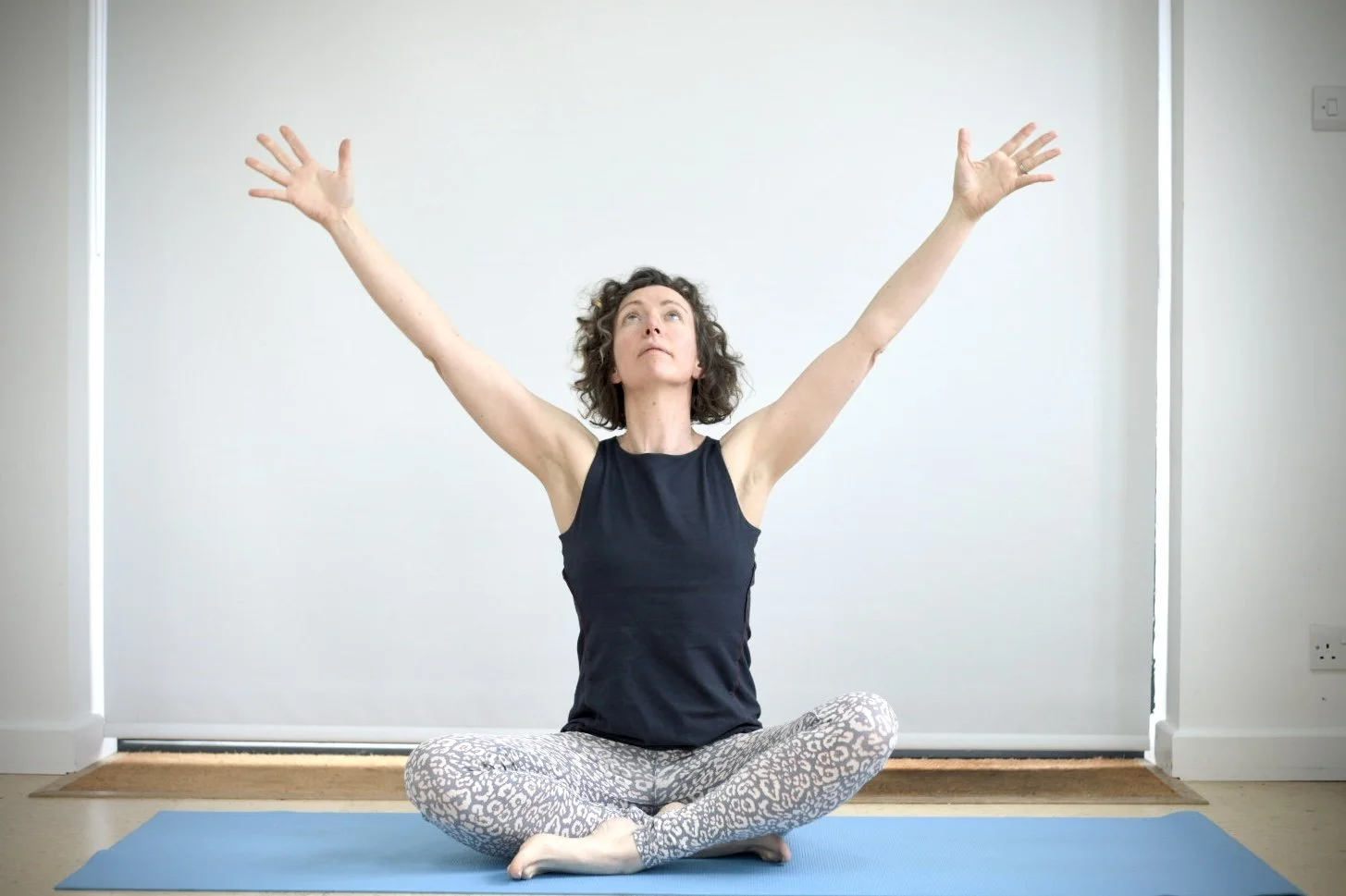
Opening the heart Chakra
This week we have journeyed up to the centre of the chakra system and found ourselves at Anahata Chakra, commonly know as the Heart Chakra.
This Chakra is in the centre of the 7 main yogic chakra’s and as such is the meeting point of our more intellectual, physical beings and our more spiritual selves. This chakra is associated with unconditional love, towards ourselves and others, so it’s been a much softer week compared to ourSolar Plexus journey.
Opening the heart
This week our practice focused on:
Expanding the chest through pranayama (breathwork)
Alternate nostril breathing (nadi shodhana)
The Krama breathing technique Anuloma (Thanks to Anodea Judith for this inspiration)
Asana which opened the heart and chest
Poses like Anahata, or Puppy pose which soften the heart to the earth
Strength through the legs, softness through the arms.
Finding strength in letting go
This weeks practice invited us all to be vulnerable, be it through posture, breathwork (trying something very new) or with the use of a rather unusual mudra which sometimes didn’t work, so we accepted and adjusted. Making space for ourselves just as we are. And a yoga teacher it also asked me to be vulnerable, to be more open about how my own heart leads me in my teaching each week.
Well rooted we rose
I’m really enjoying exploring the chakras in this way and really noticed in this weeks practice how having a strong connection to the chakras we’ve explored so far really supported the opening of the heart. Feeling rooted, through a sprinkle ofRoot Chakraposes helped us feel grounded and ready. Being more creative with well know asana’s helped us to soften and flow like our Sacral Chakra week and with last weeks self confidence boost at the Solar Plexusto lean into we really could soften the heart.
And my favourite manifestation this week was
“I love myself the way I am, not the way I was or could be, and I extend this love to others.”
Essential Oils from the Heart
This week we started our essential oils and yoga practice with an oil I love, Laurel (Bay). This oils continues on really nicely from last weeks self confience supporting oils as it’s inspiring notes boost the self esteme and help to renew our belief in our own boundless potential.
Our second oil, was Rose. Love, trust, self acceptance and emotional wellbeing are at the root of the energetic properties of this oil and I really couldn’t think of a better oil to support our open hearted journey through alternate nostril breathing and savasna.
Join me for a class, workshop or CPD training
My joy is in sharing my two great passions, yoga and aromatherapy and I would love to have you come on this journey with me.
I teach yoga classes in Sussex, runyoga workshops monthly (sometimes more) and have a wonderful community of yoga teachers who have been on my Essential Oils for Yoga Teachers CPD training and are passionate to learn more about how to safely incorporate essential oils into their workshops and classes.
Next week
We’ll be journeying up the Sushumna Nadi to the Throat, Visuddha chakra and exploring our thoughtful communication and expression - I can’t wait!
Sources and Inspiration
The themes explored in this class were informed by my own knowledge of traditional yoga philosophy and aromatherapy as well as inspiration from:
Anodea Judith’s Chakra Yoga, published by Llewellyn Books
Aromatherapy for healing the spirit, Gabriel Mojay, published by Healing Arts Press
Mudras for Body, Mind & Spirit by Gertrud Hirschi, published by Tarotdeck
These sources often inform the framework I use when designing themed yoga classes that integrate movement, breath, subtle energy and essential oils.
The Chakra Yoga series:
You can explore the whole series so far by following these links to my chakra yoga blogs for each one:
Week One: The Root Chakra
Week Two: The Sacral Chakra
Week Three: The Solar Plexus Chakra
Week Four: You’re already here!
Week Five: The Throat Chakra
Week Six: The Third Eye Chakra
Week Seven: The Crown Chakra - Coming 24th April
Chakra Yoga Series Part 3: Solar Plexus Chakra
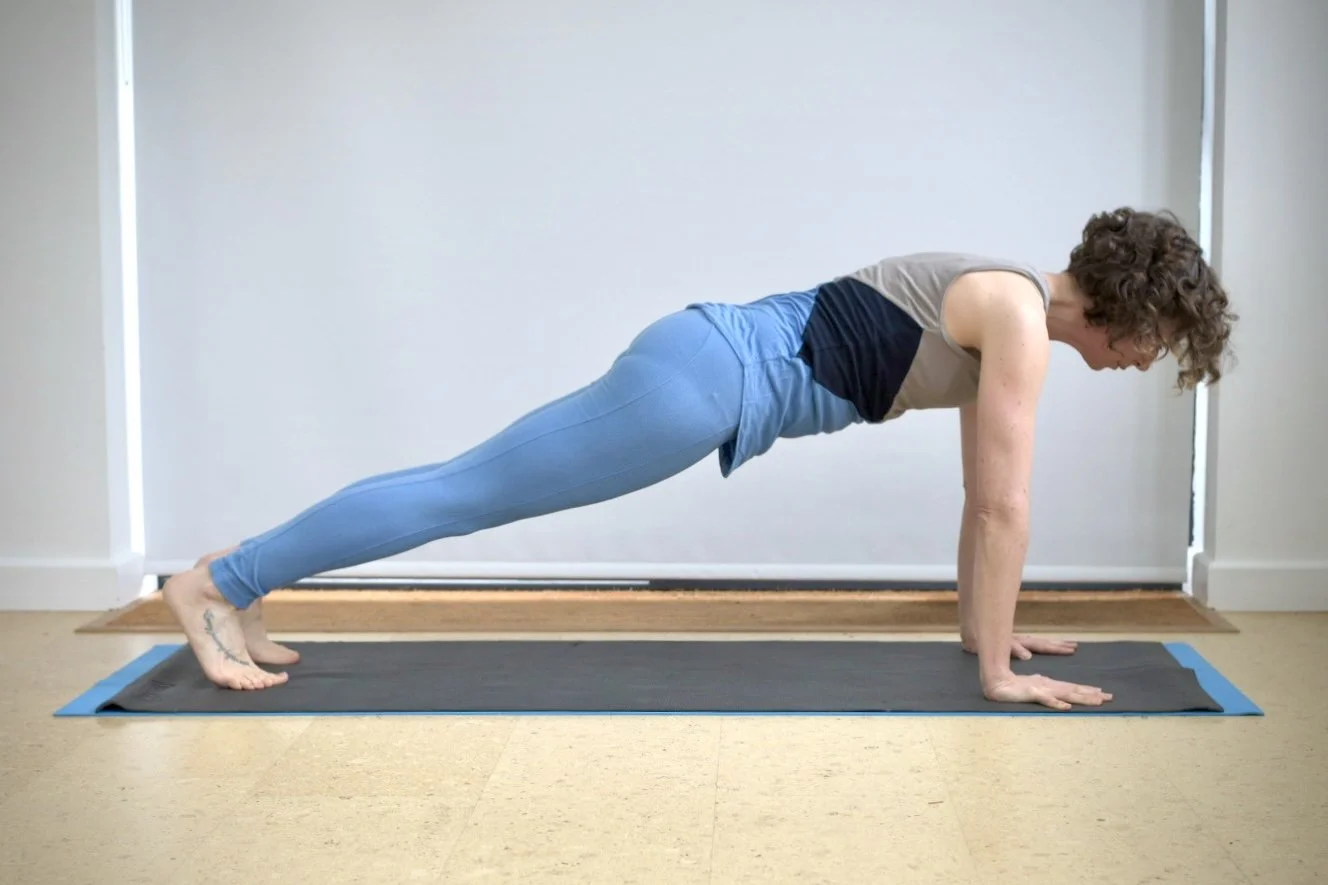
Plank pose to fire up the Solar Plexus Chakra
After establishing a grounded root and exploring our creativity in week 2, week 3 classes’ have been exploring the power of the Solar Plexus Chakra, Manipura.
The element of this Chakra is fire and boy did that translate into our practice, where strength was the key word through every posture. This chakra is associated with self confidence, optimism, and determination without the need to trample over others. It was a great, if challenging week on the mat.
Drawing on our personal power
This week our practice focused on:
Uplifting our energy
Restoring confidence and optimism in our ability to achieve
Holding poses for longer
Warrior poses, plank, boat - expansive and strong
Facing the physical challenge to see how much we are capable of
Holding for longer
By spending longer in poses like Warrior two, plank pose and down dog, we had to draw on our well of inner strength to last the distance. The breath was our supportive guide, enabling us to strengthen our will power to stay for longer. This practice really challenged us physically, but the rewards of knowing we could do it were great.
Oils to support our fire
Alongside our asana practice, we worked with 2 beautiful essential oils to enhance our exploration of the Solar Plexus Chakra.
This weeks practice started with Lemon essential oil. A breath of bright, uplifting fresh air, it wiped the slate of the day clean and encouraged us to let go of emotional confusion and doubt, clearing the mind, encouraging self-trust and uplifting us in body and soul.
Then Pine essential oil was introduced towards the end of the practice. This fortifying scent helped to bolster our confidence and like Pine often does, it re-established our connection to life in the hear and now.
I absolutely loved this combination of oils for all it added to our Solar Plexus Chakra Yoga class this week. This class takes place on a Tuesday morning at Ditchling Pavilion.
Continuing the journey next week
Next week we’ll be reaching theHeart Chakra, Anahata. This chakra which is the link between the lower, more physical chakras, and the upper, more spiritual and ethereal ones. And once again our practice will change to explore this energy centre in all its glory
If you’re intrigued to explore this in your own yoga practice you are warmly invited to join us on this journey through the Chakras. Click to discover my yoga classes, workshops and retreats.
Essential Oils and Themed Yoga Teaching
Working with aroma alongside yoga can add a subtle but powerful layer to themed classes, workshops and retreats.
Essential oils like Lemon and Pine can deepen the energetic tone of a practice and help guide students deeper into the qualities you’re exploring.
For yoga teachers, learning how to integrate essential oils safely and intentionally can open up new possibilities for creating meaningful, sensory-led classes, workshops and retreats. Check out my practical guide to essential oil safety in yoga classes here
If you're a teacher interested in exploring this approach, I share the framework I use for blending aromatherapy with yoga practice inside my on demand Essential Oils for Yoga Teachers CPD, where we explore safety, how to use scent to deepen your students yoga practice, and ways to weave scent into themed classes such as chakra practices.
You can learn more about the training here: Essential Oils for Yoga Teachers CPD
Sources and Inspiration
The themes explored in this class were informed by my own knowledge of traditional yoga philosophy and aromatherapy as well as inspiration from:
Anodea Judith’s Chakra Yoga, published by Llewellyn Books
The Power of the Chakra’s, Fiona Toy, published by Hinkler
Aromatherapy for healing the spirit, Gabriel Mojay, published by Healing Arts Press
These sources are a few of the books I go to to inform the framework I use when designing themed yoga classes that integrate asana, pranayama, subtle energy and essential oils.
The Chakra Yoga series:
You can explore the whole series so far by following these links to my chakra yoga blogs for each one:
Week One: The Root Chakra
Week Two: The Sacral Chakra
Week Three: Your already here
Week Four: The Heart Chakra
Week One: The Root Chakra
Week Five: The Throat Chakra
Week Six: The Third Eye Chakra
Week Seven: The Crown Chakra - Coming 24th April
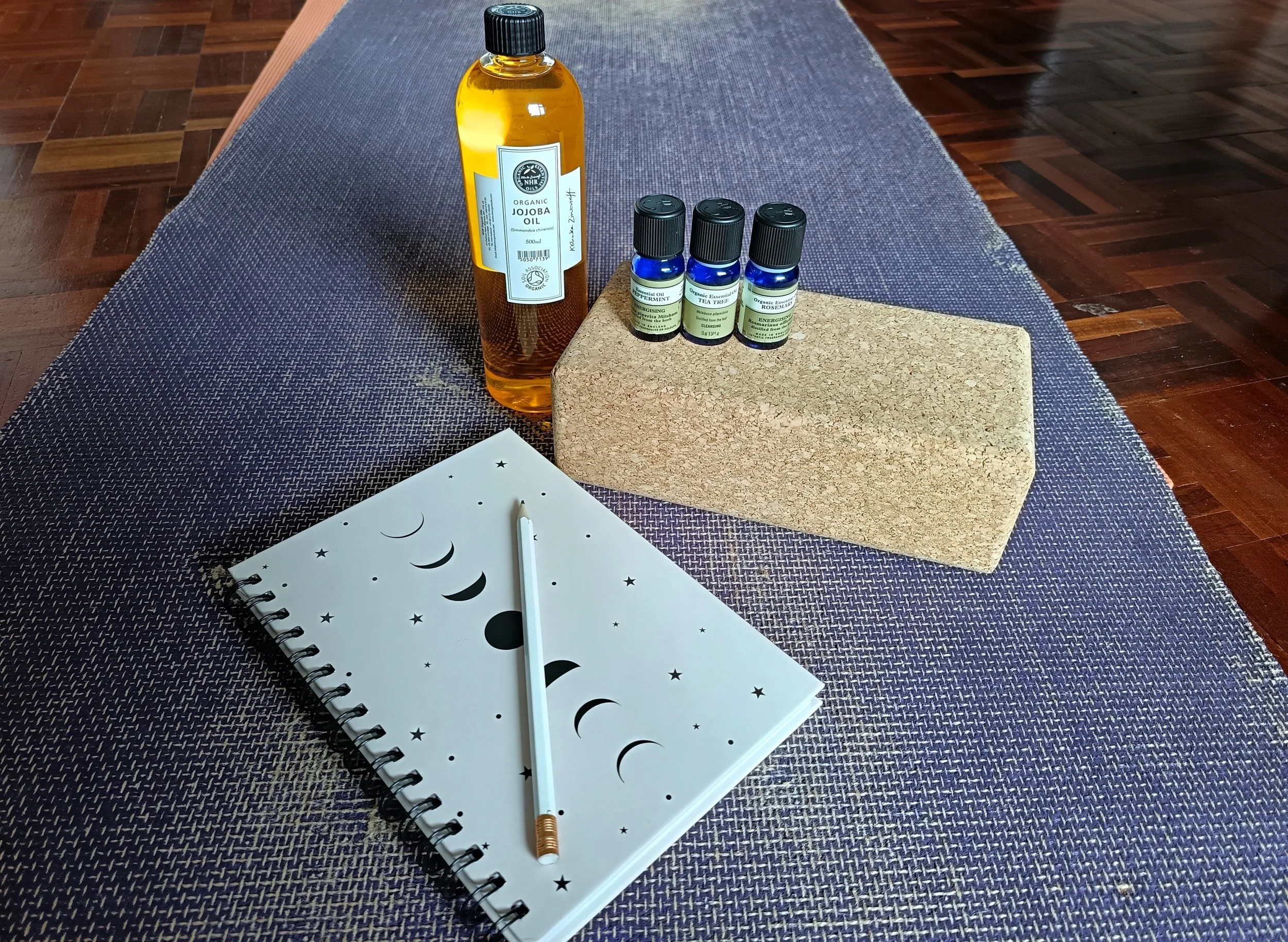
Essential Oil Safety for Yoga Teachers: A Practical Guide
Essential oil safety for yoga teachers: dilution, storage and best practice for classes and retreats.
Essential oils can beautifully enhance your yoga classes, workshops, and personal practice. They can support us in so many ways, from energising our practice, to grounding it. But they are also highly concentrated plant extracts, and with that potency in mind, I suggest, if you’re weaving essential oils into your yoga teaching following the safety guidelines below.
1. Keep Essential Oils Out of Reach of Children and Babies
Essential oils are not harmless fragrances. They are powerful substances that should always be stored safely and kept well out of reach of children and babies.
Even small amounts can cause irritation or harm if misused. Treat them with the same care you would give medicine.
2. Always Have a Vegetable Oil on Hand (Never Use Water)
This is one of the most important safety principles.
If an essential oil causes discomfort on the skin, or accidentally gets into the eye, do not use water. Water can drive the oil further into the tissue and increase irritation.
Instead:
Use a vegetable-based carrier oil (such as rapeseed, jojoba, or almond oil).
Apply generously to dilute and gently wipe away the essential oil.
Keep a carrier oil nearby whenever you’re working with essential oils in class and if your at home any cooking oil will do.
3. Keep Oils Away from the Eyes
Essential oils and eyes do not mix.
If you’re adding oils to an eye pillow or eye mask during savasana:
Ensure there is a layer of fabric between the oil and the skin
Never apply oils directly where they could transfer into the eyes
I personally prefer to scent my eye masks well before using them.
A simple barrier makes all the difference.
4. Store Oils Properly
To preserve their therapeutic properties:
Store in a cool place
Keep away from direct sunlight
Ensure lids are tightly closed
Use dark-coloured bottles (amber or cobalt blue are ideal) Or a bottle which comes in it’s own container.
Sunlight and heat can degrade essential oils over time, reducing their effectiveness and altering their chemical composition.
5. Keep Away from Open Flames
Some essential oils are flammable. Avoid using them near candles, incense burners, or open flames.
This is especially important in yoga spaces where candles are commonly used.
6. Never Use Essential Oils Neat (Undiluted)
Essential oils should not be applied directly to the skin without dilution.
Using oils neat can:
Cause contact dermatitis
Lead to skin sensitisation (which may be lifelong)
Increase risk of irritation
Diluting with a carrier oil not only improves safety — it also provides additional skin-nourishing benefits you wouldn’t want to miss.
7. Understand Phototoxic Oils
Some essential oils are phototoxic. This means they can cause skin reactions, rashes, or dark pigmentation if the skin is exposed to sunlight within 3–4 days after application.
Most citrus oils fall into this category, along with some others.
If you plan to be in the sun:
Apply phototoxic oils only to areas that will remain covered (and always dilute them)
Or use them aromatically instead (diffuser, inhalation, on a cotton pad)
This is particularly important if you’re running outdoor yoga sessions.
8. Pregnancy and Health Conditions
Not all essential oils are suitable during pregnancy or for certain health conditions.
Before using essential oils:
Research oils that should be avoided during pregnancy
Check contraindications for specific health conditions
Encourage your students to disclose relevant health information
If you (or a student) have a medical condition, always research thoroughly before use.
9. Treat Essential Oils Like Medicine
Essential oils are natural — but “natural” does not mean harmless.
Treat them with the same respect you would give medicine or herbal supplements. Continue learning about:
Oil properties
Contraindications
Safe dilution rates
Proper usage methods
Responsible use is part of being an ethical yoga teacher.
Want to Go Deeper? Train With Me
If you’re a yoga teacher who wants to confidently and safely integrate essential oils into your classes, workshops, or retreats, my Essential Oils for Yoga Teachers CPD was created with you in mind.
Inside the training, we go far beyond the basics and explore:
How to use essential oils safely and professionally in yoga classes, workshops, and retreats
How specific oils can influence mood and energy, and deepen connection to the breath, body, mind, and soul
Themed workshop ideas — plus exactly how and when to use oils within a class setting
Contraindications, safety considerations, and pregnancy guidance
Thoughtful ways to expand your offerings (and income) with integrity
This training is designed to give you the knowledge, confidence, and professional foundation to work with essential oils both responsibly and intuitively — so you can enhance your teaching in a way that feels aligned, ethical, and impactful.
You can learn more about the training here:
👉 Essential Oils for Yoga Teachers CPD
Final Thoughts: Safety First, Always
These are safety guidelines — and they matter.
But alongside them, use your common sense. If something doesn’t feel appropriate for your setting, your students, or the environment, trust that instinct.
When used safely and thoughtfully, essential oils can become a beautiful, supportive extension of your yoga teaching. Respect their potency and they’ll serve you and your students well.